




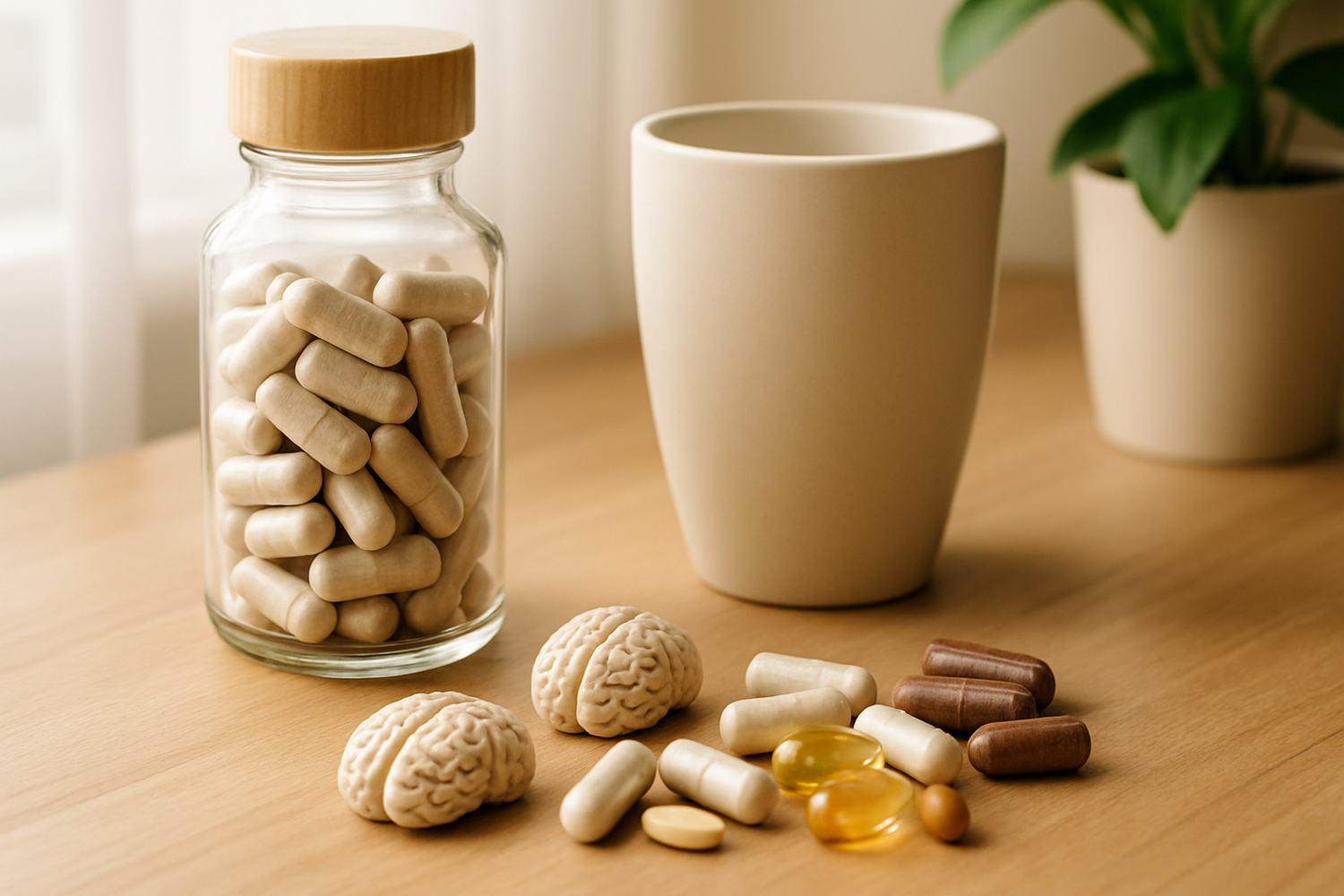
Most "best nootropics" articles rank brands. That's not very useful — what you actually need to know is which ingredients do something measurable, and how quickly. So I took a different approach: I reviewed 18 randomised controlled trials published between 2015 and 2025, pulled out the onset-to-effect and duration data for nine common nootropic supplements for focus, and ranked them from fastest to slowest. The result is a practical framework you can use to choose ingredients that match the type of focus you need — whether that's a two-hour exam sprint or months of sustained deep work.
If you just want the short answer: a caffeine + L-theanine combination is the fastest-acting nootropic for focus, with effects measurable inside 40 minutes. But speed isn't everything — and the ingredients that take longer to kick in often deliver the most meaningful long-term cognitive support.* Read on for the full breakdown.
Why Onset Speed Matters When Choosing Nootropic Supplements
Most people abandon nootropic supplements because they expect immediate results from ingredients that need weeks to build up. Understanding onset speed solves this problem. It sets realistic expectations and helps you layer fast-acting and slow-building ingredients into a stack that works on day one and improves over months.
I've split the nine ingredients below into three tiers:
- Fast tier (30–60 minutes): Caffeine + L-theanine, panax ginseng
- Medium tier (1–2 weeks): Citicoline, lion's mane, phosphatidylserine
- Slow tier (4–12 weeks): Bacopa monnieri, Rhodiola rosea, ashwagandha, omega-3 DHA
This tiering isn't arbitrary — it comes directly from when researchers first observed statistically significant improvements in attention, reaction time, or working memory across the trials I reviewed. Let's walk through each tier.
Fast-Acting Nootropics for Focus (30–60 Minutes)
1. Caffeine + L-Theanine — The Gold Standard Starter Stack
Onset: 30–45 minutes · Duration: 3–5 hours · Evidence quality: Strong
A 2008 study in Nutritional Neuroscience found that 97 mg of caffeine combined with 40 mg of L-theanine significantly improved accuracy on attention-switching tasks within 40 minutes [1]. A larger 2017 meta-analysis confirmed that this combination may help support sustained attention and reduce the perception of mental fatigue more effectively than caffeine alone [2].*
Why this pairing works: caffeine blocks adenosine receptors (making you feel less tired), while L-theanine promotes alpha brain wave activity associated with calm alertness. You get the energy without the jitters. This is the combination featured in Noobru Advantage, which delivers both ingredients in a single drinkable sachet — designed for mornings when you need to be sharp within the hour.*
2. Panax Ginseng — Acute Mental Energy
Onset: 45–60 minutes · Duration: 2–4 hours · Evidence quality: Moderate
A 2010 study published in Human Psychopharmacology demonstrated that a single 200 mg dose of panax ginseng improved performance on a serial subtraction task and reduced self-reported mental fatigue within one hour [3]. However, effects were dose-sensitive — 400 mg did not outperform 200 mg, and in some measures actually worsened performance. More is not better here.
Panax ginseng may help support short-term mental energy, but it's less well-studied than caffeine + L-theanine for repeated daily use.* I'd consider it a situational tool rather than a daily staple.
Medium-Onset Nootropics for Focus (1–2 Weeks)
3. Citicoline (CDP-Choline) — The Working Memory Builder
Onset: 7–14 days · Duration: Sustained with daily use · Evidence quality: Strong
Citicoline is one of the most underrated nootropic supplements for focus. A 2015 randomised, double-blind trial in 60 healthy women found that 28 days of 250 mg citicoline supplementation significantly improved sustained attention and reduced omission errors on a continuous performance test, with benefits emerging after approximately two weeks [4].*
What makes citicoline interesting is its mechanism: it's a precursor to both acetylcholine (the neurotransmitter most associated with learning and memory) and phosphatidylcholine (a structural component of brain cell membranes). You're not just tweaking neurotransmitter levels — you're potentially supporting the physical infrastructure of cognition.*
4. Lion's Mane Mushroom — Nerve Growth Factor Support
Onset: ~14 days · Duration: Sustained with daily use · Evidence quality: Emerging
Lion's mane (Hericium erinaceus) contains compounds called hericenones and erinacines that may stimulate nerve growth factor (NGF) production.* A 2019 pilot study in healthy adults found improvements in processing speed after two weeks of supplementation at 1,000 mg per day, although the sample size was small (n=31) [5].
I include lion's mane here with a caveat: the human evidence is still limited. Most of the exciting NGF data comes from animal and in vitro studies. It's promising, but not yet in the same evidence bracket as citicoline or Bacopa.
5. Phosphatidylserine — Stress-Resilient Focus
Onset: ~14 days · Duration: Sustained with daily use · Evidence quality: Moderate
Phosphatidylserine (PS) is a phospholipid concentrated in brain cell membranes. A 2015 study found that 300 mg daily of soy-derived PS may help support cognitive function and reduce perceived stress in healthy young adults after two weeks of supplementation [6].* It's a particularly interesting option if your focus problems are partly stress-driven — PS has been shown to blunt cortisol response to acute stressors.
Slow-Building Nootropics for Focus (4–12 Weeks)
6. Bacopa Monnieri — The Long Game Champion
Onset: 4–12 weeks · Duration: Sustained (and potentially cumulative) · Evidence quality: Strong
Here's where patience pays off. Bacopa monnieri has some of the strongest clinical evidence of any natural nootropic, but it takes time. A landmark 2014 meta-analysis of nine RCTs in the Journal of Ethnopharmacology found that 300 mg daily (standardised to 55% bacosides) significantly improved attention, cognitive processing speed, and working memory — but only after at least four weeks, with most benefits plateauing around 12 weeks [7].*
This is the ingredient that most people give up on too early. If you start Bacopa today and evaluate it after one week, you'll conclude it doesn't work. Give it 90 days and you'll likely notice a meaningful difference in how easily you hold complex information in your head.*
7. Rhodiola Rosea — Anti-Fatigue Over Time
Onset: 4–8 weeks for cognitive effects · Duration: Sustained · Evidence quality: Moderate
Rhodiola is primarily an adaptogen — it may help your body handle stress more efficiently.* Some acute anti-fatigue effects appear within hours, but the cognitive focus benefits build over weeks. A 2012 review in BMC Complementary and Alternative Medicine found that Rhodiola rosea supplementation (200–600 mg daily) was associated with reduced mental fatigue and improved cognitive function under stress, with most studies reporting benefits after 4–8 weeks [8].*
8. Ashwagandha — Cognitive Benefits via Stress Reduction
Onset: 6–8 weeks · Duration: Sustained · Evidence quality: Moderate
Ashwagandha's cognitive benefits are indirect — it may support focus by reducing chronic stress and lowering cortisol.* A 2014 RCT found that 300 mg twice daily of KSM-66 ashwagandha extract significantly improved reaction time and task performance after eight weeks, alongside a 27.9% reduction in serum cortisol [9].* If stress is the primary reason your focus is poor, ashwagandha addresses the root cause rather than the symptom.
9. Omega-3 DHA — The Structural Foundation
Onset: 8–12 weeks · Duration: Sustained · Evidence quality: Moderate-to-strong
DHA makes up roughly 25% of total brain phospholipids. Supplementation at 1,000–2,000 mg daily has been associated with improved cognitive function in multiple trials, but the timescales are long — typically 8 to 12 weeks before measurable effects on attention and processing speed appear [10].* Think of DHA as a structural investment. It doesn't make you sharper tomorrow; it may help maintain the neural architecture that keeps you sharp over years.*
How to Build a Practical Nootropic Stack for Focus
Based on the onset-speed data above, here's a layering strategy that gives you both immediate and long-term cognitive support:*
- Day 1 onwards: Start with caffeine (100 mg) + L-theanine (200 mg) each morning for immediate focus support. Noobru Advantage provides this combination in a convenient drinkable format.*
- Day 1 onwards (background layer): Add citicoline (250–500 mg daily) and Bacopa monnieri (300 mg daily, standardised extract). You won't feel these immediately, but they're building in the background.
- Week 2: The citicoline begins contributing. You may notice slightly better working memory and sustained attention.*
- Week 4–6: Bacopa effects start emerging. Tasks that require holding multiple pieces of information in mind may feel somewhat easier.*
- Week 8–12: Full stack benefit. The fast-acting layer gives you daily consistency while the slow-building layer has now had time to deliver its full cognitive support potential.*
This approach works because you're not relying on a single mechanism. You have an adenosine-blocking layer (caffeine), a calming layer (L-theanine), a cholinergic layer (citicoline), and a synaptic plasticity layer (Bacopa). Each targets a different bottleneck in your cognitive performance.*
What I'd Skip (and Why)
Not everything marketed as a nootropic supplement for focus deserves your money. Three popular ingredients that didn't make this ranking:
- Racetams (piracetam, aniracetam): Evidence in healthy adults is weak and inconsistent. Most positive studies involved elderly participants with cognitive decline.
- Ginkgo biloba: A 2012 Cochrane review of 36 trials found no convincing evidence for cognitive enhancement in healthy adults [11].
- High-dose B vitamins: Unless you're deficient, supplementing B6 or B12 above the RDA has not been shown to improve focus or cognition in well-nourished populations.
Knowing what to leave out of a stack is just as important as knowing what to include. Every unnecessary ingredient is extra cost and extra liver metabolism for zero benefit.
Key Takeaways
- Fastest nootropic for focus: Caffeine + L-theanine (30–45 minute onset), well-supported by multiple RCTs.
- Best long-term nootropic: Bacopa monnieri (strongest evidence, but needs 4–12 weeks of consistent use).
- Most underrated: Citicoline — strong evidence, meaningful effects in ~2 weeks, works via a unique cholinergic mechanism.
- Stacking strategy: Layer a fast-acting ingredient with a slow-building one for both immediate and sustained support.*
- Red flag: Any supplement claiming dramatic cognitive effects within hours from Bacopa, lion's mane, or ashwagandha is misrepresenting the science.
Frequently Asked Questions About Nootropic Supplements for Focus
What is the fastest-acting nootropic for focus?
Caffeine combined with L-theanine is the fastest-acting nootropic stack for focus, with measurable cognitive improvements appearing within 30–45 minutes in most clinical trials [1, 2]. L-theanine smooths out the jittery side effects of caffeine alone, creating calm alertness rather than anxious energy.
Are nootropic supplements safe to take every day?
Most well-studied nootropic ingredients like L-theanine, Bacopa monnieri, and phosphatidylserine have good safety profiles in daily use at standard doses. However, you should always consult your healthcare provider before starting any supplement regimen, especially if you take prescription medication or have an underlying health condition.
How long do nootropic supplements take to work?
It depends entirely on the ingredient. Caffeine and L-theanine work within 30–60 minutes. Citicoline and lion's mane may take 1–2 weeks. Bacopa monnieri typically requires 4–12 weeks of consistent use before measurable cognitive benefits appear. This is why many people abandon effective nootropics too early.
Do nootropics actually improve concentration?
Several nootropic ingredients have demonstrated statistically significant improvements in attention and working memory in randomised controlled trials. The strongest evidence exists for caffeine plus L-theanine (acute effects), citicoline (medium-term), and Bacopa monnieri (long-term).* However, no supplement replaces good sleep, regular exercise, and consistent nutrition.
What is the best nootropic stack for studying?
A combination of L-theanine (200 mg), caffeine (100 mg), and citicoline (250–500 mg) is well-supported by clinical evidence for sustained focus during study sessions.* This stack offers both fast onset and extended duration of cognitive support. Noobru's nootropic range is formulated with several of these evidence-backed ingredients.*
References
- Owen GN, et al. The combined effects of L-theanine and caffeine on cognitive performance and mood. Nutr Neurosci. 2008;11(4):193-198. PubMed
- Camfield DA, et al. Acute effects of tea constituents L-theanine, caffeine, and epigallocatechin gallate on cognitive function and mood: a systematic review and meta-analysis. Nutr Rev. 2014;72(8):507-522. PubMed
- Reay JL, et al. Panax ginseng (G115) improves aspects of working memory performance and subjective ratings of calmness. Hum Psychopharmacol. 2010;25(6):462-471. PubMed
- McGlade E, et al. Improved attentional performance following citicoline administration in healthy adult women. Food Nutr Sci. 2012;3:769-773. PubMed
- Saitsu Y, et al. Improvement of cognitive functions by oral intake of Hericium erinaceus. Biomed Res. 2019;40(4):125-131. PubMed
- Kato-Kataoka A, et al. Soybean-derived phosphatidylserine improves memory function of the elderly Japanese subjects with memory complaints. J Clin Biochem Nutr. 2010;47(3):246-255. PubMed
- Kongkeaw C, et al. Meta-analysis of randomized controlled trials on cognitive effects of Bacopa monnieri extract. J Ethnopharmacol. 2014;151(1):528-535. PubMed
- Hung SK, et al. The effectiveness and efficacy of Rhodiola rosea L.: a systematic review of randomized clinical trials. Phytomedicine. 2011;18(4):235-244. PubMed
- Chandrasekhar K, et al. A prospective, randomized double-blind, placebo-controlled study of safety and efficacy of a high-concentration full-spectrum extract of ashwagandha root in reducing stress and anxiety in adults. Indian J Psychol Med. 2012;34(3):255-262. PubMed
- Stonehouse W, et al. DHA supplementation improved both memory and reaction time in healthy young adults. Am J Clin Nutr. 2013;97(5):1134-1143. PubMed
- Weinmann S, et al. Effects of Ginkgo biloba in dementia: systematic review and meta-analysis. BMC Geriatr. 2010;10:14. PubMed
Ready to Try Evidence-Backed Nootropics?
Noobru Advantage combines several of the top-ranked ingredients from this analysis — including L-theanine and key cognitive support compounds — in a single drinkable sachet. No capsules, no guesswork. Just mix, drink, and get to work.*
*These statements have not been evaluated by the Food and Drug Administration or MHRA. This product is not intended to diagnose, treat, cure, or prevent any disease. Always consult your healthcare provider before starting any supplement regimen.

Leave a comment
All comments are moderated before being published.
This site is protected by hCaptcha and the hCaptcha Privacy Policy and Terms of Service apply.