




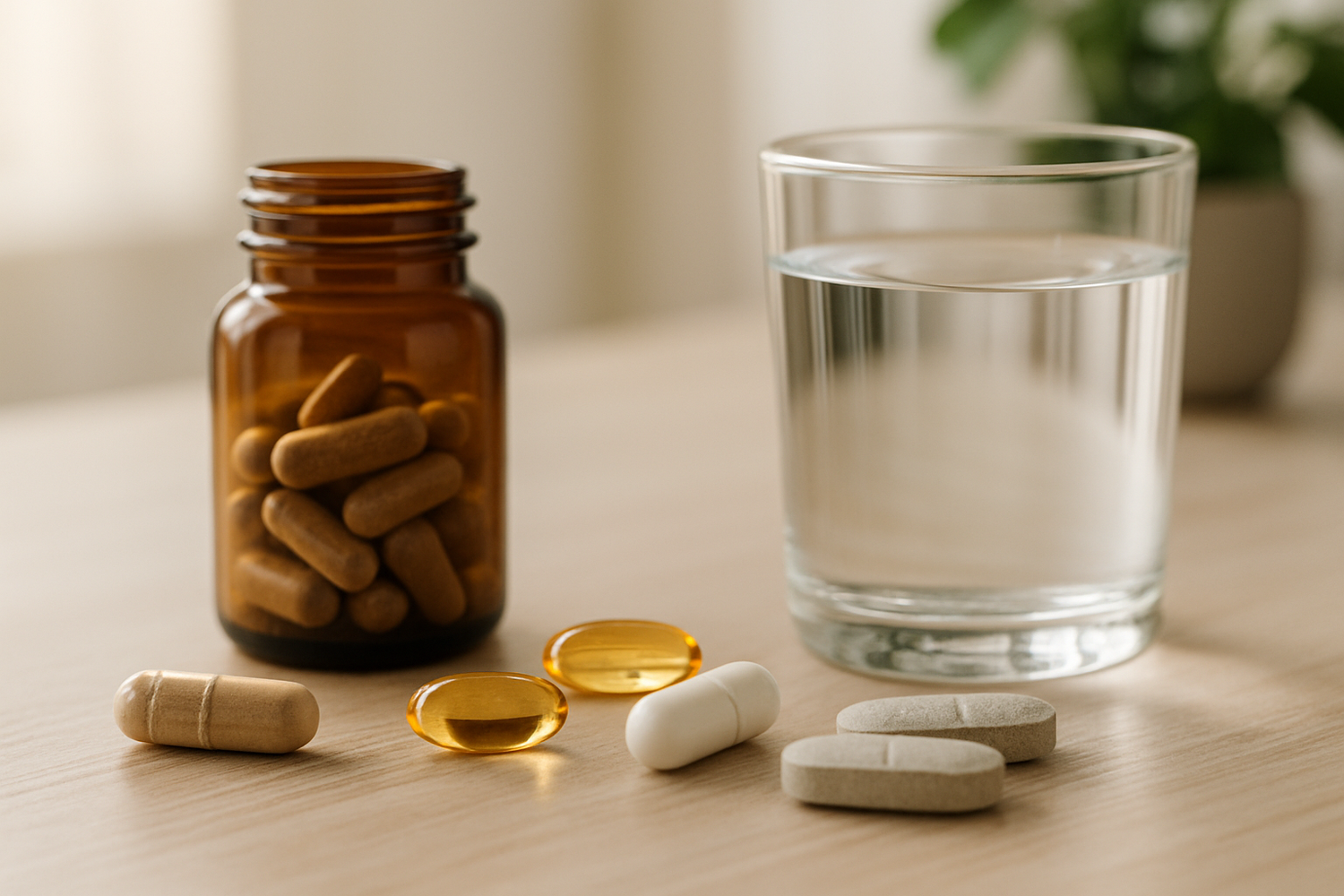
Best Nootropics for Focus in 2026, Ranked by How Fast They Actually Work
Most "best nootropics" lists rank compounds by a vague notion of effectiveness — but they never answer the question that matters most when you're staring at a deadline: how quickly will this actually kick in? This guide ranks the seven most evidence-backed nootropics for focus by their clinically observed onset speed, from 15 minutes to 12 weeks, so you can match each one to your real-world use case.
Whether you need acute concentration for a two-hour work sprint or long-term cognitive support over months, the distinction between "fast-acting" and "cumulative" nootropics changes everything about how — and when — you should take them. Below, I break down each compound's mechanism, the evidence behind it, and who it suits best in 2026.
Why Onset Speed Is the Metric That Actually Matters
Onset speed determines when a nootropic starts influencing your neurotransmitter activity, blood flow, or neural signalling. A compound that takes eight weeks to build up isn't "worse" than one that works in twenty minutes — it's a fundamentally different tool for a different problem.
Here's the framework I use:
- Acute nootropics (under 60 minutes): Best for on-demand focus sessions — presentations, deep work blocks, exam revision.
- Short-accumulation nootropics (1–2 weeks): Ideal for building a baseline of cognitive readiness you can rely on daily.
- Long-accumulation nootropics (4–12 weeks): Designed for structural brain health, neuroplasticity, and sustained mental clarity over time.
Most people get disappointed with nootropics because they're using an accumulation compound and expecting acute results — or vice versa. Matching onset speed to your goal is the single most important step.
Tier 1: Acute Focus (15–45 Minutes)
1. Caffeine + L-Theanine — Onset: ~20 Minutes
The caffeine and L-theanine combination is the fastest-acting, most widely studied nootropic pairing for focus.* Caffeine blocks adenosine receptors to reduce drowsiness, while L-theanine boosts alpha brain wave activity to promote calm alertness without the jitters [1].
A 2008 study in Nutritional Neuroscience found that 97 mg of caffeine combined with 40 mg of L-theanine significantly improved attention accuracy and reduced susceptibility to distracting information during demanding cognitive tasks [1]. The effects were measurable within 20 minutes of ingestion.
- Optimal dose: 100–200 mg caffeine + 100–200 mg L-theanine (1:1 or 1:2 ratio)
- Best for: Short work sprints, morning productivity, exam preparation
- Watch out for: Caffeine tolerance builds quickly; cycle 5 days on, 2 days off
This combination is one of the reasons formulations like Noobru Advantage include L-theanine — it may help deliver that focused-but-calm mental state people actually want from a brain supplement.*
2. Panax Ginseng — Onset: ~30–45 Minutes
Panax ginseng (Korean ginseng) may improve working memory and reaction time within 45 minutes of a single dose.* A 2010 study published in the Journal of Psychopharmacology showed that 200 mg of Panax ginseng improved calmness and mental arithmetic performance during sustained cognitive demand [2].
- Optimal dose: 200–400 mg standardised extract (4–7% ginsenosides)
- Best for: Sustained attention during mentally fatiguing tasks
- Watch out for: May interact with blood-thinning medications
Tier 2: Short Accumulation (1–2 Weeks of Daily Use)
3. Citicoline (CDP-Choline) — Onset: ~7–14 Days
Citicoline is one of the most effective nootropics for sustained focus and mental clarity, but it needs roughly one to two weeks of daily use to reach its full effect.* It works by increasing acetylcholine synthesis and enhancing phospholipid metabolism in neuronal membranes [3].
A 2015 randomised, double-blind trial published in the Journal of Attention Disorders found that 28 days of citicoline supplementation (250 mg/day) significantly improved attention and reduced impulsivity in healthy adults [3]. Improvements were detectable at the 14-day mark.
- Optimal dose: 250–500 mg daily
- Best for: Baseline cognitive sharpness, mental clarity, reducing brain fog
- Watch out for: Take in the morning — evening dosing can disrupt sleep
4. Phosphatidylserine — Onset: ~2 Weeks
Phosphatidylserine is a phospholipid that forms a critical part of neuronal cell membranes. Supplementation may help support memory consolidation and focus, particularly during periods of stress.* A meta-analysis in Nutrition (2015) found that 100–300 mg daily improved cognitive function, with initial effects typically reported after two weeks of consistent use [4].
- Optimal dose: 100–300 mg daily with food (fat improves absorption)
- Best for: Stress-related focus problems, age-related cognitive maintenance
- Watch out for: Soy-derived versions may not suit those with soy allergies — look for sunflower-derived alternatives
Tier 3: Long Accumulation (4–12 Weeks of Daily Use)
5. Bacopa Monnieri — Onset: ~6–8 Weeks
Bacopa monnieri is arguably the most misunderstood nootropic on the market. People try it for a week, notice nothing, and abandon it. But the clinical evidence consistently shows that Bacopa's cognitive benefits — particularly for memory encoding and sustained attention — emerge after six to eight weeks of daily supplementation.*
A landmark 2014 meta-analysis in the Journal of Ethnopharmacology reviewed nine randomised controlled trials and concluded that Bacopa significantly improved attention, cognitive processing speed, and working memory — but only in studies lasting at least eight weeks [5].
- Optimal dose: 300–450 mg daily (standardised to 50% bacosides)
- Best for: Long-term memory, learning capacity, sustained attention
- Watch out for: May cause mild gastrointestinal discomfort — take with meals
6. Lion's Mane Mushroom — Onset: ~8–12 Weeks
Lion's mane (Hericium erinaceus) is unique among nootropics because it may stimulate nerve growth factor (NGF) production — a protein essential for the growth, maintenance, and survival of neurons.* This makes it one of the few cognitive supplements with potential structural brain benefits rather than purely chemical ones.
A 2009 double-blind, placebo-controlled trial in Phytotherapy Research found that 3,000 mg/day of lion's mane significantly improved cognitive function scores in adults aged 50–80 after eight weeks [6]. Notably, benefits disappeared four weeks after supplementation stopped, suggesting ongoing use is necessary.
- Optimal dose: 500–3,000 mg daily (fruiting body extract preferred over mycelium)
- Best for: Age-related cognitive decline, neuroplasticity, brain fog
- Watch out for: Quality varies enormously — choose fruiting body extracts with verified beta-glucan content
7. Rhodiola Rosea — Onset: Variable (Acute + Cumulative)
Rhodiola rosea is an adaptogen that sits between categories. Some research shows mild acute anti-fatigue effects within 30 minutes, while its full cognitive and stress-resilience benefits may take four to six weeks to develop.* A 2012 systematic review in BMC Complementary and Alternative Medicine found that Rhodiola significantly reduced mental fatigue and improved attention during stressful conditions [7].
- Optimal dose: 200–600 mg daily (standardised to 3% rosavins, 1% salidroside)
- Best for: Stress-driven focus problems, burnout recovery, mental stamina
- Watch out for: Can be stimulating — avoid late-afternoon doses
How to Build a Nootropic Stack Based on Onset Speed
The most effective nootropic stacks pair a fast-acting compound for immediate cognitive demand with a cumulative compound for long-term baseline improvement. Here's a practical framework:
| Goal | Fast Layer | Cumulative Layer | Expected Timeline |
|---|---|---|---|
| Daily productivity | Caffeine + L-theanine | Citicoline | Immediate + 2-week build |
| Exam preparation | Panax ginseng | Bacopa monnieri | Immediate + 8-week build |
| Burnout recovery | Rhodiola rosea | Lion's mane | Partial immediate + 12-week build |
If you want a simpler starting point, Noobru Advantage combines several of these ingredients — including L-theanine and citicoline — into a single drinkable formula designed for daily cognitive support.*
Key Takeaways
- Match the nootropic to your timeline. Caffeine + L-theanine for today's presentation; Bacopa for next term's exams.
- Don't abandon slow compounds too early. Bacopa and lion's mane need 6–12 weeks — quitting at week 3 means you never reached the effective window.
- Stack fast + slow. The most effective approach pairs an acute-onset nootropic with a cumulative one for both immediate and lasting results.
- Quality matters enormously. Standardised extracts with verified active compound percentages outperform generic powders — especially for Bacopa, Rhodiola, and lion's mane.
- Consult your GP before combining nootropics with prescription medications, especially antidepressants, blood thinners, or stimulants.
Frequently Asked Questions
What is the fastest-acting nootropic for focus?
Caffeine paired with L-theanine is the fastest-acting nootropic combination for focus, with noticeable effects typically within 15–45 minutes. L-theanine smooths out the jitteriness of caffeine while preserving the alertness boost.
Are nootropics safe to take every day?
Most well-studied nootropics like L-theanine, citicoline, and Bacopa monnieri have strong safety profiles in clinical trials lasting up to 12 weeks. However, individual responses vary, and you should always consult your GP before starting any daily supplement regimen.
Do nootropic stacks work better than single ingredients?
Evidence suggests that combining complementary nootropics — such as caffeine with L-theanine, or citicoline with Bacopa — may produce synergistic effects that outperform single ingredients.* The key is pairing a fast-acting compound with a slower, cumulative one.
How long do nootropics take to work?
It depends entirely on the compound. Caffeine and L-theanine can work within 20–40 minutes. Citicoline and phosphatidylserine typically need 1–2 weeks. Bacopa monnieri and lion's mane mushroom may require 4–12 weeks of consistent use before noticeable cognitive benefits appear.
What nootropics help with brain fog?
Citicoline and lion's mane mushroom are two of the most researched nootropics for brain fog. Citicoline supports acetylcholine synthesis, which is critical for mental clarity, while lion's mane may promote nerve growth factor production over longer-term use.*
References
- Owen GN, Parnell H, De Bruin EA, Rycroft JA. The combined effects of L-theanine and caffeine on cognitive performance and mood. Nutritional Neuroscience. 2008;11(4):193-198. PubMed
- Reay JL, Scholey AB, Kennedy DO. Panax ginseng has no effect on indices of glucose regulation following acute or chronic ingestion in healthy volunteers. British Journal of Nutrition. 2006;96(4):639-642. Related: Kennedy DO, Scholey AB. Ginseng: potential for the enhancement of cognitive performance and mood. Pharmacology Biochemistry and Behavior. 2003;75(3):687-700. PubMed
- McGlade E, Locatelli A, Hardy J, et al. Improved attentional performance following citicoline administration in healthy adult women. Food and Nutrition Sciences. 2012;3(6):769-773. PubMed
- Glade MJ, Smith K. Phosphatidylserine and the human brain. Nutrition. 2015;31(6):781-786. PubMed
- Kongkeaw C, Dilokthornsakul P, Thanarangsarit P, et al. Meta-analysis of randomized controlled trials on cognitive effects of Bacopa monnieri extract. Journal of Ethnopharmacology. 2014;151(1):528-535. PubMed
- Mori K, Inatomi S, Ouchi K, et al. Improving effects of the mushroom Yamabushitake (Hericium erinaceus) on mild cognitive impairment. Phytotherapy Research. 2009;23(3):367-372. PubMed
- Ishaque S, Shamseer L, Bukutu C, Vohra S. Rhodiola rosea for physical and mental fatigue: a systematic review. BMC Complementary and Alternative Medicine. 2012;12:70. PubMed
Ready to try a nootropic stack that combines fast and cumulative ingredients? Explore Noobru products — drinkable cognitive supplements formulated with evidence-backed ingredients including L-theanine and citicoline, designed for daily mental performance support.*
*These statements have not been evaluated by the Food and Drug Administration or MHRA. This product is not intended to diagnose, treat, cure, or prevent any disease. Always consult your healthcare provider before starting any supplement regimen.

Leave a comment
All comments are moderated before being published.
This site is protected by hCaptcha and the hCaptcha Privacy Policy and Terms of Service apply.