




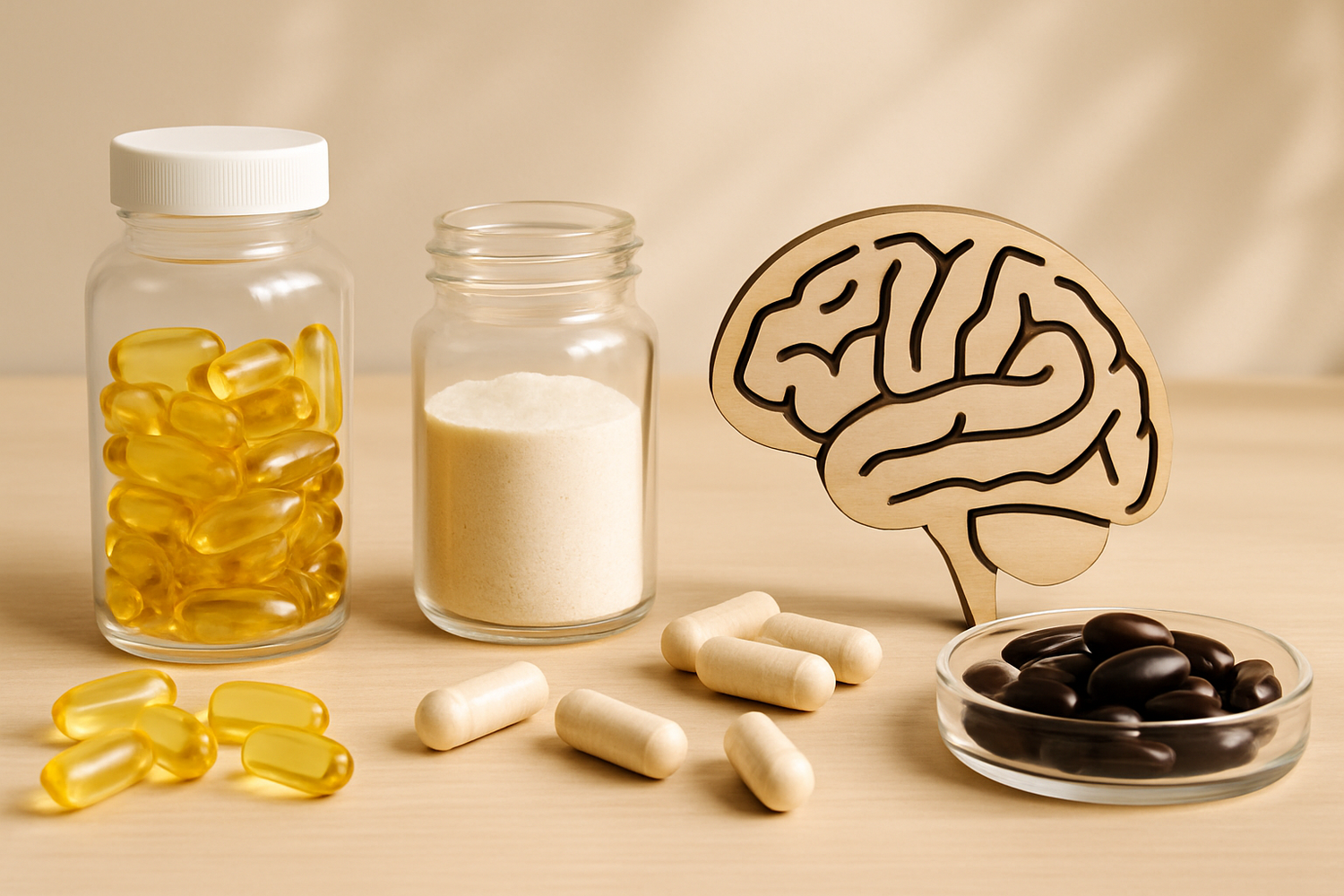
Brain Health Supplements: 6 Ingredients Ranked by Clinical Evidence
Most brain health supplement round-ups list 20 ingredients without distinguishing a gold-standard randomised controlled trial (RCT) from a petri-dish study. This guide does something different: it ranks six nootropic ingredients by a specific evidence hierarchy — study design quality, whether participants were healthy adults (not hospitalised patients), and whether the tested dose is actually available in commercial products in the UK in 2026. The result is a framework you can apply to any cognitive performance supplement on the market, not just the ones discussed here.
Why Evidence Quality Matters More Than Ingredient Lists
The UK nootropics market has grown considerably, but a practice called "fairy dusting" remains widespread. Brands include dozens of ingredients at doses far below what clinical trials tested, producing an impressive label that delivers very little cognitive support.
When evaluating any brain health supplement, three questions separate useful products from marketing exercises:
- Was the ingredient tested in humans? Cell and animal studies are interesting but don't reliably predict effects in people.
- Was the dose clinically relevant? A study showing benefits at 300 mg means nothing if a product contains 20 mg.
- Was the outcome meaningful? "Neuroprotective in vitro" is a different claim from "improved memory recall in a randomised controlled trial."
With those criteria in mind, here are six ingredients with the most compelling evidence for cognitive support, ranked from strongest to more emerging.
Tier 1: Strong Clinical Evidence
1. Citicoline — Attention and Mental Clarity
Citicoline is one of the most rigorously studied nootropic compounds available. It works through a dual mechanism: providing choline (a precursor to acetylcholine, the neurotransmitter central to learning and memory) and cytidine (which converts to uridine, supporting synaptic plasticity and neuronal membrane repair).
A 2015 double-blind RCT published in Food and Nutrition Sciences found that 28 days of citicoline supplementation at 250 mg/day significantly improved attentional performance in healthy adults, with brain imaging confirming increased frontal lobe bioenergetics on MRI [1]. A broader 2021 systematic review in Nutrients confirmed these findings across multiple populations, concluding that citicoline may help support attention, cognitive function, and mental energy* [2].
The clinically studied dose range is 250–500 mg daily. If you experience brain fog or difficulty sustaining concentration — what researchers call "attentional lapses" — citicoline has the most direct evidence base among common nootropics UK consumers can access.*
2. Bacopa Monnieri — Memory Retention
Bacopa monnieri has one of the longest research histories of any nootropic, with traditional use in Ayurvedic medicine and modern clinical validation. It enhances synaptic communication by modulating acetylcholine and serotonin pathways, while its active compounds — bacosides A and B — provide antioxidant protection to neurons.
A 2014 meta-analysis published in the Journal of Ethnopharmacology analysed nine RCTs and found significant improvement in attention, cognitive processing, and memory free recall [3]. The authors specifically recommended bacopa as a cognitive enhancer worthy of further large-scale study.
The key caveat: bacopa is a slow-acting compound. Most studies showing positive results used doses of 300–600 mg daily (standardised to 55% bacosides) over 8–12 weeks. If you want next-day results, bacopa isn't the answer — but for sustained memory support, few ingredients match its depth of evidence.*
3. L-Theanine — Calm Focus
L-theanine, an amino acid found naturally in green tea, promotes alpha brain wave activity — the brain state associated with calm, alert concentration. It modulates GABA, serotonin, and dopamine simultaneously, which is unusual for a single amino acid.
A landmark 2008 study in Nutritional Neuroscience demonstrated that combined L-theanine (97 mg) and caffeine (40 mg) improved both speed and accuracy on attention-switching tasks, outperforming either compound alone [4]. These findings have been replicated multiple times, including a 2010 study confirming benefits at 100 mg L-theanine with 50 mg caffeine [5].
"L-theanine plus caffeine is the closest thing to a free lunch in nootropics: cheap, fast-acting, and backed by replicated RCTs." The effective dose is 100–200 mg of L-theanine, typically paired with 50–100 mg of caffeine. Effects appear within 30–60 minutes, making this combination practical for professionals who need sharper focus during meetings or deep work sessions.*
4. Rhodiola Rosea — Mental Fatigue and Stress Resilience
Rhodiola rosea is an adaptogen that acts on the hypothalamic-pituitary-adrenal (HPA) axis to regulate cortisol and adrenaline response. It also increases serotonin and dopamine availability and stimulates AMPK for cellular energy production.
A 2012 review published in BMC Complementary and Alternative Medicine examined 11 placebo-controlled studies and concluded that rhodiola supplementation produced significant reductions in mental fatigue alongside improvements in cognitive function under stress [6]. An earlier 2000 RCT specifically demonstrated improved associative thinking, short-term memory, and calculation ability in fatigued physicians during night shifts [7].
The clinically validated dose is 200–600 mg daily, standardised to 3% rosavins and 1% salidroside. Rhodiola is particularly relevant for anyone dealing with chronic stress — the kind that makes every afternoon feel like wading through treacle. Unlike bacopa, effects often appear within one to two weeks.*
Tier 2: Moderate but Promising Evidence
5. Phosphatidylserine — Cognitive Ageing
Phosphatidylserine is a phospholipid that forms a critical component of neuronal cell membranes. It supports neurological function by maintaining membrane fluidity and modulating the cortisol stress response.
A 2015 review in Nutrients evaluated the available clinical evidence and concluded that phosphatidylserine may help support cognitive function in adults experiencing age-related decline, particularly in areas of memory and processing speed [8]. The NHS notes that maintaining adequate nutrient intake is important for brain health as we age.*
Typical study doses range from 100–300 mg daily, though even 50 mg in combination with synergistic ingredients has shown promise. It's a strong candidate for adults over 40 who notice slower word recall or increasing mental fatigue.
6. Vitamin B5 and B-Vitamin Complex — Neurological Foundation
B vitamins are foundational rather than flashy, but their role in cognitive performance is well-established. According to the European Food Safety Authority (EFSA), vitamins B5, B6, and B12 all hold authorised health claims for normal neurological and psychological function.
Vitamin B12 is essential for myelin sheath synthesis — the protective coating around nerve fibres. A 2016 longitudinal study published in the American Journal of Clinical Nutrition linked low B12 levels to accelerated brain volume loss and cognitive decline in older adults [9].
Vitamin B5 (pantothenic acid) supports energy metabolism in the brain. A 2019 paper in Biochemical and Biophysical Research Communications identified cerebral B5 deficiency as a potentially reversible contributor to neurodegeneration, suggesting a mechanism that previous Alzheimer's research had overlooked [10].
Vitamin B6 supports the synthesis of serotonin, dopamine, and GABA. Together, these B vitamins form the metabolic infrastructure that other nootropic ingredients build upon. Many people in the UK — particularly those following plant-based diets — may have suboptimal B12 status without realising it.
What to Look For in a Brain Health Supplement in 2026
Armed with knowledge of which ingredients have genuine evidence, here's how to evaluate any cognitive support supplement on the shelf or online:
| Quality Marker | What to Check | Red Flag |
|---|---|---|
| Dose transparency | Each ingredient listed with its exact dose in mg | "Proprietary blend" with no individual doses |
| Clinically relevant amounts | Doses match or approach what studies actually used | Ingredient present at 5–10% of the studied dose |
| Standardisation | Herbal extracts standardised to active compounds (e.g., bacosides, rosavins) | Raw herb powder with no standardisation info |
| Bioavailability support | Inclusion of absorption enhancers like piperine | No mention of absorption or bioavailability |
| Format | Drinkable or capsule formats with documented bioavailability | Compressed tablets with no dissolution data |
Cognitive performance isn't governed by a single neurotransmitter. It involves acetylcholine for memory, dopamine for motivation, GABA for calm focus, and adequate cellular energy. The most effective brain health supplements tend to address several of these pathways simultaneously rather than mega-dosing one ingredient.
Applying the Evidence Framework: A Practical Example
To show how this framework works in practice, here's how Noobru's own range maps against the criteria above — not as a sales pitch, but because we can be fully transparent about our own formulation decisions.
Noobru Advantage combines several Tier 1 and Tier 2 ingredients discussed in this article — including 200 mg of L-theanine, 50 mg of phosphatidylserine, 200 mcg of huperzine A (which supports acetylcholine levels), and 30 mg of vitamin B5 — in a single drinkable sachet. Every dose is printed on the label and falls within or near clinically studied ranges.*
For cognitive difficulties that stem primarily from stress, Noobru Pro includes 200 mg of rhodiola rosea alongside 500 mg of acetyl L-carnitine and 150 mg of alpha GPC — targeting the HPA axis and mitochondrial energy pathways that chronic stress disrupts.*
If poor sleep is undermining your daytime cognition, Noobru Lucid addresses the root cause with 1000 mg of ashwagandha, 150 mg of L-theanine, and magnesium glycinate to help support restorative sleep without morning grogginess.*
You can review every ingredient and dose on each product page. No proprietary blends, no hidden amounts. Read more about our sourcing and evidence standards from our editorial team.
Frequently Asked Questions
Do brain health supplements actually work?
Several individual ingredients have strong clinical evidence supporting cognitive benefits. Citicoline, L-theanine, bacopa monnieri, and rhodiola rosea have all shown measurable improvements in attention, memory, or mental fatigue in randomised controlled trials [1][3][4][6]. Results depend on dosage, formulation quality, and individual biology.
What is the best supplement for brain fog?
Citicoline and phosphatidylserine are among the most studied ingredients for mental clarity. Citicoline in particular improved attentional performance in a 2015 RCT of healthy adults [1]. Combining these with adaptogens like rhodiola rosea may also help address the stress-related causes of brain fog.*
Are brain health supplements safe to take every day?
Most well-studied nootropic ingredients — including L-theanine, B vitamins, and bacopa monnieri — have good safety profiles at recommended doses. However, interactions with medications are possible. Always consult your GP before starting any new supplement, especially if you take prescription drugs.
How long do brain health supplements take to work?
It depends on the ingredient. L-theanine paired with caffeine can show effects within 30–60 minutes [4]. Bacopa monnieri typically requires 8–12 weeks of consistent use before measurable memory improvements appear [3]. Adaptogens like rhodiola rosea often show benefits within 1–2 weeks [6].
Can I take multiple nootropic ingredients together?
Yes, and some combinations are synergistic. The most studied pairing is L-theanine with caffeine, which improves attention more than either ingredient alone [4][5]. Multi-ingredient formulas can be effective, provided each ingredient is included at a clinically relevant dose rather than a token amount.
Key Takeaways
Here's what to remember when choosing brain health supplements in 2026:
- Not all evidence is equal. Citicoline, bacopa, L-theanine, and rhodiola rosea have the strongest clinical backing among common nootropic ingredients — each supported by multiple RCTs in healthy adults.
- Dosage matters as much as the ingredient. Check that any supplement provides doses matching what clinical trials actually used — not trace amounts for label appeal.
- Avoid proprietary blends. If a brand won't tell you how much of each ingredient is in their formula, they're probably not including enough.
- Match the ingredient to the root cause. Brain fog from chronic stress needs different support (adaptogens, HPA axis regulation) than age-related memory decline (phosphatidylserine, B vitamins).
- Be patient with some ingredients. Bacopa and phosphatidylserine need weeks to months; L-theanine and rhodiola work within hours to days.
- A drinkable format may improve absorption. Powder-based supplements bypass the dissolution step required by compressed tablets, potentially improving bioavailability.
Ready to support your cognitive health with clinically dosed, transparent formulas? Noobru's drinkable nootropic range covers focus, memory, stress resilience, and sleep — with every ingredient and dose listed clearly on the label.
Try Noobru risk-free with our 90-day money-back guarantee →References
- McGlade, E. et al. (2015). Improved attentional performance following citicoline administration in healthy adult women. Food and Nutrition Sciences, 6(8), 769–773. PubMed
- Jasielski, P. et al. (2020). Application of citicoline in neurological disorders: a systematic review. Nutrients, 12(10), 3113. PubMed
- Kongkeaw, C. et al. (2014). Meta-analysis of randomized controlled trials on cognitive effects of Bacopa monnieri extract. Journal of Ethnopharmacology, 151(1), 528–535. PubMed
- Owen, G.N. et al. (2008). The combined effects of L-theanine and caffeine on cognitive performance and mood. Nutritional Neuroscience, 11(4), 193–198. PubMed
- Einöther, S.J. & Giesbrecht, T. (2013). Caffeine as an attention enhancer: reviewing existing assumptions. Psychopharmacology, 225(2), 251–274. PubMed
- Ishaque, S. et al. (2012). Rhodiola rosea for physical and mental fatigue: a systematic review. BMC Complementary and Alternative Medicine, 12, 70. PubMed
- Darbinyan, V. et al. (2000). Rhodiola rosea in stress induced fatigue — a double-blind cross-over study. Phytomedicine, 7(5), 365–371. PubMed
- Glade, M.J. & Smith, K. (2015). Phosphatidylserine and the human brain. Nutrients, 31(6), 781–786. PubMed
- Smith, A.D. et al. (2016). Homocysteine, B vitamins, and cognitive impairment. Annual Review of Nutrition, 36, 211–239. PubMed
- Xu, J. et al. (2019). Cerebral deficiency of vitamin B5 as a potentially-reversible cause of neurodegeneration and dementia in sporadic Alzheimer's disease. Biochemical and Biophysical Research Communications, 527(3), 676–681. PubMed
*These statements have not been evaluated by the Food and Drug Administration or MHRA. This product is not intended to diagnose, treat, cure, or prevent any disease. Always consult your healthcare provider before starting any supplement regimen.

Leave a comment
All comments are moderated before being published.
This site is protected by hCaptcha and the hCaptcha Privacy Policy and Terms of Service apply.