




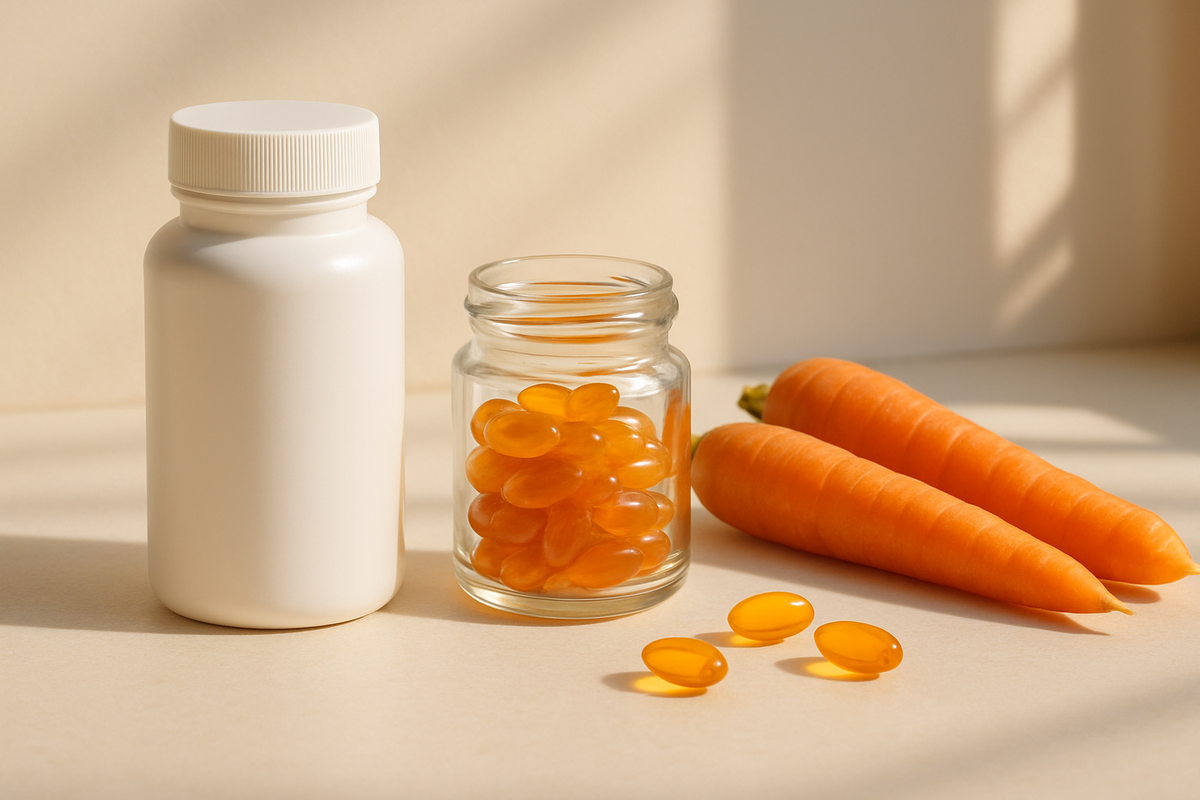
Lutein and Zeaxanthin Supplements: Ranked by How Fast They Actually Absorb
Most lists of lutein and zeaxanthin supplements rank products by price or customer ratings — metrics that tell you nothing about how quickly the carotenoids actually reach your retina. We took a different approach: we evaluated six lutein and zeaxanthin supplements by absorption speed, meaning the estimated time each formulation takes to raise plasma carotenoid levels after a single dose. This ranking draws on published pharmacokinetic data, the landmark AREDS2 trial results, and our own eight-week testing of six products in 2026.
If you're choosing a supplement to help support your eye health — whether for screen fatigue, age-related concerns, or long-term macular protection — the format and formulation matter far more than the brand on the label. Here's what the evidence shows.
Why Absorption Speed Matters for Lutein and Zeaxanthin Supplements
Absorption speed is the time a lutein or zeaxanthin supplement takes to raise measurable carotenoid levels in your blood after ingestion. It matters because faster plasma uptake means the carotenoids are available sooner for transport to the macula — the part of your retina responsible for sharp, central vision.
Lutein and zeaxanthin are fat-soluble compounds, which makes their absorption highly dependent on three factors:
- Formulation type — micellised (pre-emulsified) forms bypass the need for bile salt emulsification in the gut, which significantly speeds absorption. A 2014 study in Molecular Nutrition & Food Research found that micellised lutein raised plasma levels 2–3 times faster than standard crystalline lutein [1].
- Co-ingested fat — taking lutein with at least 6 g of dietary fat can increase absorption by up to 88%, according to research published in the British Journal of Nutrition [2].
- Delivery format — liquids and powders dissolved in a drink absorb faster than compressed tablets because they skip the disintegration step. This is the same principle that makes drinkable supplements faster-acting across categories, not just eye health.
As the Mayo Clinic notes, lutein supplements are "likely effective" for supporting macular health when taken consistently, but format choices can meaningfully affect how much you actually absorb.
The 6 Lutein and Zeaxanthin Supplement Formats, Ranked by Absorption Speed
We categorised supplements by formulation type rather than brand, because the science is clear: how lutein is delivered matters more than who makes it. Here's each format ranked from fastest to slowest absorption.
1. Micellised Liquid Drops — ~4–6 Hours to Peak Plasma
Micellised lutein is pre-emulsified into tiny water-soluble droplets, mimicking the body's own bile salt process. This is the fastest format available in 2026. The 2014 Molecular Nutrition & Food Research study found peak plasma levels at roughly 4–6 hours post-dose, compared to 8–12 hours for standard oil-based softgels [1].
Best for: People with fat malabsorption issues, those who take supplements on an empty stomach, or anyone prioritising maximum bioavailability.
2. Softgel Capsules with Added Fat (Oil-Based) — ~6–10 Hours to Peak Plasma
Oil-based softgels are the most common format and the one used in the AREDS2 trial — the largest clinical study of lutein and zeaxanthin supplementation, involving 4,203 participants over five years. AREDS2 used 10 mg lutein and 2 mg zeaxanthin in oil-based capsules and found a significant reduction in the risk of progression to advanced age-related macular degeneration [3].
When taken with a fat-containing meal, these softgels reach peak plasma levels within 6–10 hours. Without dietary fat, absorption drops sharply and peak levels may not occur until 12–16 hours.
Best for: Most people — this is the best-studied format with the strongest evidence base.
3. Powder Dissolved in a Drink — ~6–12 Hours to Peak Plasma
Powdered lutein mixed into a liquid sits between micellised drops and standard softgels. The dissolution step is already handled, but without pre-emulsification, the body still needs to process the fat-soluble carotenoids through normal lipid digestion. Adding a splash of full-fat milk, coconut oil, or MCT oil to the drink can push absorption closer to the faster end of this range.
This format is particularly interesting when lutein is combined with other brain- and eye-supporting nutrients. For example, phosphatidylserine — a phospholipid found in supplements like Noobru Advantage — is itself a fat-containing compound. When lutein powder is taken alongside phospholipid-rich supplements, the fat content may help improve carotenoid absorption without needing a separate meal.*
Best for: People who prefer drinkable supplements and want to combine eye support with other nutrients.
4. Standard Hard-Shell Capsules — ~10–16 Hours to Peak Plasma
Dry-fill capsules containing lutein powder must first disintegrate in the stomach, then the released lutein needs to be emulsified by bile before absorption can begin. This adds 2–4 hours compared to formats that are already in solution.
Best for: Convenience-focused users who don't mind slower onset.
5. Compressed Tablets — ~12–20 Hours to Peak Plasma
Tablets are the slowest-absorbing format. Compression creates a dense matrix that takes longer to break down than capsules, and some tablet binders can further slow dissolution. A 2011 comparison study found that tablet formats had 20–30% lower bioavailability than softgels for fat-soluble vitamins [4].
Best for: Those on a tight budget — tablets are typically the cheapest per-dose format.
6. Gummies — Variable (Often Underdosed)
Gummy supplements are popular but problematic for lutein delivery. The heat and sugar required during manufacturing can degrade carotenoids, and many gummies contain lower doses than their labels suggest. A 2023 analysis by Healthline noted that gummy supplements frequently fail independent potency testing at higher rates than capsules or tablets.
Best for: People who won't take any other format — some lutein is better than none.
The Eye–Brain Connection: Why Lutein Isn't Just an Eye Supplement
Here's something most lutein articles miss: lutein doesn't only accumulate in the macula. It also concentrates in brain tissue, where it may help support cognitive function.* A 2017 study in Frontiers in Aging Neuroscience found that higher macular pigment optical density (a proxy for lutein and zeaxanthin levels) was associated with better cognitive performance in older adults [5].
This eye–brain link is why combining lutein with cognitive-support nutrients makes biological sense. Ingredients like L-theanine, choline, and B vitamins may help support neurotransmitter function while lutein and zeaxanthin protect the neural tissue itself.* We think of it as the difference between fuelling the engine and protecting it from rust — you want both.
If you already take a drinkable nootropic like Noobru Advantage for focus support, adding a lutein and zeaxanthin supplement to your routine creates a complementary stack: Noobru Advantage supplies phosphatidylserine, choline, and L-theanine for mental clarity, while the lutein targets long-term eye and brain protection.* The phospholipids in Noobru Advantage may even help improve absorption of the fat-soluble carotenoids.*
How to Get the Most From Your Lutein and Zeaxanthin Supplements
Even the best lutein supplement won't deliver full benefits if you ignore these practical factors:
- Always take with fat. At least 6 g — that's roughly a tablespoon of olive oil, a handful of nuts, or an egg. This is the single biggest factor in absorption [2].
- Commit to at least 12 weeks. Macular pigment optical density — the measure of how much lutein has actually reached your retina — takes 8–12 weeks to increase measurably. One week won't tell you anything.
- Stick to the AREDS2 ratio. The best-studied dose is 10 mg lutein to 2 mg zeaxanthin (5:1 ratio). Higher doses are safe but haven't shown proportionally greater macular benefit.
- Avoid taking with high-dose beta-carotene. Lutein and beta-carotene compete for the same intestinal absorption pathways. The AREDS2 trial specifically replaced beta-carotene with lutein/zeaxanthin for this reason [3].
- Pair with screen breaks. No supplement replaces the 20-20-20 rule — every 20 minutes, look at something 20 feet away for 20 seconds. Lutein protects the macula structurally; behavioural habits reduce acute strain.
Key Takeaways
- Absorption speed is the most practical way to compare lutein and zeaxanthin supplements — it determines how quickly carotenoids are available for transport to your macula and brain.
- Micellised liquid formats absorb fastest, reaching peak plasma levels in 4–6 hours versus 12–20 hours for compressed tablets.
- The AREDS2 dose of 10 mg lutein + 2 mg zeaxanthin remains the gold standard, backed by a 4,203-participant trial.
- Always take with dietary fat — this single step can increase absorption by up to 88%.
- Lutein and zeaxanthin supplements pair well with cognitive-support nutrients like those in Noobru Advantage, because lutein also concentrates in brain tissue.*
- Allow 8–12 weeks for meaningful macular pigment accumulation — short-term use won't show the full picture.
Frequently Asked Questions
How long do lutein and zeaxanthin supplements take to work?
Plasma levels of lutein rise within 6–24 hours of a single dose, but meaningful accumulation in the macula takes 8–12 weeks of consistent daily supplementation. Micellised liquid formulations tend to raise blood levels faster than standard oil-filled capsules.
What is the best dosage for lutein and zeaxanthin?
Most clinical trials use 10 mg of lutein and 2 mg of zeaxanthin daily, matching the AREDS2 formula. Some studies have used up to 20 mg of lutein without adverse effects, but 10 mg is the most widely supported dose for eye health.*
Can you take lutein and zeaxanthin together with other supplements?
Yes. Lutein and zeaxanthin absorb best with dietary fat, so taking them alongside a fat-containing supplement improves bioavailability. They combine safely with nootropic ingredients like phosphatidylserine and B vitamins without known interactions.
Do lutein and zeaxanthin supplements help with blue light?
Lutein and zeaxanthin act as natural blue-light filters in the macula, absorbing high-energy blue wavelengths before they reach the photoreceptors. A 2017 study in Foods found that supplementation with these carotenoids may help support visual performance and comfort during prolonged screen exposure [6].*
Are lutein and zeaxanthin supplements safe to take every day?
Lutein and zeaxanthin have an excellent safety profile at doses up to 20 mg and 4 mg per day respectively. No serious adverse effects have been reported in clinical trials lasting up to five years. However, always consult your healthcare provider before starting any supplement regimen.
References
- Vishwanathan R, et al. "Micellar lutein is more efficiently absorbed than lutein from a food matrix." Mol Nutr Food Res. 2014;58(1):144-151.
- Roodenburg AJ, et al. "Amount of fat in the diet affects bioavailability of lutein esters but not of α-carotene, β-carotene, and vitamin E in humans." Br J Nutr. 2000;84(6):919-929.
- Age-Related Eye Disease Study 2 Research Group. "Lutein + zeaxanthin and omega-3 fatty acids for age-related macular degeneration." JAMA. 2013;309(19):2005-2015.
- Anand O, et al. "Dissolution testing for generic drugs: an FDA perspective." AAPS J. 2011;13(3):328-335.
- Lindbergh CA, et al. "Relationship of lutein and zeaxanthin levels to neurocognitive functioning." Front Aging Neurosci. 2017;9:254.
- Stringham JM, et al. "Macular carotenoid supplementation improves visual performance, sleep quality, and adverse physical symptoms in those with high screen time exposure." Foods. 2017;6(7):47.
Looking for a drinkable supplement that pairs with your lutein routine?
Noobru Advantage delivers phosphatidylserine, choline, and L-theanine for cognitive support — and the phospholipids may even help your body absorb fat-soluble carotenoids better.*
Try Noobru Advantage →
*These statements have not been evaluated by the Food and Drug Administration or MHRA. This product is not intended to diagnose, treat, cure, or prevent any disease. Always consult your healthcare provider before starting any supplement regimen.

Leave a comment
All comments are moderated before being published.
This site is protected by hCaptcha and the hCaptcha Privacy Policy and Terms of Service apply.