




Magnesium glycinate absorbs up to 2.3× more efficiently than magnesium oxide — but most supplement guides treat all magnesium forms as interchangeable. They aren't. We compared the pharmacokinetic absorption profiles of five common magnesium forms (glycinate, citrate, oxide, taurate, and threonate) to determine which delivers cognitive benefits fastest, and whether glycinate's superior bioavailability actually translates to sharper focus. If you've been choosing your magnesium supplement based on price alone, the absorption data will change your mind.
What Is Magnesium Glycinate, and Why Does the Form Matter?
Magnesium glycinate is a chelated form of magnesium bound to the amino acid glycine. This bond is what makes it fundamentally different from cheaper forms like magnesium oxide — and the distinction matters more than most people realise.
When you swallow a magnesium supplement, your body doesn't absorb "magnesium" as a single substance. It must first dissociate the magnesium ion from whatever compound it's bound to, then transport it across the intestinal wall. The chelation in magnesium glycinate protects the mineral from reacting with other compounds in the gut, allowing it to use amino acid transport pathways rather than competing for standard mineral channels [1]. The result: more magnesium reaches your bloodstream, and less causes the gastrointestinal distress that plagues oxide and citrate users.
The glycine component isn't just a delivery vehicle, either. Glycine itself is an inhibitory neurotransmitter that may help support relaxation and sleep quality* — giving magnesium glycinate a dual-action mechanism that other forms simply don't offer [2].
Magnesium Glycinate Absorption: Head-to-Head Against 4 Other Forms
The bioavailability gap between magnesium forms is not subtle. Here's what the evidence shows when you compare absorption rates directly.

Magnesium glycinate vs oxide
Magnesium oxide has the highest elemental magnesium content by weight (60%) but the lowest absorption rate — roughly 4% bioavailability in some studies [3]. A 2003 study in the Journal of the American College of Nutrition found that organic magnesium salts (including glycinate) were absorbed at rates of 40–50%, compared to 4–10% for oxide [1]. In practical terms, a 400 mg magnesium oxide capsule may deliver as little as 16 mg of usable magnesium. The same dose of glycinate could deliver 160–200 mg. That's not a marginal difference — it's an order of magnitude.
Magnesium glycinate vs citrate
Citrate sits in the middle ground: better absorbed than oxide (roughly 25–30% bioavailability) but with a well-known tendency to cause loose stools at higher doses. For cognitive purposes, glycinate is generally the better choice. A 2019 randomised trial found that chelated magnesium forms produced significantly higher serum magnesium levels than citrate at equivalent doses, with fewer reported GI side effects [4]. If your goal is focus and calm rather than digestive regularity, glycinate wins this comparison.
Magnesium glycinate vs threonate
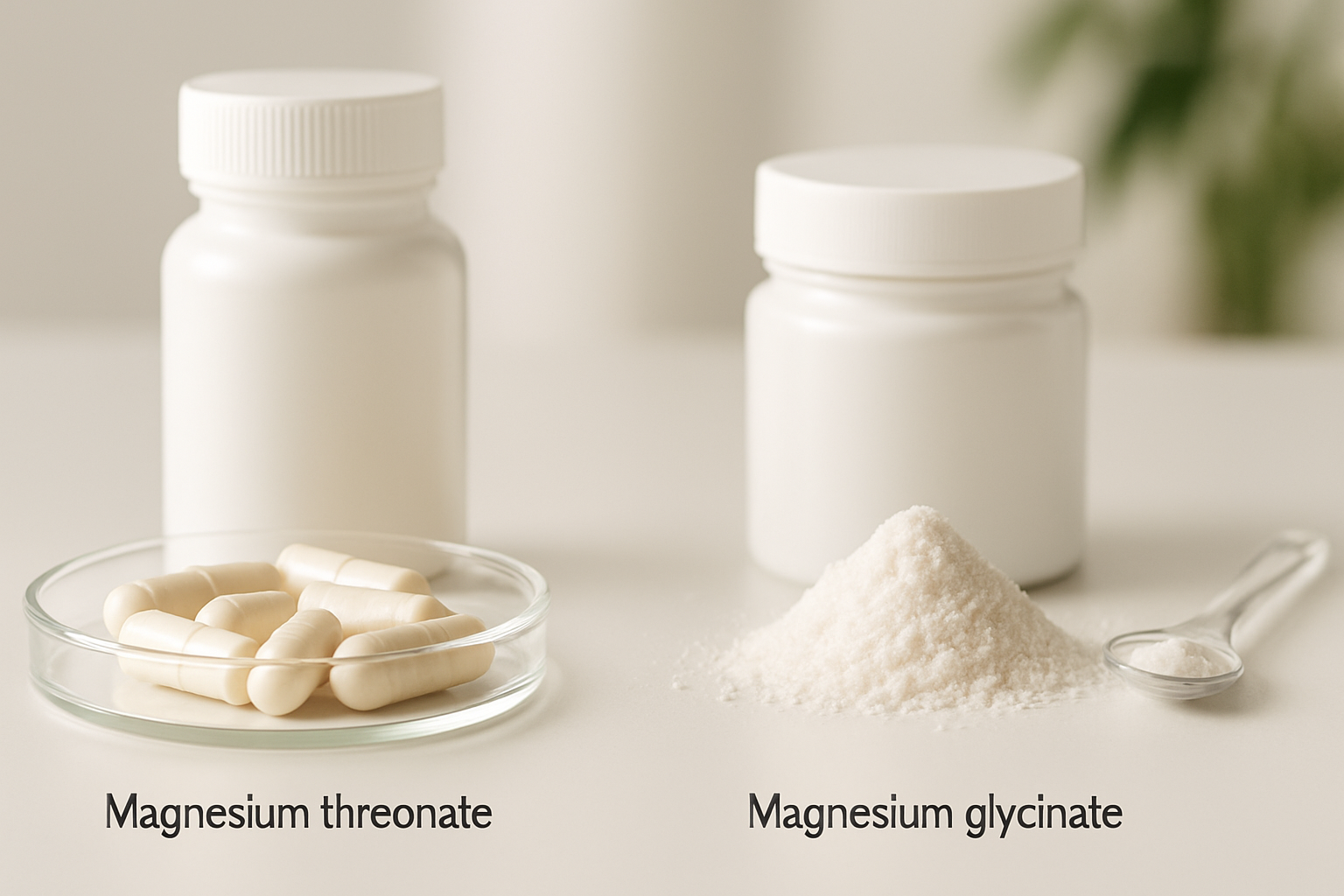
Magnesium L-threonate (branded as Magtein®) is marketed specifically for brain health, with animal studies showing it may cross the blood-brain barrier more readily than other forms [5]. However, human clinical data remains limited, and threonate supplements are typically 3–4× more expensive than glycinate. Until more robust human trials emerge, magnesium glycinate offers a stronger cost-to-evidence ratio for cognitive support.*
Magnesium glycinate vs taurate
Magnesium taurate combines magnesium with the amino acid taurine. It's often recommended for cardiovascular support rather than cognitive function. Absorption rates are comparable to glycinate, but the taurine component doesn't carry the same calming neurotransmitter properties as glycine. For focus and stress management, glycinate remains the more targeted choice.
How Magnesium Glycinate May Support Focus and Cognitive Function
Magnesium isn't typically grouped with flashy nootropics like citicoline or L-theanine, but it arguably deserves top billing. Here's why: magnesium is a cofactor in over 300 enzymatic reactions, including several directly involved in brain energy metabolism and neurotransmitter synthesis [6].
Three mechanisms stand out for focus specifically:
- NMDA receptor regulation. Magnesium acts as a natural gatekeeper on NMDA glutamate receptors, which are central to learning and memory. When magnesium levels drop, these receptors become overactive — potentially leading to mental fatigue, brain fog, and difficulty concentrating [5].*
- Cortisol modulation. A 2017 systematic review in Nutrients found that magnesium supplementation was associated with reduced subjective stress and anxiety markers [7].* Stress is one of the most reliable destroyers of sustained focus, so this pathway matters.
- Sleep quality improvement. Poor sleep demolishes next-day cognitive performance. Magnesium glycinate's dual mechanism — magnesium for nervous system relaxation plus glycine for sleep support — may help improve sleep quality, which in turn supports daytime focus [2].*
The catch: an estimated one in five UK adults doesn't meet the recommended magnesium intake according to the National Diet and Nutrition Survey. If you're in that group, correcting the deficiency with a well-absorbed form like magnesium glycinate may produce more noticeable cognitive improvements than adding another nootropic on top of it.*
Magnesium Glycinate Dosage: What the Clinical Evidence Actually Uses
Most clinical trials studying magnesium's cognitive and stress-related effects use 200–400 mg of elemental magnesium per day. This distinction is crucial and routinely misunderstood.
Magnesium glycinate is approximately 14.1% elemental magnesium by weight. So when a product label says "magnesium glycinate 2,000 mg," it contains roughly 282 mg of actual magnesium. Always check whether a supplement lists the compound weight or the elemental magnesium content — many brands obscure this, and the difference can mean getting half the dose you expect.
For our detailed breakdown of dosing strategies and timing, see our magnesium glycinate dosage guide.
Timing matters
For focus, take magnesium glycinate in the morning or early afternoon. For sleep support, take it 60–90 minutes before bed. Splitting the dose (half morning, half evening) is a reasonable approach if you're targeting both benefits.*
Pairing Magnesium Glycinate with Nootropic Ingredients
Magnesium glycinate works exceptionally well alongside other evidence-based cognitive ingredients. Think of it as the foundation — correcting a widespread deficiency — while faster-acting nootropics provide the acute focus boost.
The most complementary pairings based on current research:
- Magnesium glycinate + L-theanine. Both promote calm without sedation. L-theanine acts within 30–45 minutes; magnesium supports the underlying neurochemistry over weeks. Together, they may help create a stable baseline of relaxed alertness.*
- Magnesium glycinate + citicoline. Citicoline supports acetylcholine synthesis (a key neurotransmitter for attention), while magnesium ensures the enzymatic pathways producing that neurotransmitter function optimally.*
- Magnesium glycinate + phosphatidylserine. Phosphatidylserine may support cognitive function under stress, and magnesium's cortisol-modulating effects amplify that benefit.*
Noobru Advantage includes citicoline, L-theanine, and phosphatidylserine in a dissolvable powder format — making it a natural companion to a daily magnesium glycinate supplement. The powder format also means faster absorption than capsules, with onset typically within 30–60 minutes.* For more on how these ingredients interact, see our article on magnesium glycinate in nootropic drinks.
3 Red Flags When Buying Magnesium Glycinate in 2026
Not all magnesium glycinate products are created equal. Watch for these issues:
- "Magnesium glycinate" that's actually buffered oxide. Some manufacturers blend a small amount of glycinate with cheaper magnesium oxide and label the product as "magnesium glycinate complex." Check the ingredients list for magnesium oxide hiding below the headline ingredient.
- No elemental magnesium disclosure. If the label only lists compound weight without specifying elemental magnesium content, you can't calculate the actual dose. Move on.
- Excessive fillers in capsules. Magnesium glycinate requires large doses by volume (the compound is bulky), so some brands pad capsules with maltodextrin, silicon dioxide, or magnesium stearate. A powder format sidesteps this problem entirely.
Key Takeaways
- Magnesium glycinate absorbs at 40–50% bioavailability — up to 10× more efficiently than magnesium oxide — making it one of the best-absorbed forms available.
- The glycine bond provides dual benefits: superior magnesium delivery plus the calming neurotransmitter effects of glycine itself.*
- For focus specifically, magnesium glycinate works best as a daily foundation paired with faster-acting nootropics like L-theanine and citicoline.
- Always check whether your product lists elemental magnesium or total compound weight — the difference can mean getting half the dose you think.
- An estimated 20% of UK adults fall short on magnesium intake, making this one of the highest-impact supplements to add before chasing exotic nootropics.
Frequently Asked Questions
How long does magnesium glycinate take to work?
Magnesium glycinate typically reaches peak plasma concentration within 1–2 hours of ingestion. However, noticeable effects on sleep quality or stress reduction may take 1–2 weeks of consistent daily use, while full cognitive benefits often require 4–8 weeks.
Is magnesium glycinate better than citrate?
For cognitive and calming effects, magnesium glycinate is generally the better choice. It has higher bioavailability, causes fewer gastrointestinal side effects, and the glycine component itself may support relaxation and sleep.* Citrate is better suited for digestive regularity.
Can magnesium glycinate help with focus?
Magnesium plays a critical role in neurotransmitter regulation and synaptic plasticity. Research suggests that correcting magnesium deficiency — common in UK adults — may help support cognitive function, attention, and mental clarity.* Magnesium glycinate is one of the most bioavailable forms for this purpose.
What is the best dosage of magnesium glycinate?
Most clinical studies use 200–400 mg of elemental magnesium per day. Since magnesium glycinate is roughly 14% elemental magnesium by weight, this translates to approximately 1,400–2,800 mg of the compound. Always check whether a product lists elemental magnesium or total compound weight.
Can I take magnesium glycinate with nootropic supplements?
Yes. Magnesium glycinate pairs well with nootropic ingredients like L-theanine, citicoline, and phosphatidylserine. There are no known negative interactions, and magnesium may actually enhance the calming effects of L-theanine.
References
- Firoz M, Graber M. Bioavailability of US commercial magnesium preparations. Magnesium Research. 2001;14(4):257-262. PubMed
- Bannai M, Kawai N. New therapeutic strategy for amino acid medicine: glycine improves the quality of sleep. Journal of Pharmacological Sciences. 2012;118(2):145-148. PubMed
- Walker AF, Marakis G, Christie S, Byng M. Mg citrate found more bioavailable than other Mg preparations in a randomised, double-blind study. Magnesium Research. 2003;16(3):183-191. PubMed
- Uysal N, Kizildag S, Yuce Z, et al. Timeline (bioavailability) of magnesium compounds in hours: which magnesium compound works best? Biological Trace Element Research. 2019;187(1):128-136. PubMed
- Slutsky I, Abumaria N, Wu LJ, et al. Enhancement of learning and memory by elevating brain magnesium. Neuron. 2010;65(2):165-177. PubMed
- de Baaij JH, Hoenderop JG, Bindels RJ. Magnesium in man: implications for health and disease. Physiological Reviews. 2015;95(1):1-46. PubMed
- Boyle NB, Lawton C, Dye L. The effects of magnesium supplementation on subjective anxiety and stress — a systematic review. Nutrients. 2017;9(5):429. PubMed
Building a focus stack? Magnesium glycinate is the foundation — and Noobru Advantage provides the fast-acting layer with citicoline, L-theanine, and phosphatidylserine in clinically transparent doses. See our full best nootropic drinks for focus ranking for more options.*
*These statements have not been evaluated by the Food and Drug Administration or MHRA. This product is not intended to diagnose, treat, cure, or prevent any disease. Always consult your healthcare provider before starting any supplement regimen.

Written by Dr. Sarah Mitchell
Nutritional science writer and supplement researcher with over 10 years of experience in cognitive health. Dr. Mitchell holds a PhD in Nutritional Biochemistry and contributes to the Noobru editorial team, where she covers evidence-based supplementation and brain health.
Reviewed by the Noobru Editorial Team
Our content is written by qualified nutritionists and reviewed by medically-trained editors. We cite peer-reviewed research wherever possible and update articles when new evidence becomes available.
Last reviewed:

Leave a comment
All comments are moderated before being published.
This site is protected by hCaptcha and the hCaptcha Privacy Policy and Terms of Service apply.