




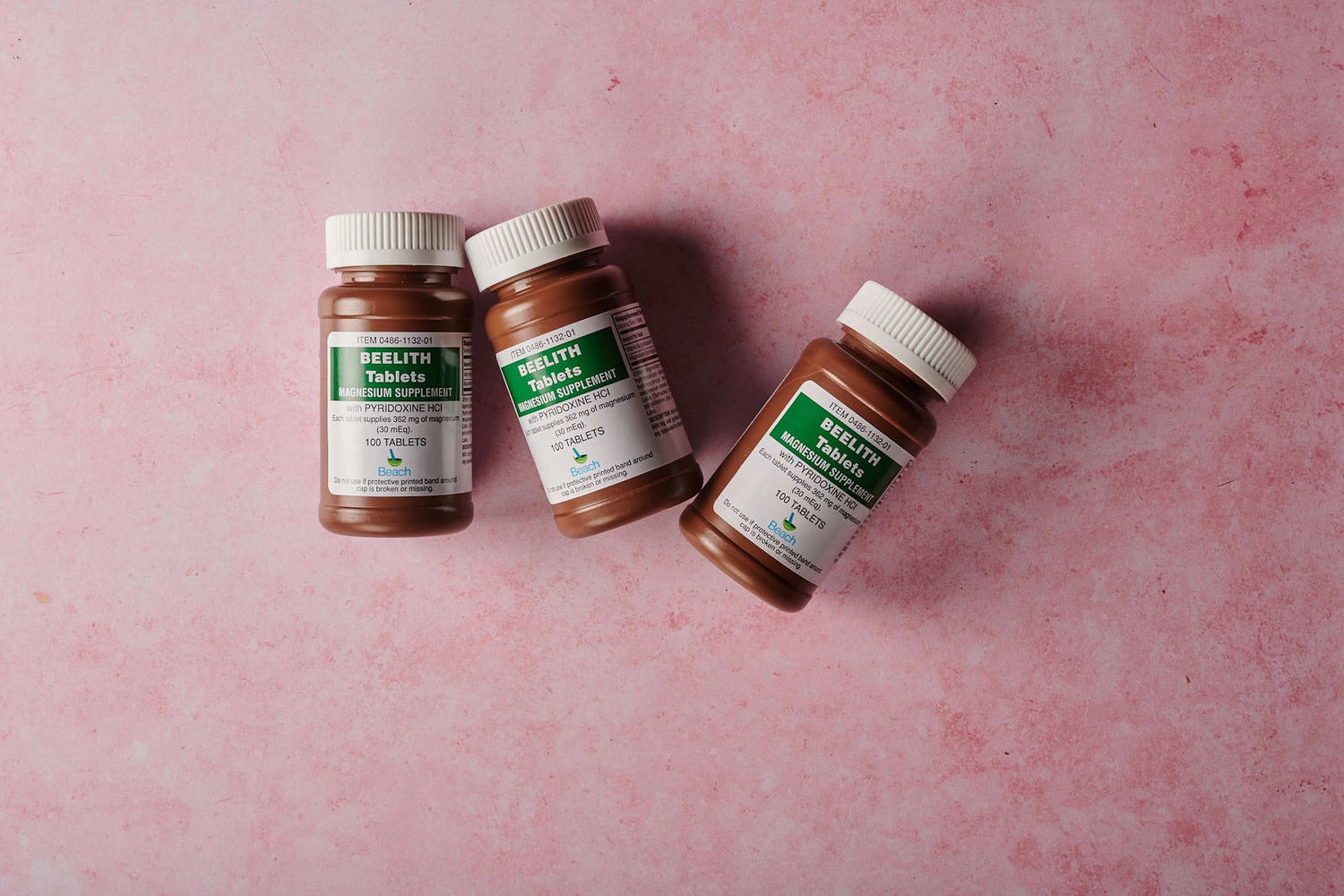
The magnesium L-threonate vs glycinate debate usually gets reduced to "one for the brain, one for sleep" — but that shorthand obscures what's genuinely interesting about these two chelated forms. They don't simply differ in what they do; they differ in where each molecule travels after absorption, and tracing those distinct pathways is the clearest way to decide which one matches your goals in 2026.
Magnesium is involved in over 300 enzymatic reactions, yet UK dietary surveys consistently suggest a significant proportion of adults fall short of the recommended intake [1]. Choosing between these forms isn't about which is "better" — it's about matching the chelation partner to the tissue you're trying to support.
What Is Magnesium L-Threonate?
Magnesium L-threonate (often sold as Magtein®) is a chelated magnesium form bound to L-threonic acid, a metabolite of vitamin C. It was developed at MIT to address a specific challenge: getting magnesium across the blood-brain barrier more efficiently than other forms.
A 2010 study in Neuron by Bhatt et al. found that magnesium L-threonate elevated brain magnesium levels in rats more effectively than magnesium citrate or chloride, with associated improvements in synaptic density and memory [2].
In human research, a 2016 trial in the Journal of Alzheimer's Disease (n=44, adults aged 50–70) reported that 12 weeks of supplementation was associated with improvements in cognitive abilities. The treatment group showed what researchers described as a shift in cognitive age markers of approximately 9 years on average [3]. This was a relatively small study, and larger trials are still needed before drawing firm conclusions.
Key characteristics of magnesium L-threonate
- Primary target tissue: Central nervous system (brain)
- Typical dose: 1,500–2,000 mg of magnesium L-threonate per day (delivering roughly 144 mg elemental magnesium)
- Bioavailability note: The L-threonic acid chelation partner is specifically selected for its ability to facilitate transport across the blood-brain barrier
- Onset: Cognitive effects typically measured at 6–12 weeks in studies
- Cost: Generally the most expensive magnesium form due to patented production
- Elemental magnesium percentage: Approximately 7–8% (low compared to other forms)
What Is Magnesium Glycinate?
Magnesium glycinate is a chelated magnesium form bound to glycine — a small amino acid that also functions as an inhibitory neurotransmitter. This form is widely regarded as one of the most bioavailable and best-tolerated magnesium supplements, with a notably low incidence of the digestive side effects common with citrate or oxide.
Glycine is far from a passive carrier. Research published in Neuropsychopharmacology (2012) demonstrated that glycine supplementation before bedtime improved subjective sleep quality in participants with mild sleep complaints [4]. When bound to magnesium, you're effectively getting two relaxation-supporting compounds in a single molecule — a pairing that makes glycinate uniquely suited to evening supplementation.
Key characteristics of magnesium glycinate
- Primary target tissue: Systemic — muscles, nervous system, bones
- Typical dose: 200–400 mg of elemental magnesium per day
- Bioavailability note: The small glycine molecule creates a stable chelate that resists binding to phytates and other absorption inhibitors in the gut
- Onset: Many users report noticeable relaxation effects within 1–7 days
- Cost: Mid-range; significantly less expensive than L-threonate
- Elemental magnesium percentage: Approximately 14%
- Digestive tolerance: Excellent — rarely causes GI distress
Head-to-Head Comparison Table
The most useful way to compare these two chelated forms is across the dimensions that actually drive supplementation decisions. Here's a direct breakdown:
| Factor | Magnesium L-Threonate | Magnesium Glycinate |
|---|---|---|
| Absorption pathway | Crosses blood-brain barrier; preferentially raises brain Mg²⁺ levels | Absorbed via intestinal epithelium; raises systemic serum Mg²⁺ levels |
| Elemental magnesium per dose | ~144 mg per 2,000 mg dose | ~200–400 mg (adjustable) |
| Primary use case | Cognitive function, memory, learning* | Sleep, relaxation, muscle recovery, general deficiency* |
| Human clinical evidence | Limited (2 published human trials as of 2026) | Broader evidence base (multiple trials for sleep, anxiety, magnesium repletion) |
| GI tolerance | Good | Excellent |
| Speed of noticeable effects | 6–12 weeks for cognitive outcomes | Days to 1–2 weeks for relaxation/sleep |
| Cost (30-day supply, UK market) | £25–£45 | £10–£25 |
| Chelation partner benefits | L-threonic acid (vitamin C metabolite; limited independent evidence) | Glycine (calming neurotransmitter; independent sleep and mood evidence) |
| Suitable for correcting deficiency? | Poor choice — too little elemental Mg per serving | Strong choice — delivers meaningful elemental Mg with high bioavailability |
One critical point often overlooked: because magnesium L-threonate delivers relatively little elemental magnesium per dose, it's generally not the best option for correcting a systemic magnesium deficiency. If blood tests show low serum magnesium, glycinate will raise your levels more efficiently.
What Users Actually Report
Aggregating user feedback from UK supplement review platforms, forums, and communities reveals consistent patterns that align closely with the clinical data.
Magnesium L-threonate users report
- Improved mental clarity and reduced brain fog after 4–8 weeks of consistent use*
- Better word recall and verbal fluency — particularly noted among users aged 45+
- Minimal sleep benefits compared to glycinate
- Frustration with high price and large capsule sizes (typically 3 capsules per serving)
- Mixed results in younger users who may not have significant brain magnesium deficits
Magnesium glycinate users report
- Noticeable improvement in sleep onset and quality within the first week*
- Reduced muscle tension and cramps, particularly after exercise
- A general sense of calm without daytime drowsiness*
- Excellent digestive tolerance — a key differentiator from cheaper magnesium forms
- Good value for money at typical UK retail prices
The pattern is clear: satisfaction runs highest when expectations match each form's strengths. Choosing L-threonate for sleep or glycinate for acute cognitive enhancement tends to produce disappointment.
Why Isolated Magnesium Only Goes So Far
Here's the perspective that changes this entire conversation: isolated magnesium — regardless of chelation form — is a single mineral addressing one piece of a far more complex system. The brain doesn't run on magnesium alone. It relies on a network of neurotransmitter precursors, adaptogens, and co-factors working in concert.
If you're interested in what nootropics are and how they work, you'll notice that the most effective approaches combine complementary compounds rather than megadosing a single ingredient. This is the principle behind Noobru's formulation strategy — and it's worth examining how that compares to taking standalone magnesium.
For cognitive function goals (where you'd consider L-threonate)
Noobru Advantage is formulated for memory clarity, brain fog reduction, and sustained focus.* Its formula includes phosphatidylserine (50 mg), which may help support neuronal membrane integrity,* L-theanine (200 mg) for calm focus,* huperzine A (200 mcg) to help support acetylcholine levels,* and ashwagandha (120 mg) for stress adaptation.* Rather than relying solely on one mineral to cross the blood-brain barrier, Advantage targets multiple cognitive pathways simultaneously.
For sleep and relaxation goals (where you'd choose glycinate)
Noobru Lucid includes magnesium glycinate in its formula — but doesn't stop there. Lucid combines it with ashwagandha (1,000 mg), L-theanine (150 mg), passion flower (200 mg), lavender (250 mg), chamomile (30 mg), and Montmorency cherry, among other calming ingredients.* This multi-pathway approach means you're not just topping up magnesium — you're supporting GABA activity, serotonin pathways, and natural melatonin production in a single drinkable sachet.*
The drinkable format matters more than many people realise. Liquid supplements bypass the need for your digestive system to break down tablet binders and coatings, potentially allowing for faster absorption. For a mineral like magnesium — where bioavailability varies significantly between chelated forms — this can make a meaningful practical difference.
Noobru Lucid sachet on a bedside table next to a glass of mixed supplement drink in a calm bedroom setting" width="800" height="500" loading="lazy" style="max-width:100%; height:auto; margin:24px 0;" />Key Takeaways: Magnesium L-Threonate vs Glycinate
- Different destinations, not different quality: L-threonate preferentially crosses the blood-brain barrier; glycinate distributes systemically with high bioavailability
- L-threonate delivers less elemental magnesium (~144 mg per full dose vs 200–400 mg for glycinate), making it a poor choice for correcting general deficiency
- Glycine is an active ingredient in its own right — an inhibitory neurotransmitter with independent evidence for supporting sleep quality*
- Onset differs dramatically: days for glycinate's relaxation effects vs 6–12 weeks for L-threonate's cognitive outcomes
- Cost gap is significant: expect to pay roughly double for L-threonate on the UK market
- Neither form alone addresses the full picture — combining magnesium with complementary compounds (as in Noobru Lucid or Noobru Advantage) may help support more comprehensive outcomes*
Our Verdict
Both magnesium L-threonate and magnesium glycinate are high-quality chelated forms — but they're engineered for fundamentally different jobs.
Choose magnesium L-threonate if: Your primary concern is age-related cognitive decline, memory, or brain-specific magnesium support.* You're willing to pay a premium and wait 6–12 weeks for results. You don't need significant systemic magnesium repletion.
Choose magnesium glycinate if: You want to help support better sleep, reduce muscle tension, or need to correct a general magnesium deficiency.* You prefer a fast-acting, well-tolerated, and cost-effective option.
Consider a multi-compound formula if: You recognise that magnesium alone — regardless of form — is rarely sufficient for complex goals like sustained cognitive performance or deep, restorative sleep. The most effective approach often involves combining the right magnesium form with complementary ingredients that address multiple biological pathways at once.
The "best" magnesium isn't a universal answer. It's the form whose absorption pathway matches your specific goals — and, more often than not, the smartest strategy is pairing it with ingredients that extend its reach.
Frequently Asked Questions
Can I take magnesium L-threonate and glycinate together?
Yes, many people stack both forms because they work through different pathways. L-threonate preferentially raises brain magnesium while glycinate supports whole-body relaxation and sleep.* Keep total elemental magnesium within the recommended daily allowance (around 300–400 mg for adults) unless advised otherwise by your healthcare provider.
Which magnesium is better for sleep — threonate or glycinate?
Magnesium glycinate is generally the stronger choice for sleep. The glycine carrier itself has calming properties that may help reduce core body temperature and promote relaxation at bedtime.* L-threonate is better suited for cognitive goals rather than direct sleep support.
How long does it take for magnesium L-threonate to work?
Most studies on magnesium L-threonate used supplementation periods of 6–12 weeks before measuring cognitive outcomes. Unlike magnesium glycinate, which many users report noticing within the first week for relaxation, threonate's brain-specific effects tend to build gradually.
Is magnesium L-threonate worth the higher price?
It depends on your goals. If you're specifically targeting cognitive function and brain magnesium levels, the patented L-threonate form offers a mechanism other forms don't replicate. For relaxation, muscle recovery, or sleep, magnesium glycinate delivers excellent results at a lower price — and is included in comprehensive formulas like Noobru Lucid alongside other calming ingredients.*
Does magnesium glycinate cross the blood-brain barrier?
All magnesium forms raise brain magnesium to some degree, but glycinate does so less efficiently than L-threonate. Glycinate primarily raises systemic serum magnesium levels, benefiting muscles, nerves, and overall relaxation rather than preferentially concentrating in brain tissue.
References
- Rosanoff A, Weaver CM, Rude RK. Suboptimal magnesium status in the United States: are the health consequences underestimated? Nutrition Reviews. 2012;70(3):153-164. PubMed
- Bhatt DK, Bhatt S, et al. Enhancement of learning and memory by elevating brain magnesium. Neuron. 2010;65(2):165-177. PubMed
- Liu G, Weinger JG, Lu ZL, et al. Efficacy and safety of MMFS-01, a synapse density enhancer, for treating cognitive impairment in older adults. Journal of Alzheimer's Disease. 2016;49(4):971-990. PubMed
- Bannai M, Kawai N. New therapeutic strategy for amino acid medicine: glycine improves the quality of sleep. Journal of Pharmacological Sciences. 2012;118(2):145-148. PubMed
Whether you're after sharper thinking or deeper sleep, Noobru's drinkable formulas combine magnesium glycinate with clinically studied nootropics and adaptogens for a multi-pathway approach you won't get from a single mineral supplement.*
Try Noobru risk-free with our 90-day money-back guarantee →*These statements have not been evaluated by the Food and Drug Administration or MHRA. This product is not intended to diagnose, treat, cure, or prevent any disease. Always consult your healthcare provider before starting any supplement regimen.



Leave a comment
All comments are moderated before being published.
This site is protected by hCaptcha and the hCaptcha Privacy Policy and Terms of Service apply.