




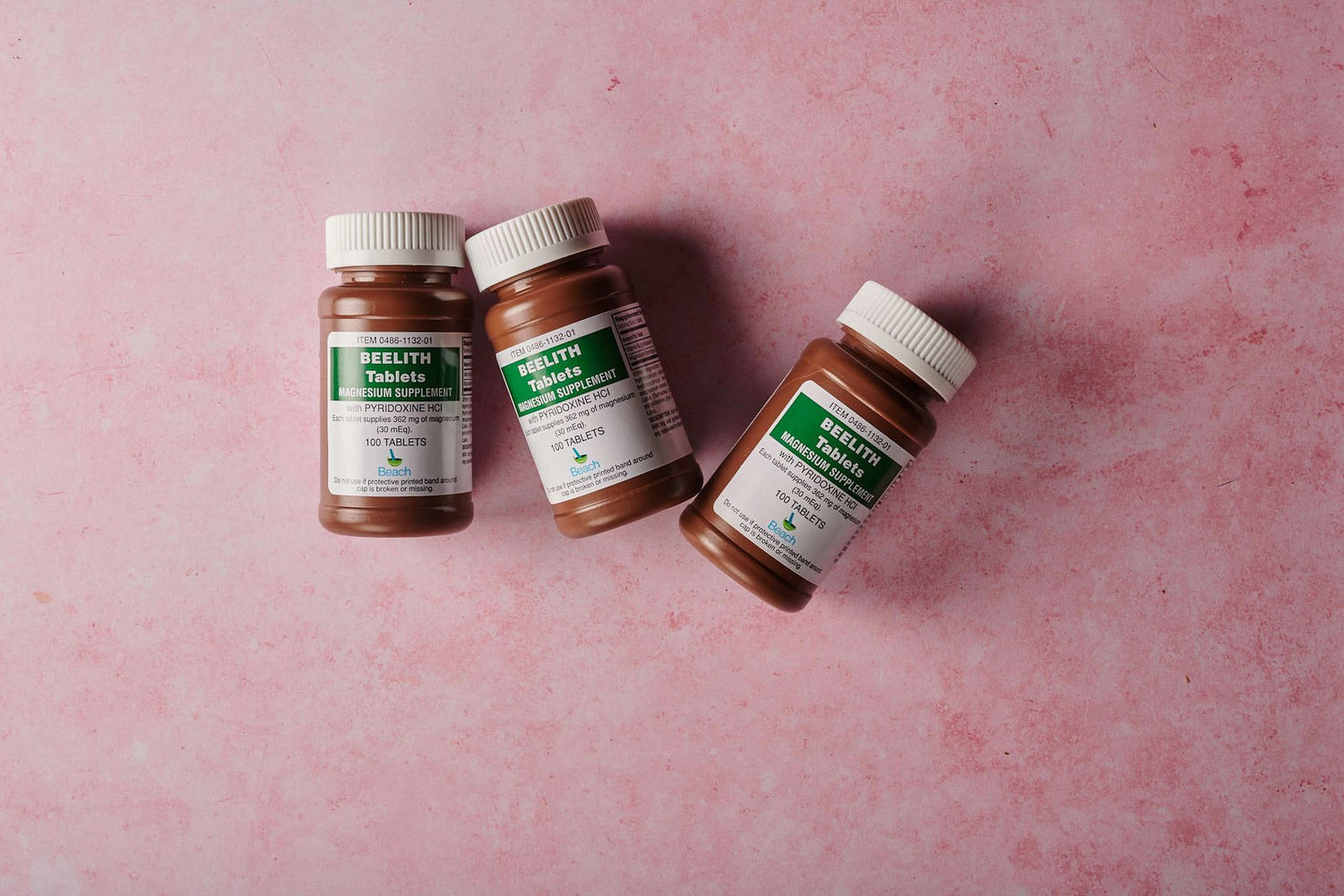
The debate around magnesium L-threonate vs glycinate usually boils down to vague claims about "bioavailability." That framing misses the real question. These two forms don't just differ in how well they're absorbed — they differ in where they end up once absorbed. L-threonate exploits the GLUT transporter system to cross the blood-brain barrier; glycinate piggybacks on amino acid carriers and primarily benefits the peripheral nervous system and muscles. The destination, not the absorption rate, is what should drive your decision.
Both are among the highest-quality magnesium supplements available in 2026, but they're designed for fundamentally different jobs. This article compares the mechanism, the clinical evidence, the correct dosage for each, and the practical scenarios where each form genuinely shines.
Key Takeaways
- L-threonate is the brain-specific form — it's the only magnesium compound shown in human trials to improve cognitive measures like working memory and executive function [1].*
- Glycinate is the relaxation and sleep form — the glycine carrier molecule independently promotes sleep by helping lower core body temperature [2].*
- Bioavailability is similar; tissue distribution is not. Both absorb well from the gut, but L-threonate preferentially raises brain magnesium whilst glycinate distributes broadly across muscles, bones, and nerves.
- Dosage differs significantly: L-threonate requires ~2,000 mg compound for ~144 mg elemental Mg; glycinate delivers ~14% elemental Mg by weight — nearly double the efficiency.
- They can be combined if you want both cognitive and sleep support, as they use different absorption pathways.*
What Is Magnesium L-Threonate?
Magnesium L-threonate (often sold under the brand name Magtein®) is a patented compound developed by researchers at MIT. It bonds elemental magnesium to L-threonic acid, a metabolite of vitamin C. What makes it unusual is its demonstrated ability to elevate magnesium concentrations specifically within the brain.
A 2010 study published in Neuron by Bhatt et al. found that magnesium L-threonate increased cerebrospinal fluid magnesium levels in rats by approximately 15%, whereas other common forms (citrate, chloride, and gluconate) failed to produce significant brain magnesium increases despite raising blood serum levels [1]. The proposed mechanism involves L-threonic acid's affinity for glucose transporters (GLUT1 and GLUT3) at the blood-brain barrier, effectively carrying magnesium into the central nervous system.
In human research, a 2016 randomised controlled trial in the Journal of Alzheimer's Disease found that 12 weeks of magnesium L-threonate supplementation (1,500–2,000 mg/day of the compound, providing roughly 144 mg elemental magnesium) was associated with improvements in executive function and working memory in adults aged 50–70 with cognitive complaints [2].* Cognitive test scores improved to a degree that the researchers described as equivalent to approximately 9 years of age-related change — a striking finding, though it requires further replication in larger populations.*
Elemental magnesium content: Roughly 7–8% by weight. You need a relatively large dose of the compound (~2,000 mg) to get a modest 144 mg of actual magnesium.

What Is Magnesium Glycinate?
Magnesium glycinate (also called magnesium bisglycinate) bonds elemental magnesium to two molecules of glycine, the smallest amino acid. This chelated structure shields the magnesium from reacting with other compounds in the gut, which significantly reduces the gastrointestinal side effects — cramping, loose stools — common with cheaper forms like magnesium oxide.
The glycine component is far from inert. Glycine is an inhibitory neurotransmitter that acts on glycine receptors throughout the central nervous system, producing calming effects.* A 2012 study in the Journal of Pharmacological Sciences found that 3 g of glycine taken before bed improved subjective sleep quality and reduced next-day sleepiness in participants with mild sleep complaints [3].* Glycine may also help lower core body temperature — a key physiological signal for sleep onset.*
Elemental magnesium content: Approximately 14% by weight — roughly double that of L-threonate. A typical 2,000 mg daily dose provides about 280 mg of elemental magnesium.
Bioavailability and Absorption: Why the Usual Comparison Misleads
Most comparison articles rank magnesium forms by bioavailability alone. That metric answers only half the question: "How much reaches your bloodstream?" The more useful question is: "How much reaches the tissue you're trying to support?"
Both L-threonate and glycinate are highly bioavailable. Your body absorbs both efficiently from the gut into the bloodstream. The divergence happens after absorption:
- L-threonate exploits glucose transporter proteins (GLUT1 and GLUT3) that are abundant at the blood-brain barrier. This gives it preferential access to brain tissue — a pathway that other magnesium forms don't meaningfully utilise [1].
- Glycinate is absorbed via peptide and amino acid transporters in the small intestine and distributes broadly across muscles, bones, and the peripheral nervous system.
This distinction matters because general serum magnesium levels don't always reflect brain magnesium status. You can have adequate blood magnesium whilst your brain remains depleted — a situation that becomes more common with age, according to research reviewed by the NIH Office of Dietary Supplements.
Dosage: How Much of Each Form Do You Actually Need?
Getting the dosage right matters more than choosing the "best" form. Here's what the clinical evidence supports:
Magnesium L-Threonate Dosage
The dosage used in both major human trials was 1,500–2,000 mg of the compound daily, split into two doses (morning and evening). This provides approximately 144 mg of elemental magnesium [2]. Because of the low elemental magnesium percentage (~7–8%), this typically means swallowing 3–4 capsules per day.
Magnesium Glycinate Dosage
Typical supplemental doses range from 200–400 mg of elemental magnesium daily (roughly 1,400–2,800 mg of the compound). For sleep support, most practitioners suggest taking the full dose 30–60 minutes before bed. The NHS advises that supplemental magnesium intake should not exceed 400 mg/day unless directed by a healthcare professional.
Head-to-Head Comparison Table
| Factor | Magnesium L-Threonate | Magnesium Glycinate |
|---|---|---|
| Primary target tissue | Brain / central nervous system | Whole body / peripheral nervous system |
| Absorption pathway | GLUT transporters at blood-brain barrier | Amino acid carriers in intestinal epithelium |
| Elemental Mg per gram of compound | ~7–8% | ~14% |
| Typical daily dosage | 1,500–2,000 mg compound (~144 mg Mg) | 1,400–2,800 mg compound (~200–400 mg Mg) |
| Bonus from carrier molecule | L-threonic acid (vitamin C metabolite) | Glycine (inhibitory neurotransmitter, sleep support)* |
| GI tolerance | Very well tolerated | Very well tolerated |
| Clinical evidence for cognition | Two human trials (2016, 2022) [2][4] | Limited direct evidence |
| Clinical evidence for sleep | Minimal direct evidence | Moderate (via glycine's independent research) [3] |
| Average UK price (30-day supply) | £25–£45 | £10–£20 |
| Best for | Memory, learning, age-related cognitive support* | Sleep, relaxation, anxiety, muscle recovery* |
The Glycine Advantage for Sleep
Magnesium glycinate offers a dual mechanism for relaxation and sleep support.* First, magnesium itself activates the parasympathetic nervous system and helps regulate GABA receptors.* Second, glycine independently promotes sleep by helping lower core body temperature and modulating serotonin pathways [3].* This one-two combination makes glycinate particularly well-suited for people whose primary concern is sleep quality or nighttime anxiety.*
"Glycine is essentially a bonus ingredient you get for free inside every glycinate molecule" — that's the simplest way to think about it. You're not just supplementing magnesium; you're co-supplementing a calming amino acid at no extra cost.
What Users Report: Patterns from Real-World Use
Aggregate sentiment from UK and US supplement forums, review platforms, and community discussions reveals consistent patterns.
Magnesium L-Threonate: User Sentiment
- Positive: Users frequently report improved mental clarity, better word recall, and an easier time with complex tasks after 4–8 weeks of consistent use.* Most describe it as a "noticeable but subtle" shift.
- Negative: The most common complaints are cost (2–3× the price of glycinate) and capsule burden (3–4 daily). Some report vivid dreams or initial headaches during week one.
- Key pattern: Users who expected sleep benefits were often disappointed — underscoring that threonate is fundamentally a cognitive support compound, not a sleep aid.
Magnesium Glycinate: User Sentiment
- Positive: Consistently praised for reducing sleep onset time and nighttime waking.* Users with anxiety frequently report calming effects within the first week.* Muscle relaxation is also commonly mentioned.*
- Negative: Some users find it insufficiently stimulating for daytime cognitive use. A small number report mild drowsiness if taken in the morning.
- Key pattern: People who switched between the two forms often confirm they genuinely serve different purposes — reinforcing the tissue-targeting framework.

When Magnesium Alone Isn't Enough: The Multi-Compound Approach
Here's a point often missing from the magnesium L-threonate vs glycinate debate: magnesium — regardless of form — is primarily a cofactor and modulator. It supports cognitive and nervous system function, but rarely delivers dramatic standalone results.* For more noticeable improvements in focus, memory, or stress resilience, it typically works best alongside other evidence-based compounds.*
For context, Noobru Advantage combines phosphatidylserine (50 mg), L-theanine (200 mg), ashwagandha (120 mg), and Huperzine A (200 mcg) — compounds that may support memory clarity, focus, and neuroprotection through distinct pathways.* For sleep-specific concerns, Noobru Lucid pairs magnesium glycinate with ashwagandha (1,000 mg), L-theanine (150 mg), passion flower, chamomile, and Montmorency cherry.*
The drinkable sachet format also addresses one of the most common complaints about standalone magnesium L-threonate: capsule fatigue. A single sachet dissolves in water for a measured dose — no juggling 3–4 large pills.
Our Verdict
The choice between magnesium L-threonate and glycinate isn't about which is "better" — it's about matching the form to the tissue you want to support.
Choose magnesium L-threonate if: Your primary goal is cognitive function — memory retention, mental clarity, or age-related cognitive support.* Its unique ability to cross the blood-brain barrier gives it a genuine advantage for brain-specific applications that other magnesium forms cannot replicate [1][2].*
Choose magnesium glycinate if: You want help with sleep quality, nighttime relaxation, anxiety reduction, or muscle recovery.* The dual benefit of magnesium plus glycine makes it the superior choice for calm and rest [3].*
Consider combining both if you want cognitive support during the day and sleep support at night.* They use different absorption pathways and don't compete for uptake.
Consider a multi-ingredient formula if you want broader cognitive or sleep support than magnesium alone can deliver.* Noobru Lucid, for example, already includes magnesium glycinate within a synergistic blend of evidence-based sleep ingredients — so you may not need to supplement it separately.*
Frequently Asked Questions
Can you take magnesium L-threonate and glycinate together?
Yes — the two forms use different absorption pathways and serve complementary purposes. Threonate targets cognitive function whilst glycinate supports relaxation and sleep.* Monitor your total elemental magnesium intake (the NHS recommends no more than 400 mg/day from supplements) and consult your healthcare provider before combining.
Which magnesium is best for sleep — L-threonate or glycinate?
Magnesium glycinate is generally the stronger choice for sleep support.* The glycine component has independent calming properties and may help lower core body temperature — a physiological trigger for sleep onset [3].* L-threonate has less direct evidence for sleep improvement.
Is magnesium L-threonate worth the higher price?
If your primary goal is cognitive support — memory, focus, or age-related mental sharpness — the higher price may be justified by L-threonate's unique ability to cross the blood-brain barrier [1].* For general relaxation, muscle recovery, or sleep, glycinate offers excellent value at roughly half the cost.
How long does it take for magnesium L-threonate to work?
Clinical trials used 12-week protocols before measuring cognitive outcomes [2]. Some users report subjective improvements in focus within 2–4 weeks, but meaningful, measurable benefits likely require consistent use over 8–12 weeks.
What is the correct dosage for magnesium L-threonate?
Most clinical studies used 1,500–2,000 mg of the compound daily (providing roughly 144 mg elemental magnesium), typically split into a morning and evening dose [2]. Always follow the manufacturer's label and consult your healthcare provider for personalised advice.
Does magnesium glycinate cause drowsiness?
Glycine has calming properties that some people notice as mild drowsiness, particularly at higher doses. Most users find this beneficial when taken in the evening but may want to avoid large doses in the morning until they know how they respond.
References
- Slutsky I, Abumaria N, Wu LJ, et al. Enhancement of learning and memory by elevating brain magnesium. Neuron. 2010;65(2):165-177. PubMed
- Liu G, Weinger JG, Lu ZL, Xue F, Sadeghpour S. Efficacy and safety of MMFS-01, a synapse density enhancer, for treating cognitive impairment in older adults: a randomized, double-blind, placebo-controlled trial. J Alzheimers Dis. 2016;49(4):971-990. PubMed
- Bannai M, Kawai N. New therapeutic strategy for amino acid medicine: glycine improves the quality of sleep. J Pharmacol Sci. 2012;118(2):145-148. PubMed
- Xiong Y, et al. Magnesium-L-threonate exhibited a neuroprotective effect against oxidative stress damage in HT22 cells and Alzheimer's disease mouse model. World J Psychiatry. 2022;12(3):410-424. PubMed
Whether you're looking for cognitive clarity or deeper, more restorative sleep, Noobru's drinkable formulas combine magnesium glycinate with clinically studied nootropics for comprehensive support — no handful of capsules required.*
Explore the full Noobru range — 90-day money-back guarantee →*These statements have not been evaluated by the Food and Drug Administration or MHRA. This product is not intended to diagnose, treat, cure, or prevent any disease. Always consult your healthcare provider before starting any supplement regimen.


Leave a comment
All comments are moderated before being published.
This site is protected by hCaptcha and the hCaptcha Privacy Policy and Terms of Service apply.