




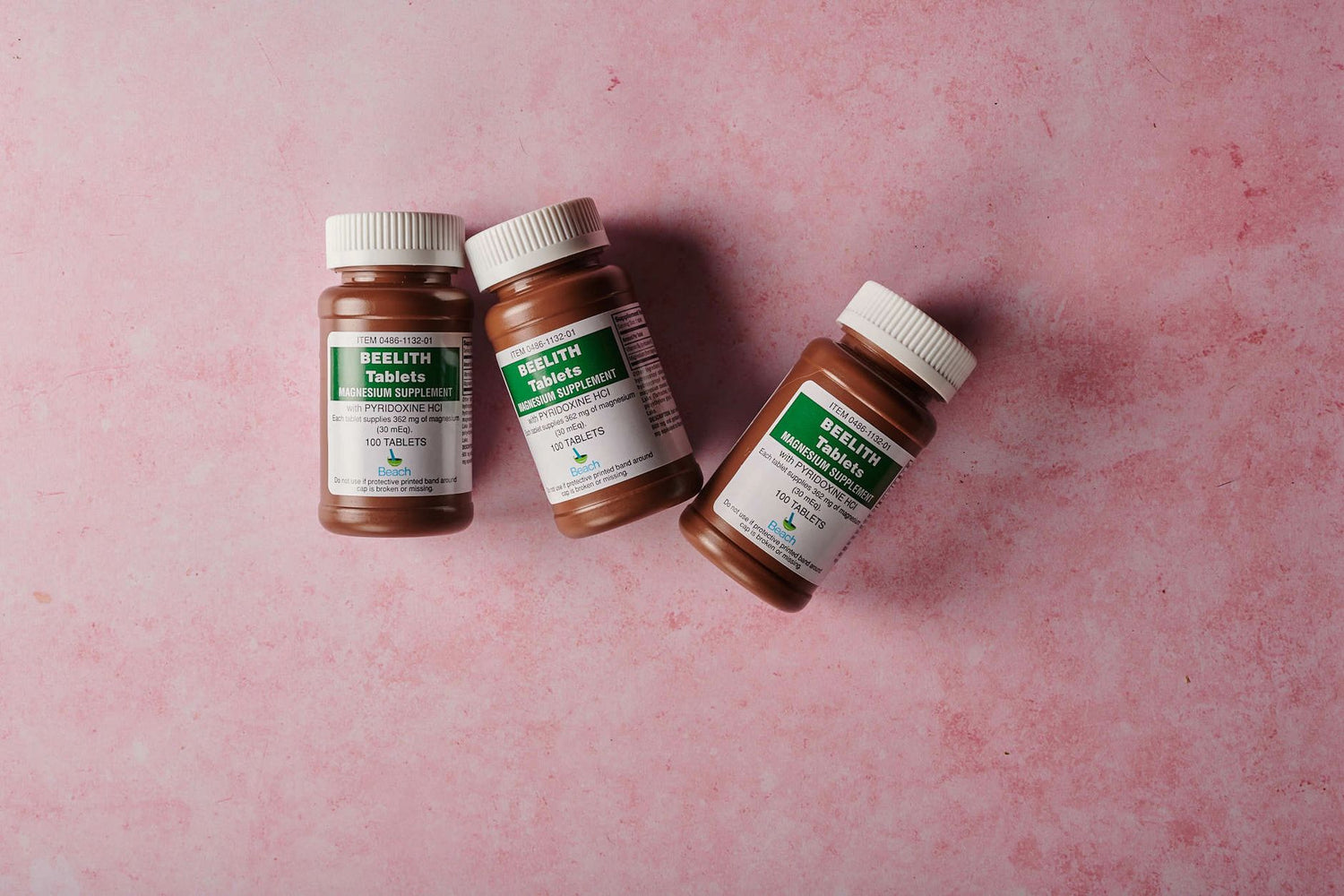
The debate around magnesium L-threonate vs glycinate usually collapses into vague claims about "bioavailability" — but bioavailability alone misses the point. The critical difference is tissue-level targeting: where each chelated form physically ends up after your gut absorbs it. Threonate is the only magnesium chelate with published evidence for crossing the blood-brain barrier and raising cerebrospinal fluid magnesium [1], while glycinate distributes systemically — supporting muscles, nerves, and sleep through an entirely separate mechanism.
Both forms are well-absorbed and well-tolerated compared to cheaper options like magnesium oxide. But "well-absorbed" does not mean "interchangeable." In this comparison, our editorial team breaks down the chelation chemistry, clinical evidence, absorption rate differences, and practical trade-offs so you can match the right form to your specific goals in 2026.
What Is Magnesium L-Threonate?
Magnesium L-threonate is a patented chelated form of magnesium (sold under the brand name Magtein®) developed at the Massachusetts Institute of Technology. It was specifically engineered to increase magnesium concentrations in the brain by bonding elemental magnesium to L-threonic acid, a metabolite of vitamin C.
The defining claim behind threonate is its ability to cross the blood-brain barrier — something most magnesium forms do poorly. A landmark 2010 study published in Neuron by Bhatt et al. found that magnesium L-threonate elevated brain magnesium levels in rodents and enhanced synaptic density, learning, and both short- and long-term memory [1].
A subsequent 2016 human trial in the Journal of Alzheimer's Disease (n=44, aged 50–70) reported that 12 weeks of supplementation was associated with improvements in executive function and working memory compared to placebo [2].
Typical dosing sits at 1,500–2,000 mg of magnesium L-threonate daily, delivering approximately 144 mg of elemental magnesium. This relatively low elemental yield is one reason threonate costs more per milligram than glycinate.
What Is Magnesium Glycinate?
Magnesium glycinate (also called magnesium bisglycinate) is elemental magnesium bonded to two molecules of the amino acid glycine. It is one of the most popular supplemental forms because it combines high bioavailability with minimal gastrointestinal side effects.
Glycinate works through two complementary mechanisms. First, the magnesium supports over 300 enzymatic reactions — including neurotransmitter regulation, muscle relaxation, and melatonin synthesis. Second, the glycine carrier molecule has independent calming properties.
Glycine acts as an inhibitory neurotransmitter in the central nervous system. A 2006 study in Sleep and Biological Rhythms showed that 3 g of glycine before bed improved subjective sleep quality and reduced next-day sleepiness [3]. A later 2012 review in Neuropsychopharmacology confirmed glycine's role in lowering core body temperature to facilitate sleep onset [4].
Standard dosing is 200–400 mg of elemental magnesium from glycinate daily. Because the chelate is approximately 14% elemental magnesium by weight, doses are larger by volume but considerably less expensive than threonate.
Why Chelation Chemistry Determines Where Magnesium Ends Up
Chelation is the reason "all magnesium is the same" is wrong. The carrier molecule bonded to elemental magnesium determines three things: how well the mineral survives stomach acid, how efficiently it crosses the intestinal wall (absorption rate), and which tissues it preferentially accumulates in.
Magnesium oxide, for context, is roughly 4% bioavailable — most of it passes straight through the gut [5]. Both threonate and glycinate use organic chelation to dramatically improve that figure, but the carrier they use sends the magnesium to different destinations.
- L-threonic acid (threonate's carrier) appears to facilitate transport across the blood-brain barrier via specific ion channels, concentrating magnesium in cerebrospinal fluid.
- Glycine (glycinate's carrier) is absorbed through amino acid transporters in the small intestine and distributes magnesium systemically — to skeletal muscle, cardiac tissue, and the peripheral nervous system.
This distinction is not marketing spin. It is measurable pharmacokinetics, and it should drive your decision.
Head-to-Head Comparison: Dosages, Evidence, and Cost
Below is a direct comparison across the metrics that matter most when choosing between these two forms.
| Factor | Magnesium L-Threonate | Magnesium Glycinate |
|---|---|---|
| Elemental Mg per typical dose | ~144 mg (from 2,000 mg threonate) | ~200–400 mg |
| Blood-brain barrier penetration | Demonstrated in animal studies; supported by one human RCT [2] | Not specifically demonstrated |
| Primary evidence base | Cognitive function, memory, synaptic plasticity | Sleep quality, muscle relaxation, anxiety, general deficiency |
| Carrier molecule benefit | L-threonic acid (vitamin C metabolite; limited independent data) | Glycine (inhibitory neurotransmitter; independent sleep evidence [3]) |
| Bioavailability | High (chelated, organic salt) | High (chelated, amino acid complex) |
| GI tolerance | Excellent | Excellent — among the best-tolerated forms |
| Approximate cost (UK, 2026) | £25–45/month | £8–20/month |
| Human RCTs | Limited (1 published RCT in older adults) | Several — more established evidence base |
| Best suited for | Cognitive support, age-related memory concerns, focus* | Sleep, relaxation, muscle recovery, general Mg deficiency* |
The evidence gap deserves honest acknowledgement. Threonate's brain-penetration story is compelling, but it rests largely on preclinical work and a single human trial with 44 participants. Glycinate's evidence base is broader — not because glycinate is inherently "better," but because it has been available and studied for longer.
What Real Users Report
Aggregated reviews from UK supplement retailers, Reddit communities (particularly r/Nootropics and r/Supplements), and Trustpilot reveal consistent patterns. Here is what stands out — filtered for recurring themes rather than cherry-picked testimonials.
Magnesium L-Threonate: User Patterns
- Positive: Improved mental clarity and "sharper" recall after 4–8 weeks of consistent use.* Many describe it as the first magnesium form where they noticed a cognitive difference.
- Negative: Price is the most common complaint — two to three times the cost of glycinate for less elemental magnesium. Some users report mild headaches in the first week. A meaningful minority see no noticeable difference and question whether the premium is justified.
Magnesium Glycinate: User Patterns
- Positive: Sleep quality improvement is the single most cited benefit, followed by reduced muscle tension and a general feeling of calm.* Widely regarded as the gentlest option for sensitive stomachs.
- Negative: Some users report daytime drowsiness when taking glycinate in the morning. Others note it helps relaxation but does nothing for cognitive sharpness.
A pattern worth noting: users who stack both forms — threonate in the morning, glycinate in the evening — report the broadest range of benefits, though this doubles the cost and complexity.
Beyond Standalone Magnesium: The Multi-Pathway Approach
Here is what most "threonate vs glycinate" comparisons miss: magnesium rarely works in isolation. Sleep quality, cognitive function, and stress resilience depend on an interplay of nutrients, adaptogens, and amino acids — not a single mineral form. A chelated magnesium supplement addresses one pathway; a well-designed stack addresses several simultaneously.
Noobru Lucid, for example, includes magnesium glycinate alongside ashwagandha (1,000 mg), L-theanine (150 mg), passionflower (200 mg), chamomile, valerian, 5-HTP, and L-tryptophan in a single drinkable sachet.
Rather than relying on one absorption pathway, the formula addresses sleep and relaxation through multiple complementary mechanisms — GABAergic calming, serotonin-to-melatonin conversion, and HPA axis regulation — all at clinical or near-clinical doses.*
For cognitive performance specifically, Noobru Advantage takes a different approach: phosphatidylserine (50 mg), huperzine A (200 mcg), L-theanine (200 mg), and ashwagandha (120 mg) work together to help support memory clarity, focus, and neuroprotection.* While Advantage doesn't contain threonate, it targets similar cognitive outcomes through acetylcholine support and synaptic membrane health.
| Feature | Standalone Threonate | Standalone Glycinate | Noobru Lucid (with glycinate) |
|---|---|---|---|
| Format | Capsules or powder | Capsules or powder | Drinkable sachet |
| Brain-specific pathway | Yes (BBB crossing) | No | Indirect (via L-theanine alpha-wave support) |
| Sleep support | Indirect | Strong (Mg + glycine) | Comprehensive (7+ calming ingredients)* |
| Stress/anxiety support | Minimal direct evidence | Moderate (glycine calming) | Strong (ashwagandha 1,000 mg + adaptogens)* |
| Absorption rate | Standard (capsule dissolution required) | Standard (capsule dissolution required) | Faster (liquid format bypasses capsule breakdown) |
| Transparency | Varies by brand | Varies by brand | Full doses listed — no proprietary blends |
Key Takeaways
- Tissue targeting matters more than generic bioavailability. Threonate reaches the brain; glycinate distributes body-wide. Choose by destination, not by absorption percentage.
- Threonate's human evidence is promising but thin — one RCT with 44 participants [2]. Glycinate's evidence base is broader and more mature.
- Glycine itself is an active ingredient, not just a carrier. It has independent calming and sleep-onset evidence [3], making glycinate a dual-action supplement.
- Cost difference is significant: threonate runs £25–45/month in the UK versus £8–20/month for glycinate — roughly 2–3× the price for less elemental magnesium.
- Neither form works as well in isolation as it does within a multi-ingredient stack targeting the same outcome through complementary pathways.
Our Verdict
There is no universal winner in the magnesium L-threonate vs glycinate debate. These forms are solving fundamentally different problems at the tissue level.
Choose magnesium L-threonate if: Your primary concern is age-related cognitive decline, memory support, or raising brain-specific magnesium levels — and you are comfortable paying a premium for emerging but not yet robust human evidence.
Choose magnesium glycinate if: Sleep, relaxation, muscle tension, or general magnesium deficiency is your main goal. Glycinate offers proven dual-action calming, excellent tolerability, and significantly better value.
Consider a comprehensive formula if: You want broader coverage. A single-ingredient magnesium supplement addresses one piece of a much larger puzzle. If sleep or cognitive function is genuinely affecting your daily life, a multi-pathway formula like Noobru Lucid (sleep and calm) or Noobru Advantage (focus and memory) may deliver more noticeable results than any standalone magnesium product.*
Frequently Asked Questions
Can you take magnesium L-threonate and glycinate together?
Yes. Because they target different tissues — threonate concentrates in the brain while glycinate distributes systemically — stacking them is common. Keep combined elemental magnesium within 300–400 mg daily unless directed otherwise by your doctor.
Which magnesium is better for sleep — threonate or glycinate?
Magnesium glycinate has stronger direct evidence for sleep support.* The glycine component acts as an inhibitory neurotransmitter with independent calming data [3], while threonate is primarily studied for cognitive outcomes.
Is magnesium L-threonate worth the higher price?
That depends on your goal. If you are specifically concerned about cognitive function or age-related memory, the patented Magtein® form has unique blood-brain barrier evidence that may justify the premium.* For sleep, muscle relaxation, or general deficiency, glycinate offers excellent results at roughly half the cost.
How long does magnesium L-threonate take to work?
The main human RCT measured outcomes at 12 weeks [2]. Some users report subjective focus improvements within two to four weeks, but meaningful brain magnesium accumulation likely requires at least six to eight weeks.
What is magnesium chelation and why does it matter?
Chelation bonds elemental magnesium to an organic carrier molecule — threonic acid or glycine, for example. This protects the mineral from degrading in stomach acid, improves absorption rate through the intestinal wall, and determines which tissues the magnesium preferentially reaches. Non-chelated forms like magnesium oxide have bioavailability as low as 4% [5].
Looking for more than standalone magnesium? Noobru Lucid combines magnesium glycinate with ashwagandha, L-theanine, and five other clinically studied calming ingredients in one drinkable sachet — no capsules, no guesswork.*
Try Noobru Risk-Free — 90-Day Money-Back Guarantee →References
- Slutsky I, Abumaria N, Wu LJ, et al. Enhancement of learning and memory by elevating brain magnesium. Neuron. 2010;65(2):165-177. PubMed
- Liu G, Weinger JG, Lu ZL, Xue F, Bhatt SA. Efficacy and safety of MMFS-01, a synapse density enhancer, for treating cognitive impairment in older adults. Journal of Alzheimer's Disease. 2016;49(4):971-990. PubMed
- Inagawa K, Hiraoka T, Kohda T, Yamadera W, Takahashi M. Subjective effects of glycine ingestion before bedtime on sleep quality. Sleep and Biological Rhythms. 2006;4(1):75-77. PubMed
- Bannai M, Kawai N. New therapeutic strategy for amino acid medicine: glycine improves the quality of sleep. Journal of Pharmacological Sciences. 2012;118(2):145-148. PubMed
- Firoz M, Graber M. Bioavailability of US commercial magnesium preparations. Magnesium Research. 2001;14(4):257-262. PubMed
*These statements have not been evaluated by the Food and Drug Administration or MHRA. This product is not intended to diagnose, treat, cure, or prevent any disease. Always consult your healthcare provider before starting any supplement regimen. Noobru is the publisher of this article and sells the products mentioned. External product links and study citations are provided for informational purposes; Noobru has no affiliate relationship with the external brands or research institutions referenced.



Leave a comment
All comments are moderated before being published.
This site is protected by hCaptcha and the hCaptcha Privacy Policy and Terms of Service apply.