




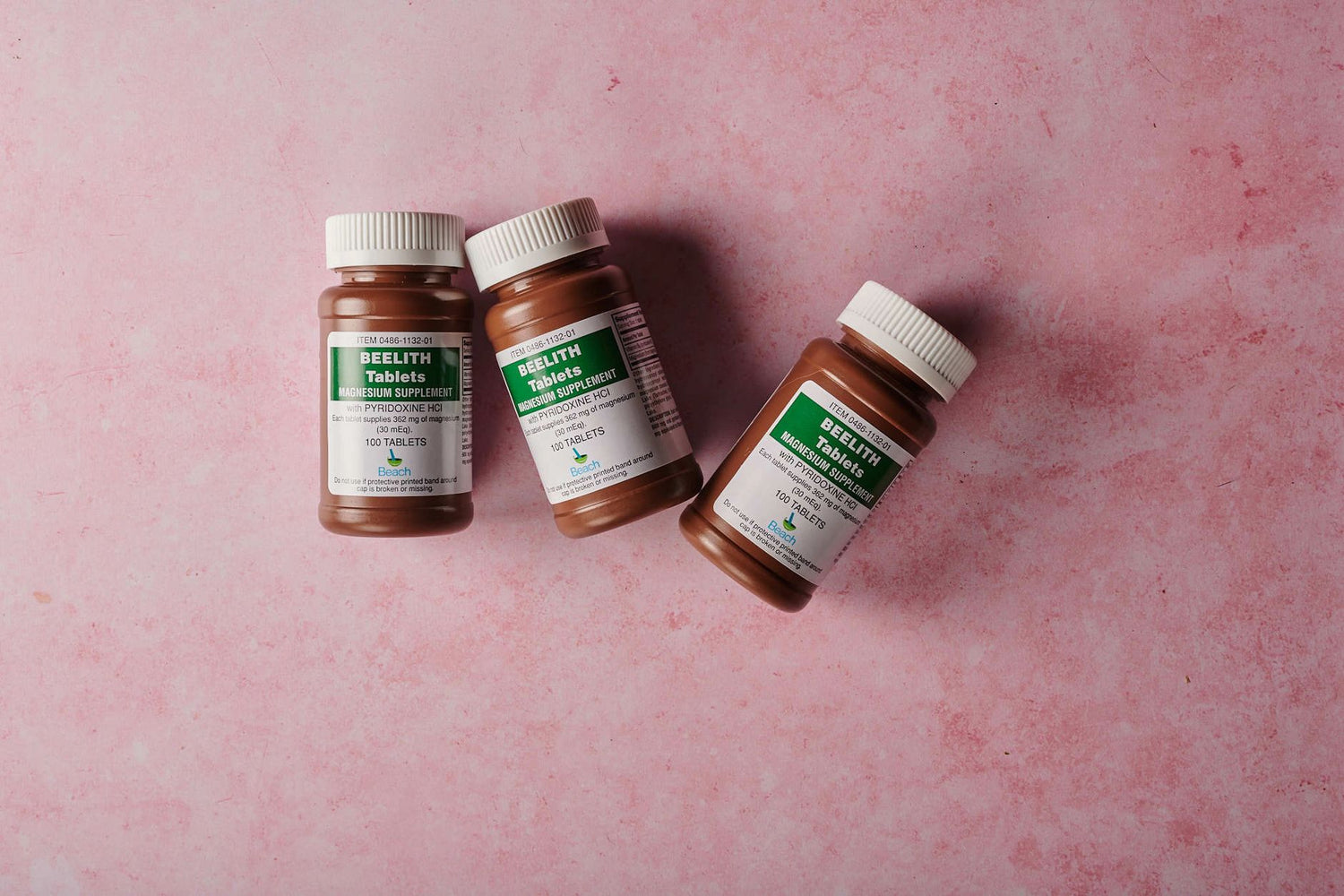
Magnesium L-Threonate vs Glycinate: Compared by What Actually Reaches Your Brain
Most magnesium L-threonate vs glycinate comparisons list the same generic pros and cons, then leave you to guess which one actually matters for your goal. This article takes a different approach: we trace each compound's journey from the gut to its target tissue — the brain for threonate, the muscles and nervous system periphery for glycinate — and use that pathway to explain why one may support cognition and the other may support sleep, rather than treating them as interchangeable.*
The distinction matters more than ever in 2026, as new research sharpens our understanding of magnesium absorption and bioavailability. Below, we break down the clinical evidence, the real-world user experience, and the scenarios where each form — or a multi-ingredient stack — makes the most sense.
What Is Magnesium L-Threonate?
Magnesium L-threonate is a chelated form of magnesium bound to L-threonic acid, a metabolite of vitamin C. It was developed at MIT specifically to increase magnesium concentrations in the central nervous system and remains the only magnesium compound with peer-reviewed evidence showing it can elevate cerebrospinal fluid magnesium levels [1].
The key mechanism is its ability to cross the blood-brain barrier — the tightly sealed membrane that prevents most supplements from reaching brain tissue. A 2010 study in Neuron by Bhatt et al. demonstrated that magnesium L-threonate raised brain magnesium levels by approximately 15% in animal models, compared to negligible increases from magnesium citrate and magnesium chloride [1].
The researchers observed enhanced synaptic density and improved short-term and long-term memory in aged subjects.
In a 2016 human trial published in the Journal of Alzheimer's Disease, 12 weeks of magnesium L-threonate supplementation (1,500–2,000 mg daily, providing roughly 144 mg of elemental magnesium) was associated with improvements in executive function and working memory in adults aged 50–70. Participants' scores on standardised cognitive tests showed improvements equivalent to approximately 9.4 years of cognitive age [2].
The typical daily dose is 1,500–2,000 mg of magnesium L-threonate, which yields relatively low elemental magnesium (around 144 mg). This makes it a targeted cognitive tool rather than a way to correct a systemic magnesium deficiency.
What Is Magnesium Glycinate?
Magnesium glycinate is elemental magnesium chelated with glycine, the smallest amino acid. This chelation gives it notably high bioavailability — meaning a greater proportion of the mineral reaches systemic circulation — and excellent gastrointestinal tolerance. It is far less likely to cause the loose stools associated with magnesium citrate or oxide.
The dual benefit comes from both components. Magnesium itself is an essential cofactor in over 300 enzymatic reactions, including neurotransmitter regulation and muscle relaxation. Glycine, meanwhile, acts as an inhibitory neurotransmitter in its own right.
Glycine binds to specific receptors in the brainstem and spinal cord, promoting calmness and lowering core body temperature — a key physiological trigger for sleep onset. A 2012 study in the Journal of Pharmacological Sciences showed that oral glycine (3 g before bedtime) improved subjective sleep quality, reduced daytime sleepiness, and enhanced next-day cognitive performance [3].
Typical doses range from 200–400 mg of elemental magnesium daily. According to the UK's National Diet and Nutrition Survey, a significant proportion of UK adults fall short of the recommended 300 mg (women) to 400 mg (men) of daily magnesium — making glycinate a practical option for both correcting shortfalls and supporting relaxation.*
Magnesium Absorption: Why the Chelation Partner Matters
Not all magnesium forms are absorbed equally, and bioavailability is the single biggest factor that separates effective supplements from expensive urine. Chelation — the chemical bonding of magnesium to an organic molecule — shields the mineral from binding to phytates and oxalates in the gut, which would otherwise prevent absorption.
Both threonate and glycinate are chelated, giving them superior magnesium absorption compared to inorganic forms like oxide (which has roughly 4% bioavailability) or carbonate. However, their chelation partners send the absorbed magnesium to different destinations:
- L-threonic acid preferentially carries magnesium across the blood-brain barrier into cerebrospinal fluid [1].
- Glycine delivers magnesium into general circulation while simultaneously activating inhibitory glycine receptors throughout the peripheral nervous system [3].
This is the single most important concept in the threonate vs glycinate debate: bioavailability alone doesn't tell you where the magnesium ends up. A supplement can be highly bioavailable and still never reach the tissue you're trying to target.
For a broader look at what magnesium does in the body and why deficiency is so common, see our full explainer.
Head-to-Head Comparison Table
The table below sets out the core differences across the metrics that matter most when choosing between these two forms.
| Criteria | Magnesium L-Threonate | Magnesium Glycinate |
|---|---|---|
| Primary mechanism | Crosses blood-brain barrier; raises CNS magnesium | High systemic bioavailability; glycine promotes GABA-like calming |
| Elemental magnesium per dose | ~144 mg (from 2,000 mg) | ~200–400 mg (varies by product) |
| Best evidence for | Cognitive function, memory, synaptic plasticity | Sleep quality, relaxation, anxiety reduction, muscle recovery |
| Clinical evidence strength | Moderate — small but promising human trials | Moderate — well-established absorption data; solid glycine sleep studies |
| GI tolerance | Excellent | Excellent |
| Cost (typical UK market, 2026) | £25–£45/month | £10–£25/month |
| Time to effect | 4–12 weeks for cognitive benefits | Days to weeks for sleep/relaxation |
| Ideal use case | Age-related cognitive concerns, focus, memory | Sleep support, nighttime anxiety, general magnesium repletion |
One nuance worth flagging: neither form is "better" in absolute terms. Recommending threonate for sleep or glycinate for cognitive enhancement would be a mismatch of mechanism to goal.
What Real Users Report
Aggregating user feedback across public review platforms, forums like Reddit's r/Supplements and r/Nootropics, and UK-based health communities reveals consistent patterns for both forms.
Magnesium L-Threonate Feedback
- Positive: Users frequently report improved mental clarity, sharper recall, and reduced brain fog after 4–8 weeks. Multiple reviewers describe it as a "subtle but noticeable" lift rather than an acute effect.
- Neutral: The low elemental magnesium content means many users still take a second form (often glycinate or citrate) for general needs.
- Negative: Price is the most common complaint — threonate typically costs two to three times more than glycinate. Some users report vivid dreams.
Magnesium Glycinate Feedback
- Positive: Users overwhelmingly praise its sleep benefits — faster sleep onset, fewer nighttime awakenings, and a general sense of evening calm. The lack of GI side effects is a consistent highlight.
- Neutral: Many note that cognitive effects are minimal compared to threonate.
- Negative: Some find it takes 2–3 weeks to notice meaningful sleep changes. A small number report mild drowsiness if taken during the day.
When a Single Mineral Isn't Enough: The Multi-Ingredient Question
Here's the part most magnesium L-threonate vs glycinate articles skip: both cognitive function and sleep quality are multi-factorial processes. Neurotransmitter balance, stress hormones, inflammation, and broader nutrient status all play roles. A single mineral — however well-absorbed — addresses one variable in a complex system.
That doesn't mean standalone magnesium is useless. It means that for some people, pairing it with complementary compounds may produce broader support.* This is the logic behind multi-ingredient formulations: rather than relying on one pathway, you engage several at once.
For sleep and relaxation, Noobru Lucid includes magnesium glycinate alongside 1,000 mg of ashwagandha, 200 mg of passionflower, 150 mg of L-theanine, and calming herbs like lavender and chamomile. The idea is to target multiple relaxation pathways simultaneously — GABA modulation, cortisol reduction, and peripheral relaxation.*
For cognitive function, Noobru Advantage pairs phosphatidylserine (50 mg), L-theanine (200 mg), ashwagandha (120 mg), and huperzine A (200 mcg). Huperzine A may help support acetylcholine levels — the neurotransmitter most directly involved in learning — whilst phosphatidylserine helps maintain neuronal membrane integrity.*
Whether you choose a standalone magnesium form or a multi-ingredient approach depends on how many variables you want to address at once. Standalone is simpler and cheaper; a stack may offer wider coverage.
Key Takeaways
- Threonate is for the brain. It's the only magnesium form with published evidence for crossing the blood-brain barrier and raising CNS magnesium levels [1]. Best suited for memory, focus, and age-related cognitive concerns.*
- Glycinate is for the body and sleep. High systemic bioavailability plus glycine's inhibitory effects make it the stronger choice for sleep quality, muscle relaxation, and correcting general magnesium deficiency.*
- Bioavailability ≠ destination. Both forms absorb well, but they deliver magnesium to different tissues. Match the form to the target.
- Neither replaces the other. Many users take both — threonate in the morning for cognition, glycinate in the evening for sleep.
- Multi-ingredient stacks may offer broader support for complex processes like sleep or cognitive function, where multiple pathways are involved.*
- Allow adequate time. Glycinate can show sleep effects within days; threonate typically requires 8–12 weeks for cognitive benefits.
Frequently Asked Questions
Can I take magnesium L-threonate and glycinate together?
Yes. Many people take both because they work through different mechanisms — threonate for cognitive support and glycinate for relaxation and sleep. Keep your total elemental magnesium within 300–400 mg daily for adults unless your healthcare provider advises otherwise.
Which magnesium is better for sleep: threonate or glycinate?
Magnesium glycinate has stronger direct evidence for sleep support. The glycine it releases binds to inhibitory receptors that promote relaxation and lower core body temperature, both of which help initiate sleep. Threonate may support sleep indirectly through cognitive calming, but glycinate is the more established choice.
Is magnesium L-threonate worth the higher price?
If your primary concern is cognitive function — memory, focus, or age-related mental sharpness — threonate's ability to cross the blood-brain barrier may justify the cost. For relaxation, muscle recovery, or sleep, glycinate offers strong value at a lower price point.
How long does magnesium L-threonate take to work?
Most clinical research uses 12-week study periods before measuring cognitive outcomes. Some users report subjective improvements in focus within 2–4 weeks, but meaningful benefits likely require consistent daily use over 8–12 weeks.
What is magnesium bioavailability and why does it matter?
Bioavailability refers to the proportion of a nutrient that enters circulation and reaches its target tissue after ingestion. Both threonate and glycinate have high bioavailability compared to oxide or carbonate, but they deliver magnesium to different systems — threonate to the central nervous system, glycinate to peripheral tissues and muscles.
References
- Slutsky I, Abumaria N, Wu LJ, et al. Enhancement of learning and memory by elevating brain magnesium. Neuron. 2010;65(2):165-177. PubMed
- Liu G, Weinger JG, Lu ZL, Xue F, Bhatt S. Efficacy and safety of MMFS-01, a synapse density enhancer, for treating cognitive impairment in older adults. Journal of Alzheimer's Disease. 2016;49(4):971-990. PubMed
- Bannai M, Kawai N. New therapeutic strategy for amino acid medicine: glycine improves the quality of sleep. Journal of Pharmacological Sciences. 2012;118(2):145-148. PubMed
- UK Government. National Diet and Nutrition Survey. GOV.UK
Looking for broader cognitive or sleep support beyond a single mineral? Noobru Advantage combines complementary nootropic compounds for focus and memory, whilst Noobru Lucid pairs magnesium glycinate with adaptogens and calming herbs for deeper rest — all in clinically dosed, drinkable sachets with full label transparency.*
Try Noobru risk-free with a 90-day money-back guarantee →*These statements have not been evaluated by the Food and Drug Administration or MHRA. This product is not intended to diagnose, treat, cure, or prevent any disease. Always consult your healthcare provider before starting any supplement regimen.


Leave a comment
All comments are moderated before being published.
This site is protected by hCaptcha and the hCaptcha Privacy Policy and Terms of Service apply.