




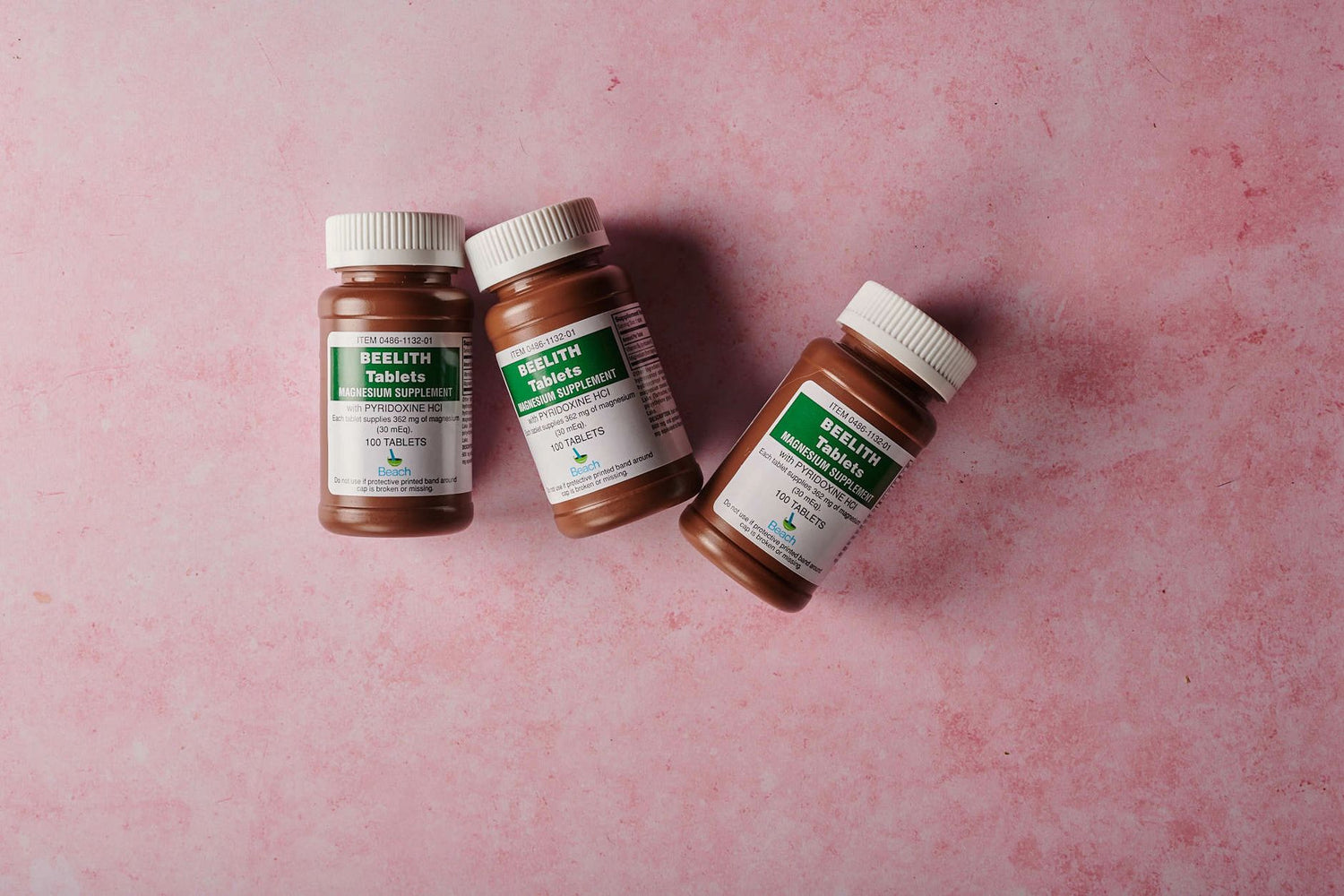
Magnesium L-Threonate vs Glycinate: A Head-to-Head Comparison Based on What the Clinical Evidence Actually Shows
Most articles comparing magnesium L-threonate vs glycinate list the same generic benefits and tell you "both are great." That is not helpful when you are standing in front of 30 options at the chemist. This article takes a different approach: we mapped each form to four specific outcomes — cognitive function, sleep latency, anxiety, and muscle recovery — then scored them against the published clinical and preclinical data available as of 2026. The result is a practical decision framework, not a vague overview.
If you are short on time, here is the one-line answer: choose magnesium L-threonate when your primary goal is brain performance, and choose magnesium glycinate when your primary goal is sleep or relaxation.* But the detail matters, so keep reading.
Key Takeaways
- For cognitive function: Magnesium L-threonate is the only form with published evidence of raising brain magnesium levels [1].*
- For sleep: Magnesium glycinate benefits from the calming properties of glycine, making it the more targeted choice [2].*
- For anxiety: Both forms may help, but glycinate has a longer track record in calming-related research.*
- For muscle recovery: Glycinate delivers more elemental magnesium per gram, which is relevant for exercise recovery.*
- Taking both: A morning–evening split (threonate AM, glycinate PM) is a common and practical strategy.
What Makes These Two Forms Different at the Molecular Level?
Every magnesium supplement pairs elemental magnesium with a carrier molecule. That carrier determines how the body absorbs and uses the magnesium. Understanding this distinction is the foundation for choosing the right form.
Magnesium L-threonate
Magnesium L-threonate (sold under the patented name Magtein®) binds magnesium to L-threonic acid, a metabolite of vitamin C. The key claim — supported by a widely cited 2010 study in the journal Neuron [1] — is that this pairing allows magnesium to cross the blood-brain barrier more efficiently than other forms. Each gram of magnesium L-threonate provides only about 7.2% elemental magnesium (~72 mg per 1,000 mg), which is notably low compared to other chelates.
Magnesium glycinate
Magnesium glycinate (also called magnesium bisglycinate) pairs magnesium with two molecules of the amino acid glycine. Glycine itself is an inhibitory neurotransmitter, meaning it has a calming effect on the nervous system independent of the magnesium it carries [2]. Each gram provides roughly 14.1% elemental magnesium (~141 mg per 1,000 mg) — nearly double what threonate delivers. This form is also known for being gentle on the digestive system, unlike magnesium oxide or citrate.
Magnesium L-Threonate vs Glycinate for Brain Health and Cognitive Function
For brain health, magnesium L-threonate is the stronger option. It is the only form with preclinical evidence of increasing cerebrospinal fluid magnesium concentrations, which is the metric that matters for cognitive outcomes.*
The foundational research comes from a 2010 Neuron study led by Slutsky et al. at MIT, which showed that magnesium L-threonate enhanced synaptic density and improved both short-term and long-term memory in aged rats [1]. A follow-up 2014 randomised controlled trial in humans (published in the Journal of Alzheimer's Disease) found that 1,500–2,000 mg of magnesium L-threonate daily was associated with significant improvements in executive function and working memory in adults aged 50–70 with cognitive concerns [3].
Magnesium glycinate, by contrast, has no published research specifically demonstrating blood-brain barrier penetration. It may support cognitive function indirectly by improving sleep quality and reducing stress — both of which influence brain performance — but it lacks the targeted mechanism that sets threonate apart.*
Our verdict on cognition: If you are supplementing specifically for memory, focus, or age-related cognitive support, magnesium L-threonate is the evidence-backed choice.* Products like Noobru Advantage, which are formulated with cognitive performance in mind, are designed around this type of targeted ingredient logic.
Magnesium Threonate vs Glycinate for Sleep
For sleep, magnesium glycinate is the better-supported choice. This advantage comes largely from glycine, its carrier amino acid, which has its own body of sleep research.*
A 2012 study published in the Journal of Pharmacological Sciences demonstrated that 3 g of glycine taken before bed reduced core body temperature and improved subjective sleep quality in participants with self-reported sleep difficulties [2]. Lowering core body temperature is a key physiological trigger for sleep onset, and glycine appears to do this by increasing blood flow to the extremities.
Magnesium itself also plays a role in sleep regulation. It helps activate the parasympathetic nervous system, regulates melatonin production, and binds to GABA receptors [4]. So magnesium glycinate effectively delivers a double mechanism: magnesium for nervous system regulation plus glycine for thermoregulation and calming.*
Magnesium L-threonate may also support sleep — some users report improved sleep quality, and one animal study noted effects on sleep architecture [5] — but the evidence is thinner, and the lower elemental magnesium content means you need larger servings to match the total magnesium of a glycinate dose.
Our verdict on sleep: Glycinate is the practical winner here. The dual mechanism, higher elemental magnesium, and superior tolerability at bedtime doses make it the default recommendation for sleep-focused supplementation.*
Which Form Is Better for Anxiety and Stress?
Both forms may help reduce feelings of anxiety, but through different pathways.* The right choice depends on whether your anxiety is more "cognitive" (racing thoughts, worry loops) or more "somatic" (muscle tension, restlessness).
- Magnesium L-threonate may help with cognitive anxiety by raising brain magnesium levels, which are involved in regulating the HPA (hypothalamic-pituitary-adrenal) stress axis.* A 2022 preclinical study showed reduced fear-based memory consolidation in animals given magnesium L-threonate [6].
- Magnesium glycinate may help with somatic anxiety through glycine's inhibitory neurotransmitter activity and magnesium's role in muscle relaxation.* It is often the first form recommended by integrative practitioners for generalised stress and tension.
A 2017 systematic review in Nutrients concluded that magnesium supplementation in general was associated with reduced subjective anxiety, though it noted that study quality was mixed and few trials compared forms head-to-head [7].
Our framework: For anxiety that lives "in your head" — racing thoughts, trouble concentrating under stress — try threonate. For anxiety that lives "in your body" — tight shoulders, jaw clenching, restless legs — try glycinate.* This is a simplification, but it is a useful starting point.
Dosage, Absorption, and Side Effects Compared
Getting the dose right matters more than most people realise. Because these two forms deliver different amounts of elemental magnesium per gram, matching doses incorrectly is one of the most common mistakes.
Dosage comparison table
| Factor | Magnesium L-Threonate | Magnesium Glycinate |
|---|---|---|
| Typical daily dose | 1,500–2,000 mg | 200–400 mg (elemental Mg) |
| Elemental Mg per 1,000 mg | ~72 mg (7.2%) | ~141 mg (14.1%) |
| Best time to take | Morning and evening (split dose) | Evening / before bed |
| GI tolerance | Very good | Very good |
| Common side effects | Headache, drowsiness | Mild GI upset (rare) |
| Cost (typical UK price) | £25–£45/month | £10–£20/month |
One important note on bioavailability: "bioavailable" does not mean "better." Magnesium oxide has low bioavailability but delivers the highest elemental magnesium per gram. Both threonate and glycinate are well absorbed, but they are absorbed for different purposes. Threonate's value is not in total magnesium delivery — it is in where that magnesium ends up (the brain).
Can You Take Magnesium L-Threonate and Glycinate Together?
Yes, and in many cases, stacking both forms is the most practical approach. Because each form has a distinct strength, combining them allows you to target cognitive function and sleep simultaneously without relying on a single high dose of either.
A common protocol is:
- Morning: 1,000 mg magnesium L-threonate (~72 mg elemental Mg) for daytime cognitive support*
- Evening: 200–300 mg elemental Mg from magnesium glycinate for sleep and relaxation*
This gives a combined daily elemental magnesium intake of roughly 270–370 mg, which is within the NIH's recommended dietary allowance of 310–420 mg for adults (depending on age and sex). Always count magnesium from food sources as well — leafy greens, nuts, seeds, and dark chocolate all contribute.
Which Should You Choose? A Decision Framework
Rather than declaring a single winner, here is how to match the form to your goal:
| Your primary goal | Recommended form | Why |
|---|---|---|
| Memory and focus | L-Threonate | Only form shown to raise brain Mg levels [1]* |
| Sleep quality | Glycinate | Glycine's dual calming + thermoregulation effect [2]* |
| Cognitive anxiety | L-Threonate | May help modulate stress response in the brain [6]* |
| Physical tension / somatic anxiety | Glycinate | Muscle relaxation + inhibitory neurotransmitter support* |
| Exercise recovery | Glycinate | Higher elemental Mg per dose, gentle on the gut* |
| Brain + sleep (both) | Both (AM/PM split) | Covers cognitive and relaxation pathways* |
If you are looking for a supplement that already combines evidence-based cognitive ingredients — rather than piecing together individual forms yourself — Noobru Advantage is formulated to support focus and mental clarity using a targeted nootropic blend.* It is worth considering alongside, or as part of, your magnesium strategy.
Frequently Asked Questions
Is magnesium L-threonate better than glycinate for brain health?
Magnesium L-threonate is the stronger choice for cognitive function. It is the only form shown in animal and early human studies to cross the blood-brain barrier and raise magnesium concentrations in cerebrospinal fluid, which may support memory and learning [1].*
Which magnesium is better for sleep — threonate or glycinate?
Magnesium glycinate is generally preferred for sleep. Glycine, the amino acid it is bound to, has independent calming effects on the central nervous system, and glycinate tends to be better tolerated at the higher doses often used before bedtime [2].*
Can you take magnesium L-threonate and glycinate together?
Yes, many people take both forms together — threonate in the morning for cognitive support and glycinate in the evening for sleep. Because each form provides elemental magnesium, you should count both towards your total daily intake and stay within recommended limits.
What are the side effects of magnesium L-threonate?
The most commonly reported side effects are headache, drowsiness, and mild gastrointestinal discomfort. L-threonate is generally well tolerated, though it provides less elemental magnesium per capsule than glycinate, so larger serving sizes are sometimes needed.
How much magnesium L-threonate should I take daily?
Most clinical research has used 1,500–2,000 mg of magnesium L-threonate per day, which delivers roughly 144 mg of elemental magnesium. Dosing is typically split into a morning and evening serving.
The Bottom Line
The magnesium L-threonate vs glycinate debate does not have a single right answer — it has a right answer for you, based on what you are trying to achieve. Threonate is the specialist: purpose-built for brain magnesium delivery, backed by targeted (if still emerging) research.* Glycinate is the generalist: better for sleep, relaxation, and overall magnesium repletion, with the added benefit of glycine's calming properties.*
For most people, a morning–evening combination of both forms covers the broadest range of benefits. And if you are specifically focused on cognitive performance, pairing either form with a well-formulated nootropic blend like Noobru Advantage may help you get further than magnesium alone.*
Ready to support your focus and mental clarity? Explore the full range of Noobru supplements and find the right fit for your goals.
References
- Slutsky I, Abumaria N, Wu LJ, et al. Enhancement of learning and memory by elevating brain magnesium. Neuron. 2010;65(2):165-177. PubMed
- Bannai M, Kawai N. New therapeutic strategy for amino acid medicine: glycine improves the quality of sleep. J Pharmacol Sci. 2012;118(2):145-148. PubMed
- Liu G, Weinger JG, Lu ZL, Xue F, Sadeghpour S. Efficacy and safety of MMFS-01, a synapse density enhancer, for treating cognitive impairment in older adults. J Alzheimers Dis. 2016;49(4):971-990. PubMed
- Held K, Antonijevic IA, Künzel H, et al. Oral Mg2+ supplementation reverses age-related neuroendocrine and sleep EEG changes in humans. Pharmacopsychiatry. 2002;35(4):135-143. PubMed
- Mickley GA, Hoxha N, Luchsinger JL, et al. Chronic dietary magnesium-L-threonate speeds extinction and reduces spontaneous recovery of a conditioned taste aversion. Pharmacol Biochem Behav. 2013;106:16-26. PubMed
- Abumaria N, Yin B, Zhang L, et al. Effects of elevation of brain magnesium on fear conditioning, fear extinction, and synaptic plasticity in the infralimbic prefrontal cortex. J Neurosci. 2011;31(42):14871-14881. PubMed
- Boyle NB, Lawton C, Dye L. The effects of magnesium supplementation on subjective anxiety and stress — a systematic review. Nutrients. 2017;9(5):429. PubMed
*These statements have not been evaluated by the Food and Drug Administration or MHRA. This product is not intended to diagnose, treat, cure, or prevent any disease. Always consult your healthcare provider before starting any supplement regimen.



Leave a comment
All comments are moderated before being published.
This site is protected by hCaptcha and the hCaptcha Privacy Policy and Terms of Service apply.