




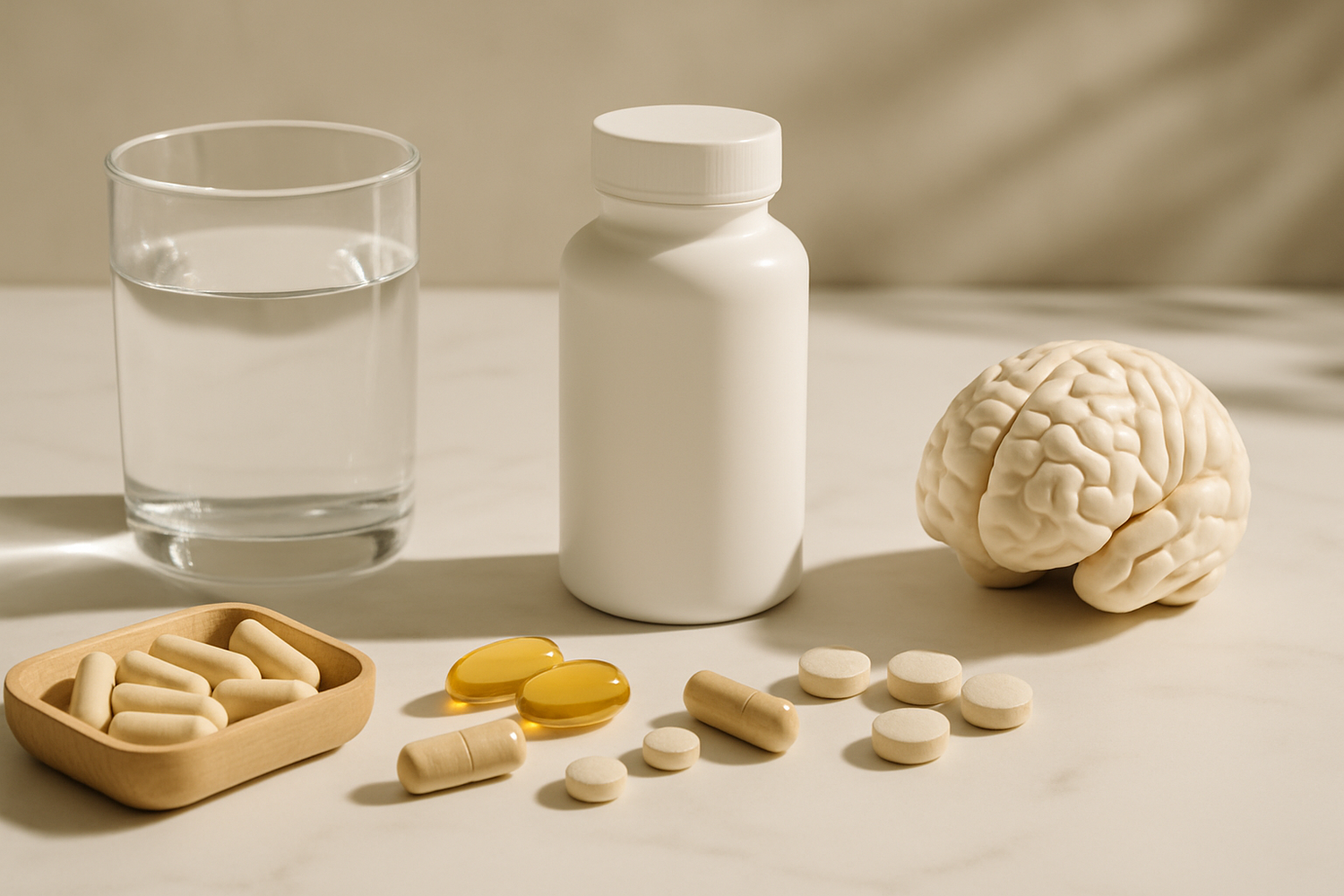
Brain Supplements for Focus and Memory: What Actually Works in 2026
Brain supplements are one of the fastest-growing categories in the UK wellness market — yet most people struggle to separate evidence-backed ingredients from marketing noise. This guide cuts through the confusion. Whether you're a professional battling afternoon brain fog, a student preparing for exams, or simply someone who wants sharper mental clarity, you'll learn exactly which brain supplements for focus and memory have genuine scientific support, what dosages matter, and how to build a stack that fits your life.
What Are Brain Supplements (Nootropics)?
Brain supplements — also called nootropics or cognitive function supplements — are compounds that may help support mental performance, including focus, memory, and processing speed.* The term "nootropic" was coined in 1972 by Romanian psychologist Corneliu Giurgea, who defined it as any substance that enhances learning while being virtually non-toxic [1].
Modern nootropic supplements typically combine nutrients, herbal extracts, and amino acids. They work through several mechanisms:
- Neurotransmitter support: Supplying precursors or cofactors for acetylcholine, dopamine, and serotonin production*
- Cerebral blood flow: Helping deliver oxygen and glucose to brain tissue*
- Neuroprotection: Providing antioxidants that may help protect neurons from oxidative stress*
- Neuroplasticity: Supporting the brain's ability to form and strengthen connections*
5 Evidence-Backed Ingredients for Focus and Memory
Not every ingredient on a supplement label has solid research behind it. These five have multiple peer-reviewed studies supporting their cognitive benefits.*
1. Bacopa Monnieri
Bacopa monnieri is one of the most clinically studied herbal nootropics. A 2014 meta-analysis published in the Journal of Ethnopharmacology reviewed nine randomised controlled trials and concluded that bacopa may help improve attention, cognitive processing, and working memory [2].*
Effective dosage: 300–450 mg daily of extract standardised to 50% bacosides. Most trials showed meaningful results after 8–12 weeks of consistent use.
2. Phosphatidylserine
Phosphatidylserine is a phospholipid that makes up about 15% of the brain's total phospholipid pool. Research published in Nutritional Neuroscience found that supplementation with 100 mg three times daily may help support memory recall and cognitive function in older adults [3].*
Effective dosage: 100–300 mg daily. Soy-derived and sunflower-derived forms are both well-absorbed.
3. L-Theanine
L-theanine, an amino acid found naturally in green tea, may help promote calm, focused attention without drowsiness.* A 2008 study in Nutritional Neuroscience showed that 50 mg of L-theanine increased alpha brain wave activity — the frequency associated with relaxed concentration — within 40 minutes of ingestion [4].
Effective dosage: 100–200 mg daily. Pairs particularly well with caffeine for sustained attention without jitters.*
4. B Vitamins (Especially B6, B9, and B12)
B vitamins are essential cofactors in neurotransmitter synthesis. Vitamin B12 deficiency, which affects an estimated 6% of UK adults under 60 and up to 20% of those over 60, is linked to cognitive decline and brain fog [5].
Key point: B vitamins may help support mental clarity most noticeably in people whose levels are suboptimal.* If you follow a plant-based diet or are over 50, B12 supplementation is especially worth considering.
5. Lion's Mane Mushroom
Lion's mane (Hericium erinaceus) contains compounds called hericenones and erinacines that may help stimulate nerve growth factor (NGF) production.* A 2009 placebo-controlled trial in Phytotherapy Research found that 250 mg taken three times daily for 16 weeks improved cognitive function scores in older adults with mild cognitive impairment [6].
Effective dosage: 500–3,000 mg daily of fruiting body extract.
How to Choose a Quality Brain Supplement
The difference between an effective nootropic and a waste of money often comes down to formulation quality. Here's what to look for in 2026:
- Clinically studied dosages: Many products include the right ingredients at doses too low to match what trials used. Check the label against the dosages listed above.
- Transparency: Avoid proprietary blends that hide individual ingredient amounts. Look for full-disclosure labels.
- Bioavailability: Drinkable formats are absorbed faster than tablets because they bypass the dissolution step in the stomach.
- Third-party testing: Reputable brands test for heavy metals, microbial contamination, and ingredient potency.
- Synergistic stacking: The best formulas combine ingredients that work together — such as L-theanine with B vitamins and bacopa monnieri.
Noobru Advantage was designed with these principles in mind. It's a drinkable nootropic formula that combines phosphatidylserine, L-theanine, B vitamins, and other brain-supporting nutrients at research-informed dosages — delivered in a format optimised for fast absorption.*
Lifestyle Habits That Amplify Brain Supplement Benefits
No supplement works in isolation. These four habits create the foundation that allows nootropics to work most effectively:
- Sleep 7–9 hours nightly. The brain clears metabolic waste through the glymphatic system during deep sleep. Supplementation cannot compensate for chronic sleep deprivation.
- Move for 30 minutes daily. Aerobic exercise increases brain-derived neurotrophic factor (BDNF), which supports the same neuroplasticity pathways that nootropics target.
- Eat omega-3-rich foods. Fatty fish, walnuts, and flaxseeds provide DHA, a structural component of brain cell membranes that complements phosphatidylserine supplementation.
- Manage stress actively. Chronic cortisol exposure shrinks the hippocampus — the brain's memory centre. Even 10 minutes of daily mindfulness or breathing exercises can help.
What to Expect: Realistic Timelines
Brain supplements are not instant. Here's a realistic timeline based on clinical trial data:
- Days 1–7: L-theanine and B vitamins may produce subtle improvements in calm focus and energy.*
- Weeks 2–4: Phosphatidylserine users in studies began noticing improvements in recall and mental stamina.*
- Weeks 8–12: Bacopa monnieri and lion's mane typically require this longer window to show measurable cognitive benefits in trials.*
Consistency is the single biggest factor. Taking a brain supplement sporadically will not produce the results seen in clinical studies. Daily use, at the right dose, over sufficient time is essential.
Key Takeaways
- Brain supplements with the strongest evidence include bacopa monnieri, phosphatidylserine, L-theanine, B vitamins, and lion's mane mushroom.
- Dosage matters — check labels against clinically studied amounts.
- Drinkable formats may offer faster absorption than tablets.
- Allow 8–12 weeks for herbal nootropics to reach full effect.*
- Supplements work best alongside quality sleep, regular exercise, and a nutrient-rich diet.
- Noobru Advantage combines several of these evidence-backed ingredients in a convenient daily drink.*
Frequently Asked Questions
Do brain supplements actually work for focus?
Some brain supplement ingredients have clinical evidence supporting their role in cognitive function. Bacopa monnieri, phosphatidylserine, and B vitamins have peer-reviewed studies showing they may help support focus, memory, and mental clarity.* However, results vary by individual, and no supplement replaces sleep, exercise, and a balanced diet.
What is the best natural supplement for memory?
Bacopa monnieri is one of the most studied natural supplements for memory support. A 2014 meta-analysis in the Journal of Ethnopharmacology found it may help improve attention and cognitive processing.* Other well-researched options include phosphatidylserine, lion's mane mushroom, and omega-3 fatty acids.
How long do brain supplements take to work?
Most brain supplements require consistent use over several weeks before noticeable effects. Water-soluble nutrients like B vitamins may show effects within days, while herbal nootropics such as bacopa monnieri typically require 8 to 12 weeks of daily use based on clinical trial timelines.
Are nootropic supplements safe?
Most well-researched nootropic ingredients like B vitamins, phosphatidylserine, and bacopa monnieri have strong safety profiles when taken at recommended dosages. However, you should always consult your healthcare provider before starting any supplement, especially if you take medications or have existing health conditions.
Can I take brain supplements with coffee?
Yes, most nootropic supplements can be taken alongside moderate caffeine intake. Some formulations, like Noobru Advantage, are designed to complement caffeine by including L-theanine, which may help smooth out the jittery effects of coffee while supporting calm focus.*
Ready to Support Your Focus and Memory?
If you're looking for an evidence-informed, drinkable nootropic that combines several of the ingredients covered in this guide, try Noobru Advantage today. It's designed for daily use, mixes in seconds, and delivers brain-supporting nutrients in a format your body can absorb quickly.*
References
- Giurgea, C. (1972). "The nootropic concept." Drug Development Research.
- Kongkeaw, C. et al. (2014). "Meta-analysis of randomized controlled trials on cognitive effects of Bacopa monnieri extract." Journal of Ethnopharmacology, 151(1), 528–535.
- Glade, M.J. & Smith, K. (2015). "Phosphatidylserine and the human brain." Nutrition, 31(6), 781–786.
- Nobre, A.C. et al. (2008). "L-theanine, a natural constituent in tea, and its effect on mental state." Asia Pacific Journal of Clinical Nutrition, 17(S1), 167–168.
- Hunt, A. et al. (2014). "Vitamin B12 deficiency." BMJ, 349, g5226.
- Mori, K. et al. (2009). "Improving effects of the mushroom Yamabushitake on mild cognitive impairment." Phytotherapy Research, 23(3), 367–372.
*These statements have not been evaluated by the Food and Drug Administration or MHRA. This product is not intended to diagnose, treat, cure, or prevent any disease. Always consult your healthcare provider before starting any supplement regimen.



Leave a comment
All comments are moderated before being published.
This site is protected by hCaptcha and the hCaptcha Privacy Policy and Terms of Service apply.