




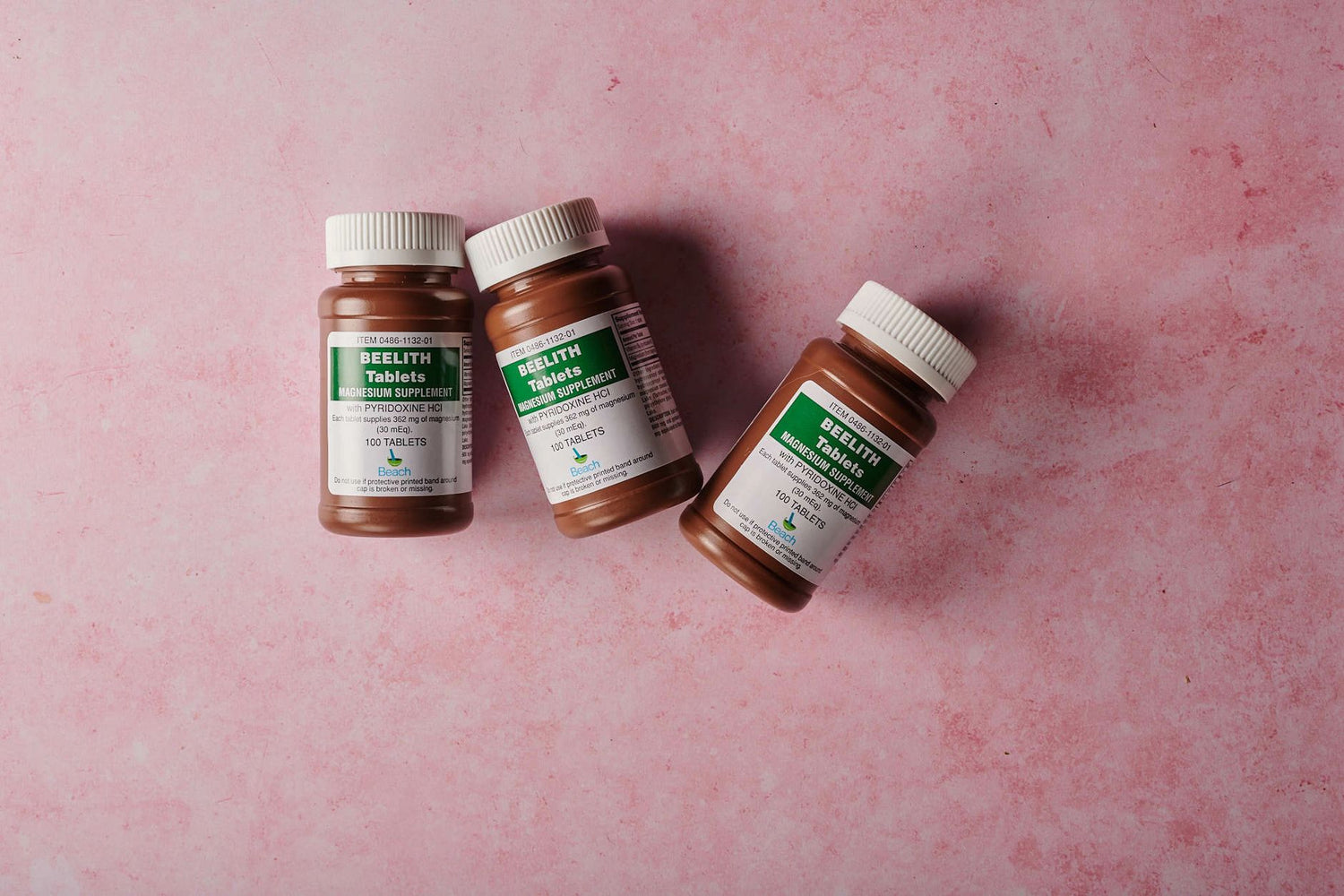
Most comparisons of magnesium L-threonate vs glycinate rank them by "bioavailability" — but that metric hides the distinction that actually matters. Both forms absorb well into the bloodstream. The meaningful difference is where the magnesium goes next: threonate is the only form with clinical data showing it raises magnesium levels in cerebrospinal fluid, whilst glycinate (also called magnesium bisglycinate) delivers systemic repletion and the calming benefits of its glycine carrier. Choosing between them isn't about which is "better" — it's about which tissue you're trying to reach.
This comparison, updated for 2026, evaluates both forms by tissue-specific delivery, evidence quality, cost-per-outcome, and practical fit — with inline study references so you can check the data yourself.
Key Takeaways
- Threonate (Magtein®) crosses the blood-brain barrier — the only magnesium form with published human data showing cognitive improvement linked to brain-specific delivery [1][2].
- Glycinate excels at systemic magnesium repletion and sleep support — chelated magnesium with excellent GI tolerability, plus glycine's independent calming effects [3].
- Threonate's low elemental magnesium (~7–8%) makes it a poor standalone choice for correcting whole-body deficiency.
- Cost gap is significant: threonate runs roughly £25–45/month in the UK vs £8–20 for glycinate.
- They can be combined, but for broader cognitive or sleep support, multi-ingredient formulations often outperform isolated magnesium forms.
What Is Magnesium L-Threonate (Magtein)?
Magnesium L-threonate is a patented compound — marketed as Magtein® — developed at MIT and first described in a 2010 Neuron paper [1]. It pairs elemental magnesium with L-threonic acid, a metabolite of vitamin C. The commercial premise: this specific pairing enhances magnesium transport across the blood-brain barrier more effectively than other chelated magnesium forms.
The original MIT research used animal models. Rats given magnesium L-threonate showed a ~15% increase in cerebrospinal fluid magnesium compared to baseline, whilst magnesium citrate, chloride, and gluconate produced no statistically significant brain-magnesium increase [1].
A subsequent human trial published in the Journal of Alzheimer's Disease (2016) tested adults aged 50–70 taking 1.5–2g of Magtein daily for 12 weeks [2]. Participants showed improvements in executive function and working memory. The researchers reported that cognitive test scores improved to levels associated with participants roughly 9 years younger — a striking finding, though one that describes test performance improvement, not a literal biological age change.
The honest limitation: that 2016 trial had only 44 participants and was funded by Magceutics, the patent holder. The results are promising but haven't yet been replicated at scale in independent trials. If you're evaluating threonate for cognitive support, that context matters.
What Is Magnesium Glycinate (Bisglycinate)?
Magnesium glycinate — chemically identical to magnesium bisglycinate — is elemental magnesium chelated with two molecules of glycine, a non-essential amino acid that doubles as an inhibitory neurotransmitter. It's one of the most widely recommended forms of chelated magnesium for general supplementation, and the reasons are practical: high bioavailability, excellent GI tolerability, and a glycine bonus.
Both components pull their weight independently. Magnesium participates in over 300 enzymatic reactions — neurotransmitter regulation, muscle contraction, energy metabolism, bone mineralisation [4]. Glycine, meanwhile, has its own evidence base for sleep.
A 2006 study in Sleep and Biological Rhythms found that 3g of glycine before bed improved subjective sleep quality and reduced next-day fatigue, partly by lowering core body temperature [3]. A later 2012 study in Neuropsychopharmacology confirmed glycine's role in thermoregulation-mediated sleep onset [5].
The quotable distinction: glycinate is the form you choose when the destination is your whole body. Threonate is the form you choose when the destination is specifically your brain.
Head-to-Head: Dosage, Absorption, Brain Penetration, and Cost
Comparing these two forms purely by absorption percentage misses the point. Both absorb well. The question is tissue-specific delivery — and on that axis, they diverge sharply.
| Factor | Magnesium L-Threonate (Magtein) | Magnesium Glycinate (Bisglycinate) |
|---|---|---|
| Elemental Mg per gram | ~7–8% (low) | ~14% (moderate) |
| Typical daily dose | 1,500–2,000mg compound (~144mg elemental Mg) | 200–400mg elemental Mg |
| Blood-brain barrier penetration | Demonstrated in preclinical + limited human data [1][2] | No specific BBB advantage shown |
| GI tolerability | Excellent | Excellent |
| Sleep evidence | Indirect (via brain relaxation pathways) | Moderate — glycine lowers core temperature [3][5] |
| Cognitive evidence | 1 human trial [2], multiple preclinical studies [1] | General Mg-cognition data only, not form-specific |
| UK cost (2026) | £25–45/month | £8–20/month |
| Best suited for | Cognitive support, memory, brain-specific Mg delivery | Sleep, relaxation, muscle recovery, general Mg repletion |
Three Points Most Comparison Articles Miss
- Threonate is a poor choice for correcting deficiency. Its low elemental magnesium content (~144mg per daily dose) makes it impractical for repletion. The UK National Diet and Nutrition Survey consistently finds ~15% of adults fall below the Lower Reference Nutrient Intake for magnesium [6]. If that's you, glycinate is the obvious first step.
- Glycine's effects aren't just a "bonus" — they're a reason to choose bisglycinate. When you take chelated magnesium glycinate, you're getting a clinically meaningful dose of glycine. This amino acid acts on NMDA receptors and glycine-specific receptors throughout the central nervous system [3]. The calming effect is independent of magnesium itself.
- Neither form addresses the full picture. Magnesium — regardless of chelation partner — affects one set of pathways. Cognitive performance and sleep quality involve acetylcholine, dopamine, GABA, cortisol, and serotonin systems simultaneously. This is why multi-ingredient approaches often outperform single-mineral supplementation.
What Users Actually Report: Aggregated Review Patterns
Across major UK and US supplement retailers in 2026, user reviews for both forms are overwhelmingly positive — but the reported benefits diverge in predictable, tissue-consistent ways.
Magnesium L-Threonate Users
Most commonly report improved mental clarity, sharper recall, and better sustained focus — typically after 4–8 weeks of consistent use. The most frequent complaints: price (2–3× more than glycinate) and capsule burden (3–4 daily due to low elemental Mg content).
Some users note improved sleep as a secondary benefit, though this is reported less consistently than with glycinate.
Magnesium Glycinate (Bisglycinate) Users
Most commonly praise sleep quality, nighttime relaxation, and reduced muscle tension. Many report feeling noticeably calmer within the first week. The most frequent complaint: mild drowsiness if taken during the day — actually a useful signal that it's best dosed in the evening.
A pattern worth noting: neither form produces dramatic overnight results for most people. Magnesium supplementation works best as a consistent daily practice — particularly for cognitive benefits, which appear to compound over weeks rather than appearing on day one.
Beyond Isolated Magnesium: When a Multi-Ingredient Approach Makes Sense
This is where I'd encourage stepping back from the threonate-vs-glycinate debate entirely. Both are single-mineral supplements. They each do one or two things well. But the biological systems governing cognition and sleep are multi-pathway — they involve neurotransmitter synthesis, stress-hormone regulation, synaptic plasticity, and more. Magnesium alone, regardless of form, won't address all of those axes.
If you're exploring what nootropics are and how they work, you'll find that the most effective cognitive support strategies combine complementary ingredients rather than relying on a single compound.
For Cognitive Support Goals
Noobru Advantage combines phosphatidylserine (50mg), L-theanine (200mg), ashwagandha (120mg), and huperzine A (200mcg). These target memory consolidation, attentional focus, and neuroprotective pathways across multiple mechanisms.* If your goals overlap with what threonate users typically seek — sharper recall, reduced brain fog — a multi-pathway stack may help support broader cognitive function than magnesium alone.*
For Sleep and Relaxation Goals
Noobru Lucid includes magnesium glycinate alongside ashwagandha (1,000mg), L-theanine (150mg), passion flower (200mg), lavender (250mg), and chamomile (30mg). Rather than taking bisglycinate in isolation, this combines it with calming botanicals that work through complementary mechanisms — GABA modulation, cortisol regulation, and serotonin pathway support.*
Both come as drinkable sachets rather than capsules, which is a practical advantage when you're already taking 3–4 magnesium pills daily and don't fancy adding more to the pile.
Verdict: A Decision Framework, Not a Winner
There is no universal winner in the magnesium L-threonate vs glycinate comparison. The right choice depends entirely on which tissue you're trying to support.
Choose threonate (Magtein) if:
- Your primary goal is cognitive function — memory, mental clarity, age-related cognitive support*
- You're comfortable with higher cost and larger capsule doses
- You understand the evidence is promising but still limited to one funded human trial [2]
Choose glycinate (bisglycinate) if:
- You want sleep support, nighttime relaxation, or muscle recovery*
- You need to correct a whole-body magnesium deficiency
- Budget matters — it delivers more elemental Mg per pound spent
Consider a multi-ingredient approach if: you want to go beyond what any single magnesium form can offer. Isolated minerals address one pathway; formulations like Noobru Advantage (cognitive) and Noobru Lucid (sleep) combine chelated magnesium with complementary nootropics and adaptogens for broader support.*
Whichever route you choose, consistency matters more than the specific form. And if you suspect a genuine deficiency, a serum magnesium test through your GP is always the best starting point.
Frequently Asked Questions
Can you take magnesium L-threonate and glycinate together?
Yes, and many people do because they target different tissues. Threonate primarily crosses the blood-brain barrier whilst chelated magnesium glycinate supports whole-body relaxation through its glycine component. Keep your combined elemental magnesium within the 300–400mg daily range recommended for adults.
Which magnesium is better for sleep — threonate or glycinate?
Magnesium bisglycinate is generally the stronger choice for sleep. The glycine it's bound to independently lowers core body temperature and acts as an inhibitory neurotransmitter — both mechanisms that may support sleep onset [3][5].* Threonate may help indirectly through brain relaxation, but the direct sleep evidence favours glycinate.
Is magnesium L-threonate (Magtein) worth the higher price?
If your primary concern is cognitive function — memory, focus, or age-related mental sharpness — threonate's demonstrated ability to raise brain magnesium levels may justify the premium [2].* For general relaxation, muscle support, or sleep, glycinate delivers excellent value at roughly half the monthly cost.
How long does magnesium L-threonate take to work?
The main human study used a 12-week supplementation period before measuring cognitive improvements [2]. You may notice subtle changes in calmness sooner, but meaningful cognitive benefits typically require consistent daily use over 6–12 weeks.
What is the difference between magnesium glycinate and magnesium bisglycinate?
They're the same compound. "Bisglycinate" specifies that two glycine molecules are chelated to each magnesium ion, which is the standard form sold as "magnesium glycinate." Both terms describe identical chelated magnesium with the same absorption and tolerability profile.
Looking for cognitive support or better sleep that goes beyond isolated magnesium? Noobru's drinkable formulas combine magnesium glycinate with clinically studied nootropics and adaptogens in a single sachet.
Try Noobru risk-free with our 90-day money-back guarantee →References
- Bhatt, D.L. et al. (2010). Enhancement of learning and memory by elevating brain magnesium. Neuron, 65(2), 165–177. PubMed 20152124
- Liu, G. et al. (2016). Efficacy and safety of MMFS-01, a synapse density enhancer, for treating cognitive impairment in older adults. Journal of Alzheimer's Disease, 49(4), 971–990. PubMed 26519439
- Inagawa, K. et al. (2006). Subjective effects of glycine ingestion before bedtime on sleep quality. Sleep and Biological Rhythms, 4(1), 75–77. DOI: 10.1111/j.1479-8425.2006.00193.x
- de Baaij, J.H.F. et al. (2015). Magnesium in man: implications for health and disease. Physiological Reviews, 95(1), 1–46. PubMed 25540137
- Bannai, M. et al. (2012). The effects of glycine on subjective daytime performance in partially sleep-restricted healthy volunteers. Frontiers in Neurology, 3, 61. PubMed 22529837
- Public Health England (2020). National Diet and Nutrition Survey: Years 9 to 11 (2016/2017 to 2018/2019). GOV.UK
*These statements have not been evaluated by the Food and Drug Administration or MHRA. This product is not intended to diagnose, treat, cure, or prevent any disease. Always consult your healthcare provider before starting any supplement regimen.



Leave a comment
All comments are moderated before being published.
This site is protected by hCaptcha and the hCaptcha Privacy Policy and Terms of Service apply.