




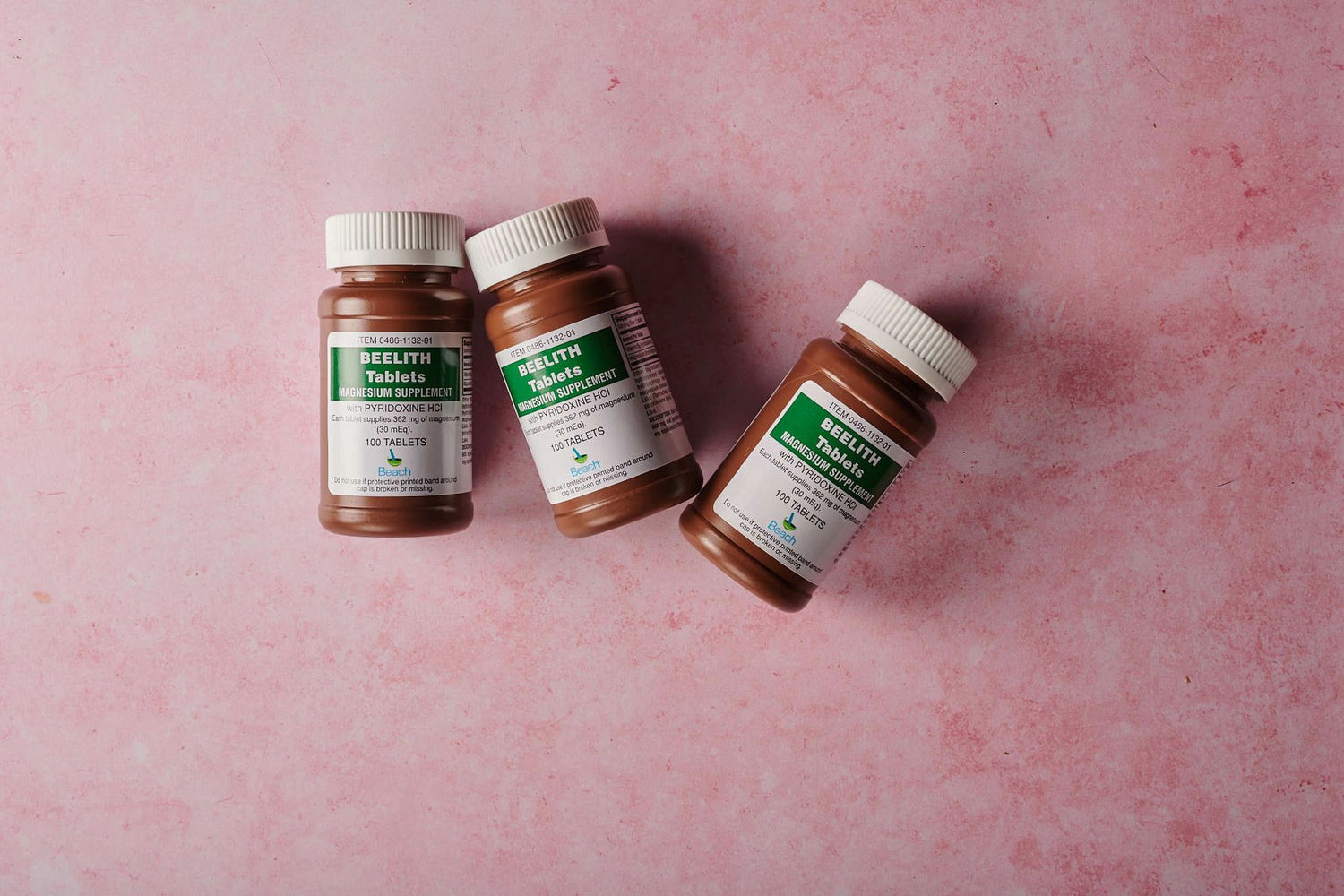
The debate around magnesium L-threonate vs glycinate usually collapses into vague claims about "bioavailability" — but bioavailability where is the question that actually matters. These two forms deliver magnesium to fundamentally different destinations: L-threonate is the only form shown to meaningfully raise brain magnesium by crossing the blood-brain barrier [1], while glycinate leverages its glycine carrier to support whole-body relaxation, muscle function, and sleep [2]. Choosing the right one in 2026 depends entirely on whether your goal lives above the neck or below it.
This comparison evaluates both forms by target tissue, onset speed, and strength of human evidence — drawing on the sole published L-threonate RCT alongside the broader glycine sleep-quality literature — so you can make a decision based on mechanisms, not marketing.
What Is Magnesium L-Threonate?
Magnesium L-threonate (sold under the patented name Magtein®) is a magnesium salt of L-threonic acid, a metabolite of vitamin C. It was developed by researchers at MIT to address a specific problem: getting magnesium into the brain efficiently.
The key differentiator is its ability to cross the blood-brain barrier. A 2010 study published in Neuron by Bhatt et al. demonstrated that magnesium L-threonate increased cerebrospinal fluid magnesium levels in animal models by approximately 15%, whereas other forms — including magnesium chloride and gluconate — failed to produce meaningful increases [1].
This matters because brain magnesium plays a critical role in synaptic density, neural plasticity, and NMDA receptor function — all of which underpin learning and memory.
The typical dosage ranges from 1,500mg to 2,000mg of magnesium L-threonate daily, yielding roughly 144mg of elemental magnesium. That's a relatively low elemental yield per gram compared to other forms, which partly explains the higher cost.
What Is Magnesium Glycinate?
Magnesium glycinate is magnesium chelated (bonded) to the amino acid glycine. It's one of the most widely recommended supplemental forms because of its high absorption rate and gentle digestive profile — it rarely causes the loose stools associated with magnesium oxide or citrate.
The dual-action mechanism makes glycinate distinctive. You're getting both magnesium and glycine, a conditionally essential amino acid that acts as an inhibitory neurotransmitter.
Research published in The Journal of Pharmacological Sciences (2012) found that glycine supplementation improved subjective sleep quality in participants dissatisfied with their sleep [2]. Glycine appears to work by lowering core body temperature and modulating serotonin levels — both signals that prepare the body for rest.
The standard dosage ranges from 200mg to 400mg of elemental magnesium daily, making it a practical choice for people addressing general magnesium insufficiency alongside relaxation support.
Head-to-Head: Mechanisms, Dosages, and What the Research Shows
Here's where the magnesium L-threonate vs glycinate comparison gets specific. The table below summarises the key factors that should drive your decision.
| Factor | Magnesium L-Threonate | Magnesium Glycinate |
|---|---|---|
| Primary target | Brain (crosses blood-brain barrier) | Whole body (muscles, nerves, systemic) |
| Elemental Mg per dose | ~144mg (from 2,000mg) | ~200–400mg |
| Carrier compound benefits | L-threonic acid (vitamin C metabolite) | Glycine (inhibitory neurotransmitter, sleep support) |
| Best evidence for | Cognitive function, memory, learning* | Sleep quality, relaxation, muscle recovery* |
| GI tolerance | Good | Excellent |
| Human clinical trials | Limited (1 published RCT as of 2026) | Multiple (via glycine and chelated Mg research) |
| Cost per serving (UK) | £0.80–£1.50 | £0.25–£0.60 |
| Time to noticeable effects | 6–12 weeks for cognitive outcomes | 1–2 weeks for sleep and relaxation |
The brain bioavailability question
L-threonate's flagship human clinical trial, published in the Journal of Alzheimer's Disease (2016), studied 44 adults aged 50–70 with cognitive complaints [3]. After 12 weeks, the magnesium L-threonate group showed significant improvement in executive function and working memory versus placebo.
However — and this is worth emphasising — this is a single study with a small sample size. Promising, but not yet definitive. The PubMed listing for this trial has been widely cited, yet no large-scale replication has been published as of 2026.
Glycinate does not have specific evidence for crossing the blood-brain barrier in the same targeted way. Its cognitive benefits are indirect: adequate systemic magnesium supports NMDA receptor function and neurotransmitter regulation regardless of form, and glycine itself has calming effects on neural activity.
The relaxation and sleep question
This is where glycinate has the stronger evidence base. Glycine supplementation (typically 3g before bed) has been studied in multiple human trials showing improvements in subjective sleep quality, sleep onset latency, and next-day alertness [2][4].
When magnesium and glycine are combined in glycinate form, you get the muscle-relaxing, nerve-calming effects of magnesium and the sleep-promoting properties of glycine in a single compound.* A useful way to think about it: glycinate gives you a two-for-one that no other magnesium form offers for sleep.
L-threonate may support relaxation indirectly through its effects on brain magnesium, but the evidence for this specific outcome remains largely anecdotal.
What Users Actually Report
Aggregating user sentiment from public review platforms, Reddit threads, and health forums reveals consistent patterns.
Magnesium L-threonate: common user experiences
- Improved mental clarity and "sharper thinking" — typically after 4–8 weeks of consistent use
- Better dream recall and more vivid dreams
- Mild calming effect, though less pronounced than glycinate
- Frustration with the high cost per serving
- Difficulty determining whether effects come from L-threonate specifically or from correcting a general magnesium deficit
Magnesium glycinate: common user experiences
- Faster onset of relaxation — many notice effects within the first week
- Improved sleep quality, particularly falling asleep more easily*
- Reduced muscle tension and cramps
- Less evening anxiety*
- Minimal digestive side effects versus other magnesium forms
The most common complaint across both forms is unrealistic expectations. Magnesium works best as part of a broader strategy — not as a standalone fix.
Noobru Lucid sachet into a glass of water at a kitchen counter in the evening" width="800" height="500" loading="lazy" />Where Multi-Ingredient Formulas Fit In
Standalone magnesium supplements deliver a single mineral. The question worth asking is whether magnesium alone is sufficient for the outcome you're actually seeking.
For sleep and relaxation
If sleep is the goal, magnesium glycinate is an excellent starting point — but glycine and magnesium address only two pathways. A broader approach might combine magnesium with ashwagandha (for cortisol modulation), L-theanine (for alpha brainwave support), and botanicals like passion flower and chamomile.*
Noobru Lucid uses this multi-pathway logic, combining magnesium glycinate with ashwagandha (1,000mg), L-theanine (150mg), passion flower (200mg), lavender (250mg), and chamomile (30mg) in a drinkable sachet. It's one option among several for people who'd rather not assemble five separate bottles.*
For cognitive support
L-threonate's brain-penetrating mechanism is genuinely compelling — but with only one published human RCT, the evidence is still maturing. An alternative cognitive-support strategy uses ingredients with larger evidence bases: phosphatidylserine for membrane fluidity, L-theanine for focus without stimulation, and huperzine A for acetylcholine preservation.
Noobru Advantage takes this approach, using phosphatidylserine (50mg), L-theanine (200mg), huperzine A (200mcg), and ashwagandha (120mg).* Neither approach is objectively "better" — the right choice depends on how much weight you place on a single promising mechanism versus a broader, more established evidence base.
Key Takeaways
Here's the short version of everything above — the decision framework in four points:
- Target tissue is the deciding factor. L-threonate is designed for the brain; glycinate is designed for whole-body magnesium status, relaxation, and sleep.
- Evidence strength favours glycinate — for now. Glycinate benefits from multiple human trials on glycine and chelated magnesium. L-threonate has one small but promising RCT [3].
- Onset speed differs significantly. Glycinate users typically report effects within one to two weeks; L-threonate's cognitive benefits may take six to twelve weeks to emerge.
- Magnesium alone is rarely the whole solution. Whether your goal is sleep or cognition, complementary ingredients — like L-theanine, ashwagandha, or phosphatidylserine — can target additional pathways that magnesium doesn't address on its own.*
Whichever form you choose, consistency matters more than brand. Take it daily, at the right dose, and give it adequate time. If you're taking any medications — particularly blood pressure drugs, antibiotics, or muscle relaxants — consult your healthcare provider before adding magnesium.
Frequently Asked Questions
Can I take magnesium L-threonate and glycinate together?
Yes. They work through different pathways — L-threonate targets brain magnesium via the blood-brain barrier, while glycinate supports whole-body relaxation through glycine's calming effects. Keep total elemental magnesium under 400mg daily unless directed by a healthcare provider.
Which magnesium is better for sleep — threonate or glycinate?
Glycinate has stronger evidence for sleep support. The glycine it's bound to has been shown to lower core body temperature and promote relaxation, both of which may help with sleep onset [2].* L-threonate may support sleep indirectly, but the clinical evidence is thinner.
Is magnesium L-threonate worth the higher cost?
It depends on your goal. L-threonate costs two to three times more per serving than glycinate. If cognitive support — particularly memory and learning — is your primary concern, the premium may be justified by its unique brain bioavailability. For sleep or general relaxation, glycinate offers stronger value.
How long does it take for magnesium L-threonate to work?
The only published human RCT measured cognitive outcomes after 12 weeks of daily supplementation [3]. Subtle calming effects may appear within the first week or two, but meaningful cognitive benefits likely require six to twelve weeks of consistent use.
Does magnesium glycinate cause digestive side effects?
Magnesium glycinate is one of the best-tolerated forms. Unlike magnesium oxide or citrate, glycinate rarely causes loose stools because the chelated bond with glycine allows absorption in the small intestine rather than drawing water into the colon.
If sleep and evening calm are your goals, Noobru Lucid combines magnesium glycinate with ashwagandha, L-theanine, and passion flower in a single drinkable sachet.*
Browse all Noobru products — 90-day money-back guarantee →References
- Slutsky I, Abumaria N, Wu LJ, et al. Enhancement of learning and memory by elevating brain magnesium. Neuron. 2010;65(2):165-177. PubMed
- Bannai M, Kawai N. New therapeutic strategy for amino acid medicine: glycine improves the quality of sleep. Journal of Pharmacological Sciences. 2012;118(2):145-148. PubMed
- Liu G, Weinger JG, Lu ZL, Xue F, Sadeghpour S. Efficacy and safety of MMFS-01, a synapse density enhancer, for treating cognitive impairment in older adults: a randomized, double-blind, placebo-controlled trial. Journal of Alzheimer's Disease. 2016;49(4):971-990. PubMed
- Yamadera W, Inagawa K, Chiba S, Bannai M, Takahashi M, Nakayama K. Glycine ingestion improves subjective sleep quality in human volunteers, correlating with polysomnographic changes. Sleep and Biological Rhythms. 2007;5(2):126-131. DOI
- National Institutes of Health Office of Dietary Supplements. Magnesium — Fact Sheet for Health Professionals. NIH
*These statements have not been evaluated by the Food and Drug Administration or MHRA. This product is not intended to diagnose, treat, cure, or prevent any disease. Always consult your healthcare provider before starting any supplement regimen.



Leave a comment
All comments are moderated before being published.
This site is protected by hCaptcha and the hCaptcha Privacy Policy and Terms of Service apply.