




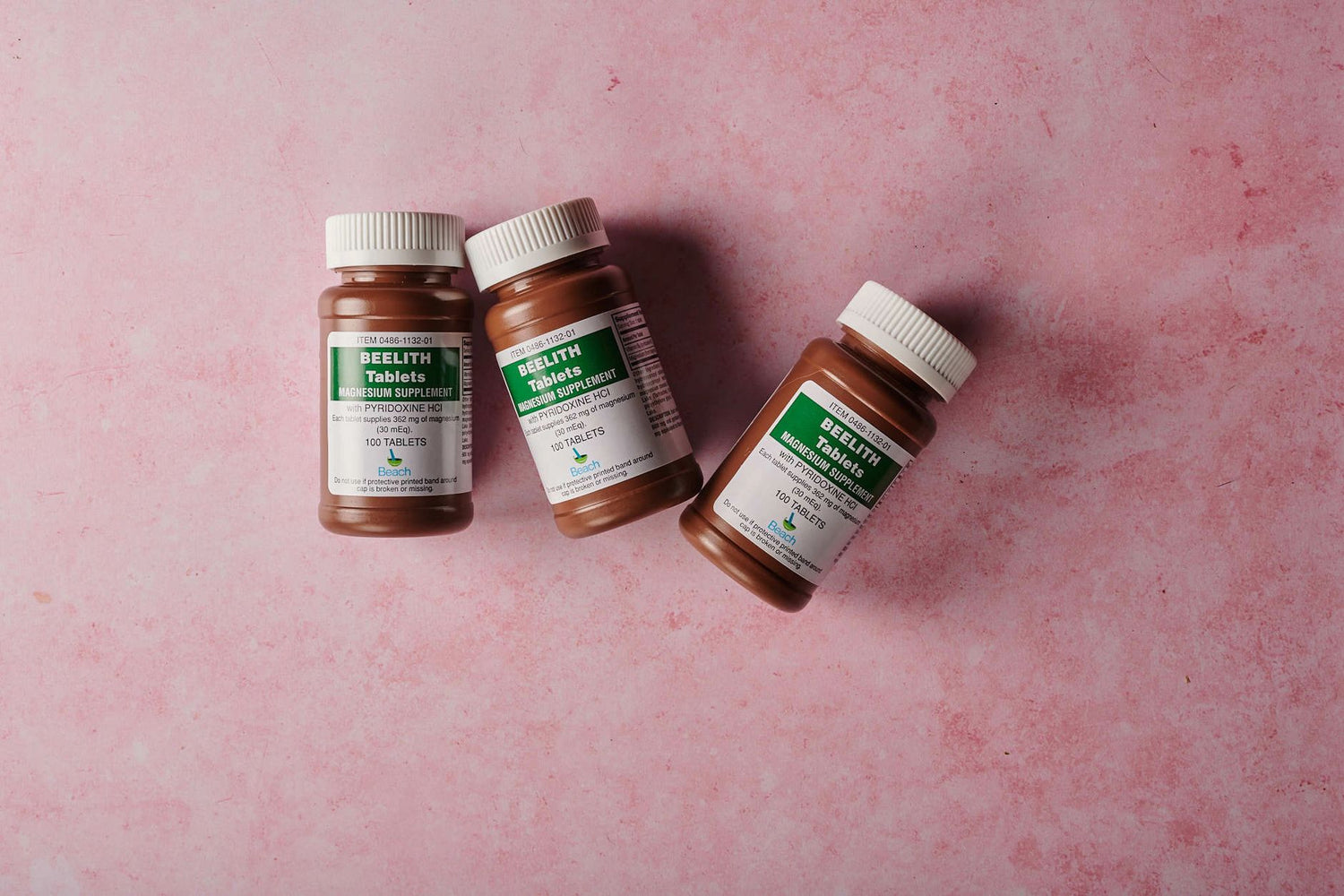
Most magnesium comparisons list ten forms in a table and tell you they're all "great choices." That's not helpful when your real question is specific: should I take magnesium threonate or magnesium glycinate? The answer depends on one mechanism that most articles gloss over — whether the form can actually cross the blood-brain barrier and raise magnesium levels inside your brain, not just your bloodstream.
This article compares magnesium threonate vs glycinate through that single lens — brain bioavailability — then maps each form to specific goals like cognitive sharpness, sleep quality, and stress resilience. Every claim is referenced to published research so you can check the evidence yourself.

What Makes Magnesium Threonate Different From Glycinate?
Magnesium threonate (sold as Magtein®) is magnesium bound to L-threonic acid, a metabolite of vitamin C. Magnesium glycinate is magnesium bound to glycine, a calming amino acid. The carrier molecule is what changes everything about where each form ends up in your body.
The critical difference: threonate is the only magnesium form demonstrated to significantly elevate brain magnesium concentrations in peer-reviewed research [1]. A landmark 2010 study published in Neuron by Bhatt et al. at MIT found that magnesium L-threonate raised cerebrospinal fluid magnesium by ~15%, while magnesium chloride, citrate, and gluconate failed to produce statistically significant increases — despite raising serum magnesium equally well.
Glycinate, meanwhile, excels at systemic absorption. It has high bioavailability, gentle gastrointestinal tolerability, and the bonus calming effect of its glycine carrier. But it does not appear to preferentially raise brain magnesium levels.
Why the Blood-Brain Barrier Matters
The blood-brain barrier (BBB) is a selective membrane that blocks most substances — including most forms of magnesium — from entering brain tissue. Your serum magnesium can be perfectly normal while your brain magnesium is depleted. This is why standard blood tests are poor indicators of neurological magnesium status [2].
L-threonic acid appears to enhance magnesium transport across the BBB via specific transporter mechanisms. This makes threonate uniquely relevant for cognitive goals, not because other forms are "bad," but because they simply don't reach the target tissue as effectively.
Magnesium Threonate: Best For Brain and Cognitive Support
Magnesium threonate may help support memory, learning, and age-related cognitive function.* The evidence base is still emerging but compelling:
- Synaptic density: The 2010 Neuron study found MgT increased synaptic connections in the hippocampus (the brain's memory centre) and improved both short-term and long-term memory in animal models [1].
- Human cognitive trial: A 2016 study in the Journal of Alzheimer's Disease tested 2,000 mg/day of MgT in adults aged 50–70 with cognitive concerns. Participants showed significant improvements in executive function and working memory compared to placebo over 12 weeks [3].
- Brain age: The same trial estimated that MgT supplementation reversed clinical brain age measures by an average of 9.4 years, though this metric has drawn some methodological scrutiny.
Best for: focus, mental clarity, age-related cognitive concerns, anyone specifically targeting brain magnesium levels.*
Limitation: MgT delivers only ~8% elemental magnesium by weight. A 2,000 mg dose provides just 144 mg of elemental magnesium — well below the 300–400 mg daily RDA. You'll likely need a second magnesium source if you're correcting a general deficiency.
Magnesium Glycinate: Best For Sleep, Stress, and Muscle Recovery
Magnesium glycinate may help support sleep quality, stress resilience, and muscular relaxation.* It's the more versatile of the two forms for whole-body benefits:
- Sleep quality: A 2012 study in the Journal of Research in Medical Sciences found that magnesium supplementation significantly improved subjective sleep quality, sleep time, and morning alertness in elderly subjects with insomnia [4].
- Glycine's own effects: The glycine carrier amino acid independently promotes sleep. Research published in Neuropsychopharmacology showed that 3 g of glycine before bed improved subjective sleep quality and reduced daytime drowsiness [5].
- Tolerability: Glycinate causes far less gastrointestinal distress than citrate or oxide forms, making it suitable for long-term daily use.
Best for: sleep support, evening relaxation, stress and tension, muscle cramps, anyone who needs a well-tolerated daily magnesium with higher elemental content.*
Limitation: No specific evidence that glycinate preferentially raises brain magnesium. If your primary goal is cognitive support, threonate has a stronger evidence base for that particular mechanism.
Head-to-Head Comparison: Threonate vs Glycinate
| Criteria | Magnesium Threonate | Magnesium Glycinate |
|---|---|---|
| Crosses BBB | Yes — clinically demonstrated | Not demonstrated |
| Elemental Mg per dose | ~144 mg (from 2,000 mg) | ~200–350 mg (typical doses) |
| Primary benefit | Cognitive function, memory* | Sleep, relaxation, muscle recovery* |
| Human clinical trials | Limited (1 key RCT) | Moderate (several sleep/deficiency studies) |
| GI tolerability | Excellent | Excellent |
| Cost (typical) | £25–£40/month | £10–£20/month |
| Time to notice effects | 4–12 weeks | 1–3 weeks |
Can You Take Both Together? The Stacking Approach
Yes — and this is arguably the most practical answer for people who want both cognitive and sleep support.* Because threonate and glycinate serve different physiological targets, they complement rather than compete with each other.
A sensible stacking protocol:
- Morning/afternoon: 1,000–2,000 mg magnesium threonate (for brain magnesium elevation)
- Evening: 200–400 mg magnesium glycinate (for sleep and whole-body relaxation)
This approach covers the RDA gap that threonate alone cannot fill, while still getting the BBB-crossing benefit. If you're already using a nootropic stack that includes L-theanine or other calming compounds, glycinate in the evening pairs well without over-sedation.*
Browse the full range of Noobru supplements to see how magnesium fits alongside other evidence-backed cognitive support ingredients.*
Who Should Choose Which Form?
Choose magnesium threonate if:
- Your primary concern is focus, memory, or age-related cognitive decline*
- You're already meeting your RDA through diet or another supplement
- You want the only form with published BBB-crossing evidence
Choose magnesium glycinate if:
- Sleep quality is your main goal*
- You need a higher elemental magnesium dose for general deficiency
- You experience digestive sensitivity with other magnesium forms
- Budget is a factor — glycinate costs roughly half the price
Choose both if:
- You want comprehensive brain and body magnesium support*
- You experience both cognitive fog during the day and poor sleep at night
Key Takeaways
- Threonate is brain-specific. It's the only magnesium form shown to cross the blood-brain barrier and raise brain magnesium levels in published research [1].
- Glycinate is the all-rounder. Higher elemental magnesium, excellent tolerability, and glycine's own calming effects make it ideal for sleep and general deficiency.*
- They're not competitors — they're complements. Stacking both covers different physiological needs without redundancy.
- Neither is instant. Threonate requires 4–12 weeks for cognitive effects; glycinate typically 1–3 weeks for sleep benefits.
- Serum magnesium tests are unreliable for assessing brain magnesium status. Only ~1% of body magnesium is in blood serum [2].
Frequently Asked Questions
Does magnesium threonate cross the blood-brain barrier?
Yes. Magnesium L-threonate is the only magnesium form clinically shown to raise brain magnesium levels significantly. A 2010 MIT study published in Neuron demonstrated that MgT increased cerebrospinal fluid magnesium by ~15%, while other forms did not [1].
Can I take magnesium threonate and glycinate together?
Yes. Many people take threonate in the morning for cognitive support and glycinate in the evening for sleep.* The two forms target different tissues and mechanisms, making them complementary rather than redundant. Consult your healthcare provider before starting any new combination.
Which is better for sleep — magnesium threonate or glycinate?
Magnesium glycinate is generally the stronger choice for sleep.* The glycine amino acid has independent sleep-promoting effects [5], and glycinate provides higher elemental magnesium at the doses typically used for sleep support.
How long does magnesium threonate take to work?
Clinical trials measured cognitive improvements after 6–12 weeks of daily supplementation [3]. Some users report subjective improvements sooner, but consistent use for at least 4 weeks is likely needed to meaningfully raise brain magnesium levels.
What is the recommended dosage for magnesium threonate?
The standard research dose is 1,500–2,000 mg of magnesium L-threonate daily, split across two to three servings. This provides approximately 144 mg of elemental magnesium — so you may need an additional magnesium source to meet the full 300–400 mg RDA.
References
- Slutsky I, Abumaria N, Wu LJ, et al. Enhancement of learning and memory by elevating brain magnesium. Neuron. 2010;65(2):165-177. PubMed
- Costello RB, Elin RJ, Rosanoff A, et al. Perspective: The case for an evidence-based reference interval for serum magnesium. Advances in Nutrition. 2016;7(6):977-993. PubMed
- Liu G, Weinger JG, Lu ZL, Xue F, Sadeghpour S. Efficacy and safety of MMFS-01, a synapse density enhancer, for treating cognitive impairment in older adults. Journal of Alzheimer's Disease. 2016;49(4):971-990. PubMed
- Abbasi B, Kimiagar M, Sadeghniiat K, et al. The effect of magnesium supplementation on primary insomnia in elderly. Journal of Research in Medical Sciences. 2012;17(12):1161-1169. PubMed
- Bannai M, Kawai N. New therapeutic strategy for amino acid medicine: glycine improves the quality of sleep. Journal of Pharmacological Sciences. 2012;118(2):145-148. PubMed
Looking for cognitive support you can actually feel?*
Explore Noobru's full supplement range — designed with bioavailable ingredients like magnesium and L-theanine to help support mental clarity and focus.*
*These statements have not been evaluated by the Food and Drug Administration or MHRA. This product is not intended to diagnose, treat, cure, or prevent any disease. Always consult your healthcare provider before starting any supplement regimen.



Leave a comment
All comments are moderated before being published.
This site is protected by hCaptcha and the hCaptcha Privacy Policy and Terms of Service apply.